


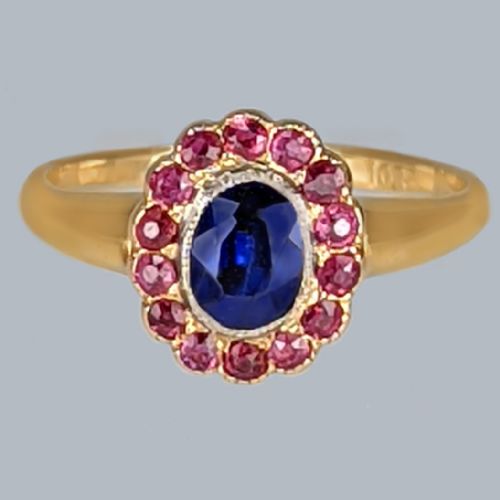


Vintage Gem Cluster Ring
A vintage gem cluster ring brings together central coloured stones and encircling diamonds across Edwardian, Art Deco and mid-century designs.
Vintage Gem Cluster Ring
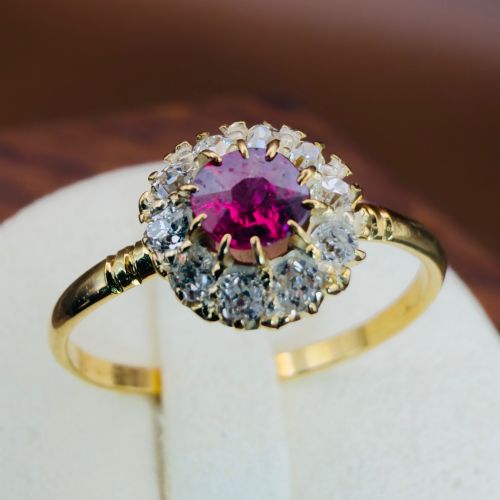
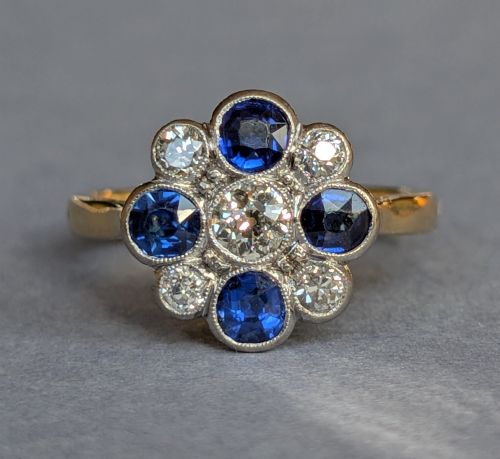
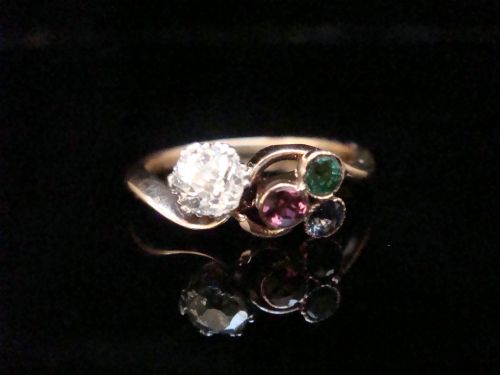
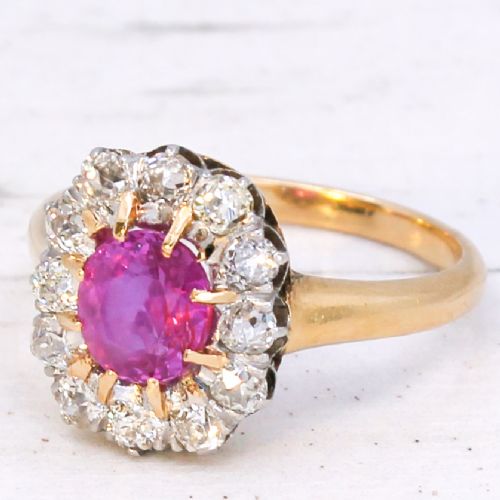
A vintage gem cluster ring places a prominent central stone, such as sapphire, ruby, emerald or opal, at the heart of an encircling arrangement of smaller diamonds. These pieces most commonly appear in styles spanning the Victorian era through to the mid-twentieth century.
The selection here covers traditional dress rings and engagement forms created in platinum, 18ct gold, white gold and 9ct gold. Pieces range from delicate Edwardian halo mountings to bold Art Deco geometric profiles and mid-century oval cuts.
Materials and construction
Craftsmen built these mountings primarily in durable precious metals like platinum and 18ct gold, utilising both yellow and white varieties to complement the coloured gemstones. Stones were set by hand using claws, bezels or flush techniques tailored to the specific geometry of each cluster.
Gemstone selection paired hard-wearing corundum like sapphires and rubies with softer centre stones such as emeralds, jadeite and amethysts, balanced by old-cut, rose-cut or baguette diamonds. Metalwork often featured delicate pierced galleries and fine millegrain borders characteristic of period workshops.
Listings feature platinum and 18ct gold alongside alternative options in 9ct and 14ct gold across multiple decades.
Elements of distinction
Quality rests in the harmony of proportions between the central gem and its surrounding border of diamonds, alongside the natural saturation and clarity of the stones themselves. Superior examples show careful matching of diamond cuts and secure, precise metalwork that frames the cluster without overwhelming it.
The integrity of the original mounting and the preservation of hand-finished details such as gallery piercing or millegrain edge work elevate a piece. Evidence of thoughtful gem selection, including certified unheated stones or well-matched colour gradients, distinguishes finer specimens.
The Vintage Gem Cluster Ring Glossary
- Cluster ring
- A ring featuring a central gemstone surrounded by a group of smaller stones, typically diamonds. This arrangement maximises visual impact and light reflection.
- Millegrain
- A decorative technique involving a row of tiny raised metal beads along the edge of a setting. It adds a refined, textured border typical of Edwardian and Art Deco jewellery.
- Old cut
- A diamond facet style hand-polished before modern machine-cutting standards were established. These stones often display smaller tables and higher crowns, producing a softer glow under candlelight.
- Halo
- A specific cluster configuration where a central stone is completely encircled by a single uniform row of smaller pavé or claw-set diamonds.
Vintage Gem Cluster Ring: Frequently Asked Questions
How do I care for my cluster ring?
Regular gentle cleaning in warm soapy water keeps gemstones and metal settings bright and free from accumulated oils. Avoid harsh ultrasonic cleaners, particularly when softer gems like emeralds or opals are part of the cluster.
Have a professional jeweller inspect the claws and settings periodically to ensure every stone remains secure within the mounting.
Are these suitable for daily wear?
Harder central stones like sapphire, ruby and diamond withstand daily wear exceptionally well when set in sturdy platinum or 18ct gold. Softer centre gems require a little more mindfulness regarding impact and daily activities.
Removing the ring during heavy manual work protects delicate claw settings and softer stones from unnecessary knocks.
How are different periods identified?
Stylistic cues such as geometric platinum lines indicate Art Deco origins, while delicate openwork and softer yellow gold point toward Edwardian or Victorian craftsmanship. Hallmarks, metal purity stamps and gemstone cutting styles further clarify the era of manufacture.
Comparing the mounting techniques with documented period examples helps confirm the timeline of each piece.