

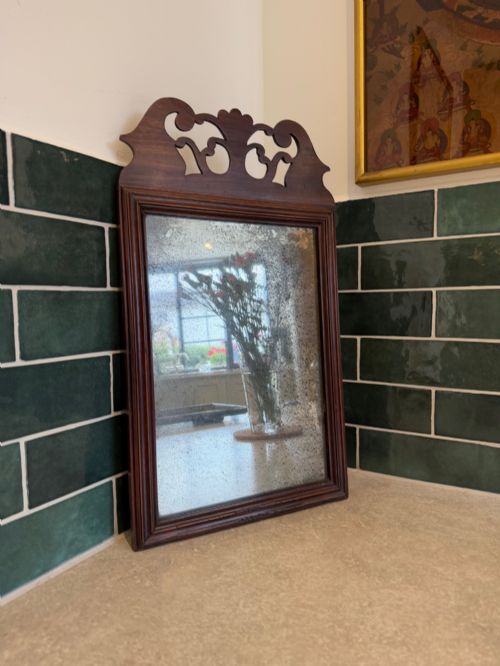
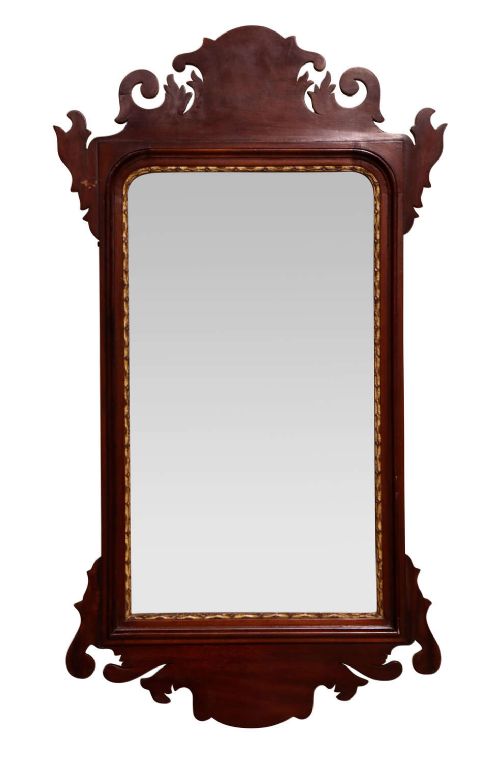
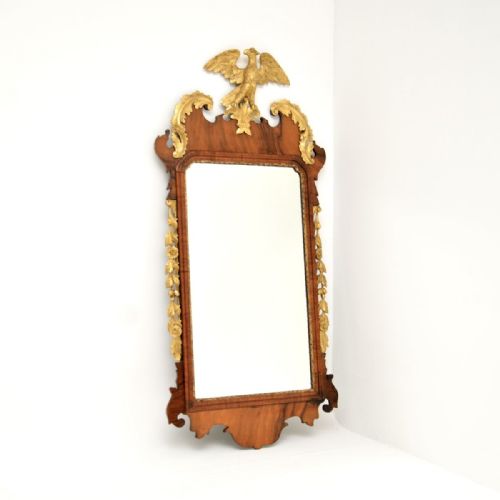
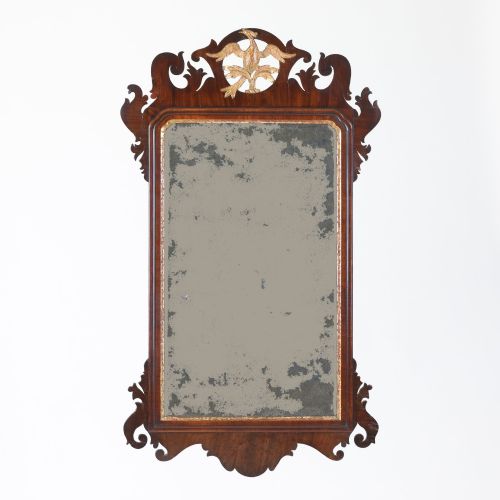





Vintage Fretwork Mirror
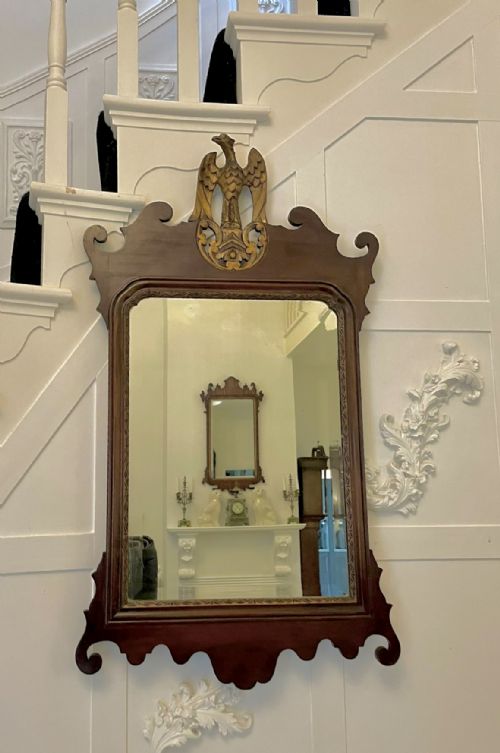
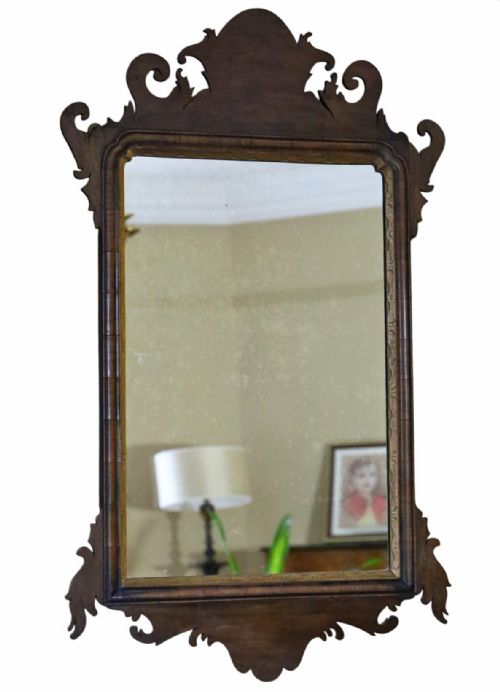
A vintage fretwork mirror brings crisp fret-cut silhouettes and historic warmth to a hallway, drawing the eye with pierced wooden frames.
Vintage Fretwork Mirror
A vintage fretwork mirror relies on intricate, pierced wooden frames that trace their design roots back to the eighteenth century. When you search for a vintage fretwork mirror, you encounter pieces that span from original Georgian examples to later revivals in walnut and mahogany.
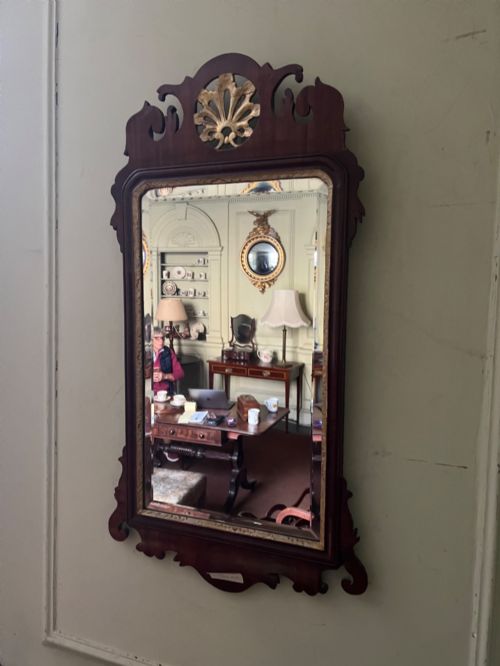
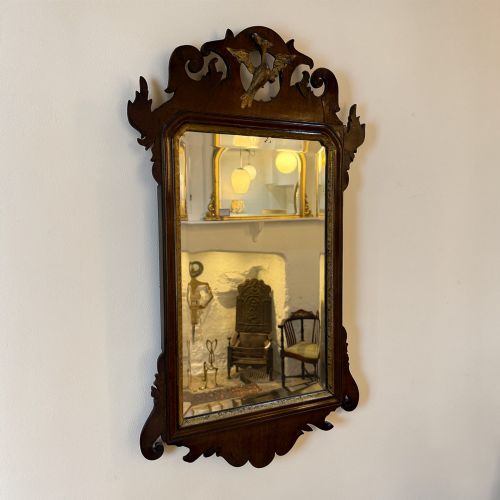
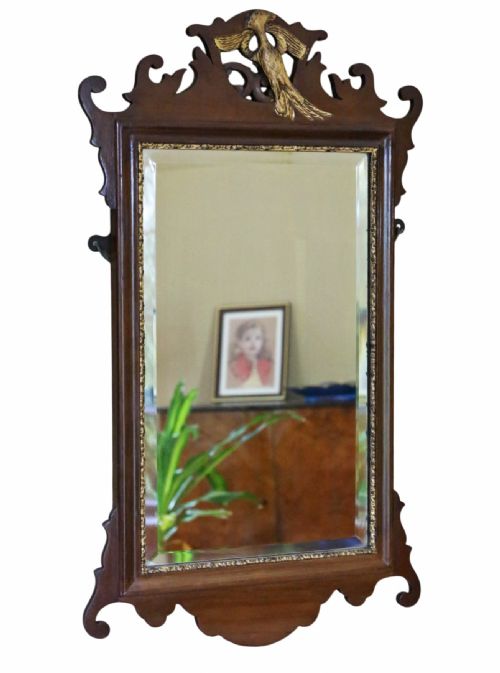
The most common iterations on this page channel Chippendale aesthetics, featuring pierced scrolls and the iconic Ho-ho bird motif at the crest. These wall mirrors range from small bedroom pieces to large overmantle formats designed for reception rooms.
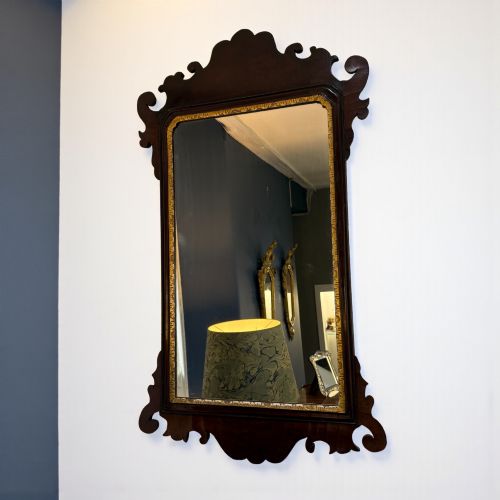
Materials lean heavily towards rich timbers such as mahogany and walnut, occasionally accented with parcel gilding or a gilt slip around the mirror glass. Edwardian and later nineteenth-century interpretations sit alongside eighteenth-century originals, offering varied scales for domestic interiors.
Materials and construction methods
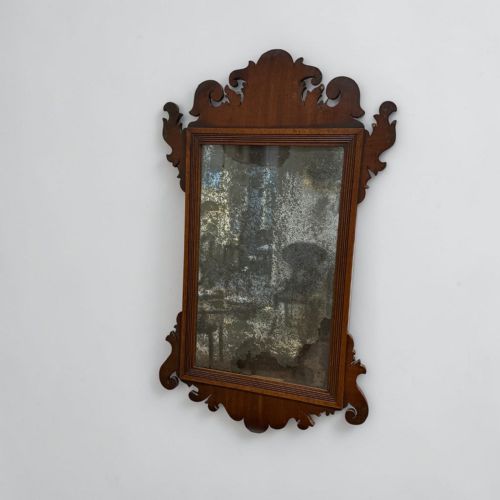
Craftsmen built these frames using dense, durable timbers like mahogany and walnut, which held sharp fret-cut edges without splintering. Frets were sawn meticulously by hand using fine scroll saws to achieve symmetrical or scrolling pierced patterns.
Surfaces often combined polished wood with applied details such as gesso, giltwood, or subtle brass inlays. Early glass panes were fitted into rebated frames behind protective slips, while later nineteenth and twentieth-century iterations introduced bevel-edged mirror glass.
Vintage Fretwork Mirror Retail Price Guide 2026
Typical asking prices for vintage fretwork mirror among the pieces listed under this phrase on Sellingantiques today, from the lower quarter to the upper quarter. They describe what is for sale here now, not the wider market.
The mythical Ho-ho bird watches silently from the top of the fretwork, guarding your reflection since the seventeen-eighties.
Distinctions in craftsmanship and materials
Quality rests in the precision of the piercing and the choice of timber figure, such as richly grained burr walnut or dense mahogany. Superior examples display crisp, undercut carving on decorative elements like the Ho-ho bird crest rather than soft, rounded profiles.
The integration of the gilt slip and the depth of the frame's moulding distinguish finer works from standard commercial productions. Earlier eighteenth-century originals exhibit construction traits and timber ageing that contrast with later Edwardian or Georgian Revival interpretations.
The Vintage Fretwork Mirror Glossary
- Fretwork
- Ornamental pattern openwork formed by cutting wood with a scroll saw. It defines the pierced silhouette characteristic of these frames.
- Ho-ho bird
- A stylized Chinese phoenix frequently carved onto the crests of eighteenth-century mirrors. This mythological bird symbolizes virtue and grace.
- Gilt slip
- A narrow gilded wooden moulding fitted inside the main frame directly next to the glass. It provides a bright visual border against dark mahogany or walnut.
- Parcel gilt
- Part gilt, where selective areas of a wooden frame receive gold leaf or paint. This technique highlights carved details against polished timber.
- Overmantle
- A large horizontal mirror designed to hang above a fireplace mantelpiece. These pieces often feature extended frames suited to principal reception rooms.
Vintage Fretwork Mirror: Frequently Asked Questions
Where should I hang a fretwork mirror?
These wall mirrors suit reception rooms, hallways, and morning rooms where their pierced wooden frames command attention. They function effectively above mantelpieces or console tables as traditional focal points.
Ensure the wall fixings match the weight of the timber frame, particularly for larger mahogany or walnut overmantle versions.
How do I distinguish an eighteenth-century mirror from a revival piece?
Examine the timber shrinkage, the construction behind the frame, and the hand-cut irregularities of early fretwork. Eighteenth-century pieces display oxidation and timber characteristics absent in later work.
Revival pieces from the nineteenth and twentieth centuries often feature machine-cut precision, modern mirror glass, or standardised backboards.
What woods are typical for these mirrors?
Mahogany and walnut dominate the selection, offering deep natural tones and stable grain for intricate fret-cut designs. Sycamore, oak, and yew appear occasionally across specific periods.
Many examples enhance these primary timbers with giltwood accents, gesso detailing, or brass inlay work.