


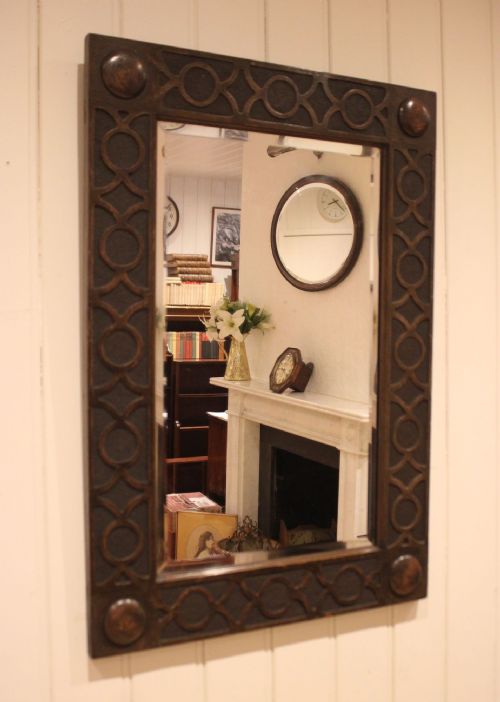


Vintage Fretwork Frame
A vintage fretwork frame brings intricate pierced woodwork into a room, offering classic Georgian symmetry and delicate fret-cut detail.
Vintage Fretwork Frame
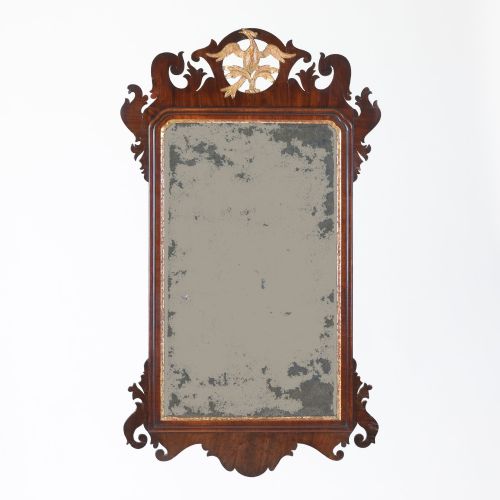
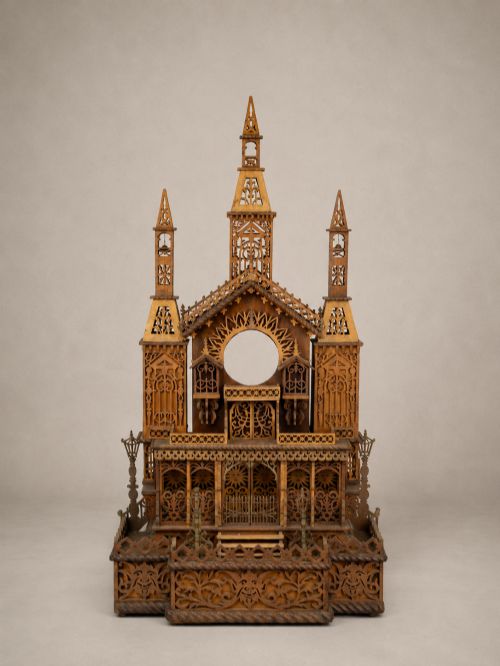
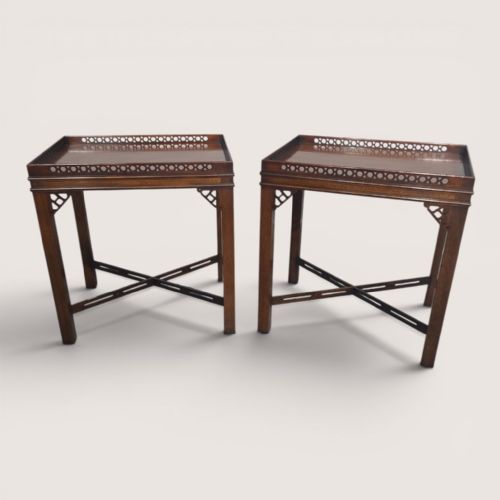
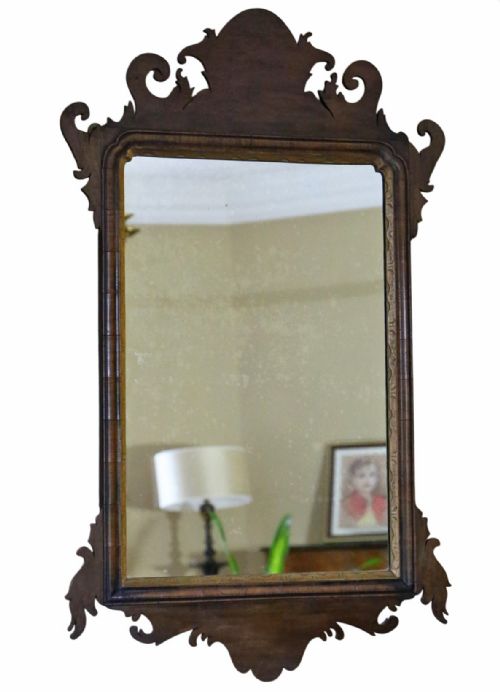
While mirrors dominate the selection, the category also encompasses architectural clock cases and occasional tables displaying similar pierced woodwork. Buyers encounter various historical periods here, ranging from genuine 18th-century examples to Edwardian and later 20th-century revivals.
The aesthetic leans heavily on traditional forms, incorporating mahogany and walnut veneers alongside giltwood accents. Such frames suit reception rooms, halls and bedrooms where traditional craftsmanship adds texture to an interior scheme.
Materials and construction
Cabinetmakers utilised dense timbers like mahogany, walnut and yew to achieve the crisp edges required for intricate fretwork. These woods provided the structural stability needed for delicate pierced patterns without risking breakage.
Surface finish played a vital role, with makers applying French polish to highlight the grain of the wood or incorporating giltwood highlights to catch the light. Mirror glass was then set within the rebate, frequently accompanied by backing boards secured with traditional fixings.
A whimsical Dutch brassband relief painting occasionally joins the mirror frames, proving that pierced woodwork found outlets far beyond traditional household reflections.
Assessing quality and execution
The precision of the piercing distinguishes superior examples, where every internal curve and sharp corner of the fretwork exhibits total control. Lesser pieces often display blunt angles or clumsy sanding within the cut-outs.
Timber selection dictates the overall presence of the frame, with figured walnut veneers and rich mahogany showing deeper chatoyancy and grain movement. The retention of original mercury or early plate glass also elevates the integrity of the piece.
The Vintage Fretwork Frame Glossary
- Fretwork
- Ornamental design created by cutting patterns through thin wood using a piercing saw. This technique defines the silhouette of the frame.
- Giltwood
- Timber coated with gold leaf or gesso and gilding powder. It provides reflective contrast against dark mahogany or walnut.
- Chippendale
- The 18th-century furniture style associated with Thomas Chippendale, known for rococo scrolls, Chinese motifs and elaborate fret-cut crestings.
- Yew
- A dense, resilient timber with distinct reddish-brown hues and pale sapwood. Cabinetmakers utilised it for its rich grain and durability.
- Overmantle
- A large mirror designed specifically to hang above a fireplace mantelpiece. These pieces often feature extended horizontal proportions and architectural mouldings.
Vintage Fretwork Frame: Frequently Asked Questions
How do I hang a heavy fretwork mirror safely?
These wooden frames require sturdy fixings screwed directly into wall studs or masonry using appropriate wall anchors. The weight of the timber and glass demands a professional-grade picture wire or D-rings attached securely to the frame's structural backing.
Avoid relying on lightweight picture hooks that cannot bear the sustained downward pull. Ensuring the mirror hangs flush against the wall also prevents undue stress on the upper joints.
Are these frames genuinely eighteenth century?
The selection includes genuine 18th-century pieces alongside later revivals from the Edwardian era and the early 20th century. Examining the construction methods, timber shrinkage and backing boards helps determine the true age of the object.
Revival pieces often emulate earlier Chippendale styles closely, meaning physical indicators like hand-cut screws or secondary woods provide the clearest clues to date.
How should I clean the pierced woodwork?
Dust accumulates within the intricate fret-cut channels, requiring a soft-bristled artist brush or dry microfibre cloth to clear gently. Avoid liquid polishes or moisture pooling in the recesses, as dampness can lift delicate veneers or damage gilt surfaces.
For the glass insert, apply a mild glass cleaner to a cloth rather than spraying directly onto the mirror, protecting the surrounding timber from chemical contact.
What distinguishes a Chippendale style frame?
Chippendale style frames typically feature signature elements such as Ho-ho birds, scrolling ears, and elaborate pierced swan-neck pediments. The proportions remain balanced yet theatrical, drawing heavily upon rococo and chinoiserie influences.
Later Georgian revival versions replicate these exact motifs, meaning stylistic cues alone often span more than a century of manufacturing tradition.