
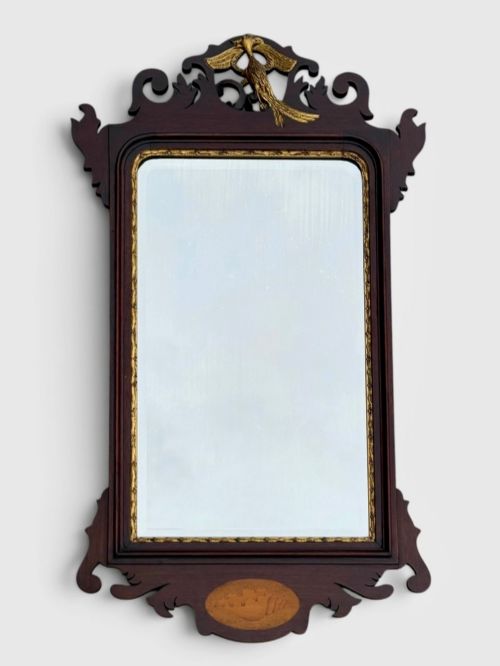
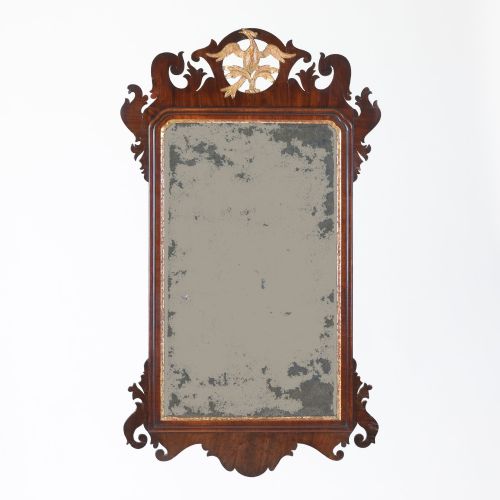


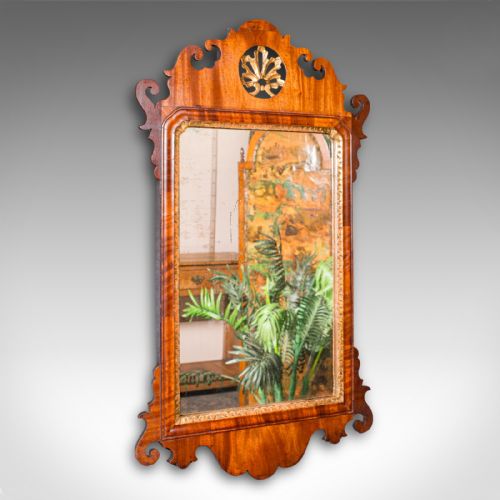
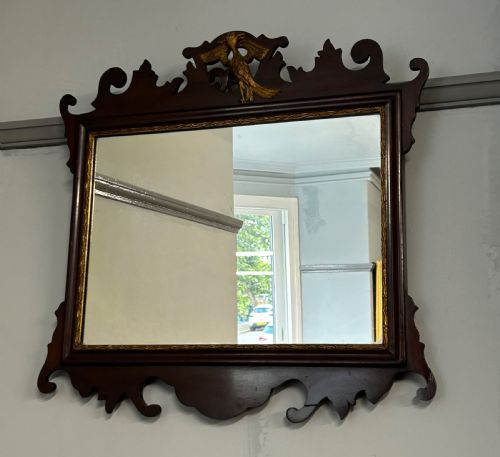
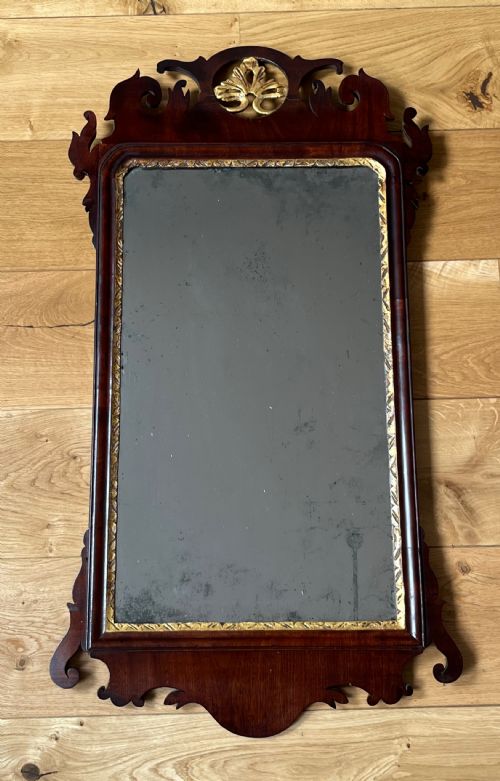


Scrolled Mahogany Frame Mirror
These scrolled mahogany frame mirror pieces offer rich timber grain and fretwork charm, built to anchor a reception hall or bedroom wall.
Scrolled Mahogany Frame Mirror
A scrolled mahogany frame mirror draws the eye with its intricate fret-cut silhouette, combining rich timber tones with classical wall-hanging proportions. These items function primarily as wall mirrors, taking forms such as pier mirrors, vanity mirrors and large fretwork panels designed for principal rooms.
Buyers browsing this selection encounter pieces spanning the Georgian era, the Victorian period, and Edwardian revivals up to nineteen hundred. The most common survivals on this page are Georgian style and Chippendale revival examples, alongside genuine eighteenth century items featuring traditional scrollwork and ho-ho bird carvings.
Makers and craftsmen utilised substantial mahogany timbers, often enhanced by giltwood accents, gold leaf, and delicate satinwood inlay. Whether styled as a George III fretwork mirror or a Vauxhall mirror, each piece reflects the enduring appeal of eighteenth century design vocabulary executed across different centuries.
How they were made
Cabinetmakers constructed these frames using dense mahogany, selected for its deep grain and stability under intricate fret-cutting saws. Craftsmen shaped the distinct scrolled outlines by hand, piercing the timber to create light, scrolling borders characteristic of the style.
Surface decoration frequently incorporated gold leaf and giltwood details to highlight carved motifs like the ho-ho bird. Where inlay appears, artisans set fine satinwood into the mahogany base to introduce contrasting linear patterns along the border.
Mirror glass was set into the timber rebate, with period pieces often utilising Vauxhall plates featuring subtle bevels or hand-silvered finishes. Joinery relied on traditional pegging and corner blocks hidden behind the secondary backing boards to secure the fretwork.
Listings span multiple eras from the eighteenth century through to nineteen hundred, including Georgian, Victorian, and Edwardian periods.
What varies in quality
Quality in a scrolled mahogany frame mirror rests upon the crispness of the fret-cut piercing and the depth of the carved details. Superior examples exhibit sharp, clean lines in the scrolls and carefully proportioned ears, whereas lesser pieces show blunt edges and simplified outlines.
The choice and figuring of the mahogany timber dictate the visual weight of the frame, with richly grained boards commanding greater presence. Additionally, the presence of original gilding, intact gold leaf, and crisp satinwood inlay rather than painted simulation elevates the standard of execution.
The Scrolled Mahogany Frame Mirror Glossary
- Fretwork
- Openwork ornamentation cut from a thin board using a fretsaw. This technique creates the delicate, pierced borders seen around the edge of the glass.
- Pier mirror
- A tall wall mirror designed to hang on the narrow wall space between windows. These pieces often feature substantial mahogany frames and detailed crestings.
- Vauxhall mirror
- A type of antique mirror featuring bevelled plate glass, named after the famous London glasshouses. They are prized for their historical association with eighteenth century British interiors.
- Giltwood
- Wood that has been coated with gold leaf or gold paint for decorative effect. It frequently highlights the carved crests and birds on these frames.
Scrolled Mahogany Frame Mirror: Frequently Asked Questions
Where should I hang this mirror?
These pieces suit principal reception rooms, hallways, and bedrooms where their decorative fretwork can catch the light. They traditionally hang above fireplace mantels or console tables.
Ensure the wall fixings can support the combined weight of the dense mahogany timber and glass plate.
How do I date a mahogany mirror?
Dating relies on examining the construction methods, timber choice, and the style of the fret-cut scrollwork. Eighteenth century examples show hand-cut tool marks and period secondary woods.
Later Victorian and Edwardian revivals often display machine-cut precision and different backing board configurations.
What is a ho-ho bird?
The ho-ho bird is a stylized Chinese phoenix motif frequently carved into the crest of eighteenth century fretwork mirrors. It represents good fortune and adds height to the top scroll.
Revival pieces from later periods also adopted this traditional decorative element.
Are these mirrors heavy?
Mahogany is a dense, heavy hardwood, and when combined with thick mirror glass and layered frames, these items require secure wall anchoring. Proper brackets are essential for safe hanging.
Check the structure of the frame joints before mounting to ensure stability.