
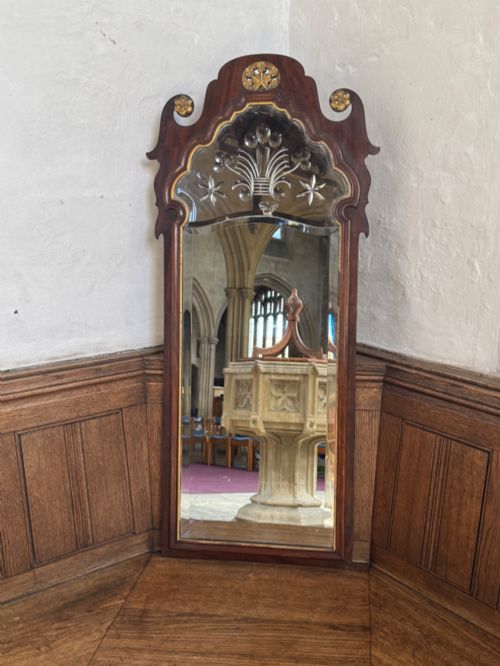
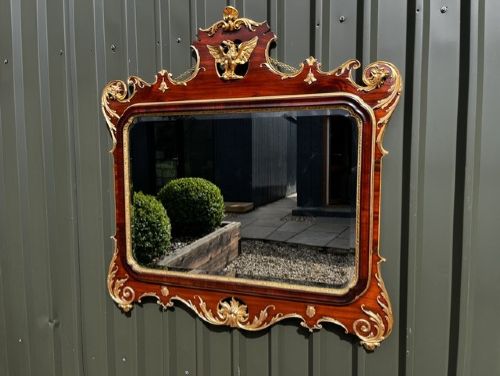


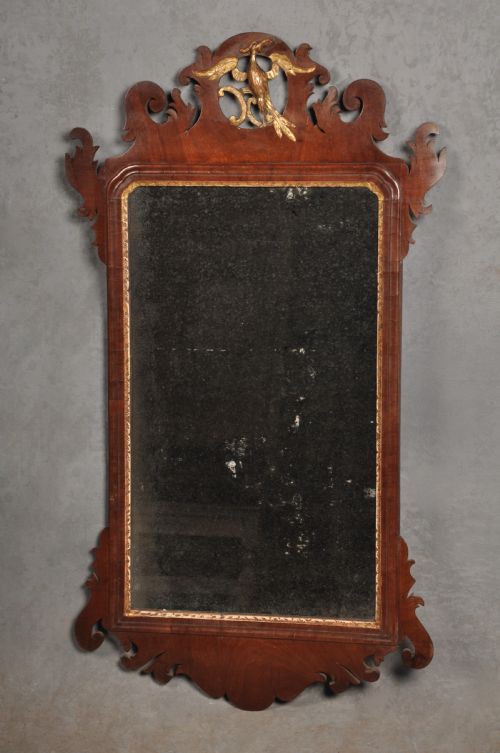


Mahogany Giltwood Mirror
A mahogany giltwood mirror brings warmth and reflective light to a room through the combination of rich timber and bright gilding.
Mahogany Giltwood Mirror
A mahogany giltwood mirror combines deep brown timber with bright applied gilding, creating a contrast that has spanned several centuries of interior decoration. When searching for a mahogany giltwood mirror, buyers encounter various forms including wall mirrors, pier mirrors, overmantel mirrors, and dressing mirrors.
The pieces appearing on this page span the Georgian, Regency, Victorian, and Edwardian periods, alongside specific revivals like George II and Chippendale styles. Wall mirrors and overmantel mirrors predominate, though dressing mirrors and console tables also appear in the selection.
Origin and regional style vary across the inventory, with English workshops sitting alongside Swedish Gustavian and Italian Empire examples. Certain pieces show distinct regional characteristics, such as Welsh provenance or Scandinavian interpretations of classical forms.
Assessing quality and finish
Quality rests in the crispness of the carved detail and the harmony between the mahogany body and the giltwood embellishments. Pierced fretwork requires precise hand-cutting, and frames with deep relief carving and balanced proportions stand apart from simpler iterations.
The integrity of the surface finish dictates much of the visual impact, particularly where original gilding meets polished timber. Surviving original mirror plates and untouched structural condition add weight to an example.
Listings feature mahogany, giltwood, and brass across wall, overmantel, and dressing mirror forms from Georgian to Edwardian periods.
The Mahogany Giltwood Mirror Glossary
- Pier mirror
- A tall wall mirror designed to hang on the wall space between windows. These pieces often feature candle sconces or console tables placed beneath them.
- Fretwork
- Thin wood cut into decorative patterns using a fretsaw. This technique creates the intricate, open-work borders seen on many 18th-century frames.
- Parcel-gilt
- A finish where only specific carved details or portions of an object receive gold leaf, leaving the underlying mahogany visible elsewhere.
- Overmantel mirror
- A wide horizontal mirror designed to sit above a fireplace mantelpiece. These frames often reflect the proportions of the hearth below.
- Flame mahogany
- Timber cut from the fork of the mahogany tree to produce a distinctive, flamelike grain pattern. Cabinetmakers used these veneers on prominent display surfaces.
Mahogany Giltwood Mirror: Frequently Asked Questions
Where should I hang a mahogany giltwood mirror?
These mirrors suit locations where they can capture and reflect natural light, such as above a fireplace mantel, between windows as a pier glass, or over a sideboard.
Consider the scale of the wall and surrounding furniture to ensure the proportions of the frame complement the room.
How do I identify a Georgian style mirror?
Georgian and Georgian revival mirrors often feature architectural elements, symmetrical scrollwork, fret-cut borders, and gilded ornamentation like eagles or floral motifs.
Construction details and the depth of the timber carving help distinguish genuine period pieces from later revival works.
What is the difference between a wall mirror and an overmantel mirror?
Wall mirrors are typically vertical or oval in orientation and suit general wall placement throughout a home. Overmantel mirrors are built with wider horizontal proportions specifically to sit above fireplace surrounds.
Both types utilise mahogany and giltwood materials, but their dimensions reflect their original architectural placement.
How should I clean a giltwood and mahogany frame?
Dust the carved giltwood and mahogany surfaces gently with a soft, dry brush to prevent accumulation without disturbing fragile gold leaf. Avoid liquid cleaners and harsh chemicals, which can damage the delicate gilded areas and timber polish.
Professional consultation is advisable for any conservation work on historic finishes.