

Vintage French Walnut Commode
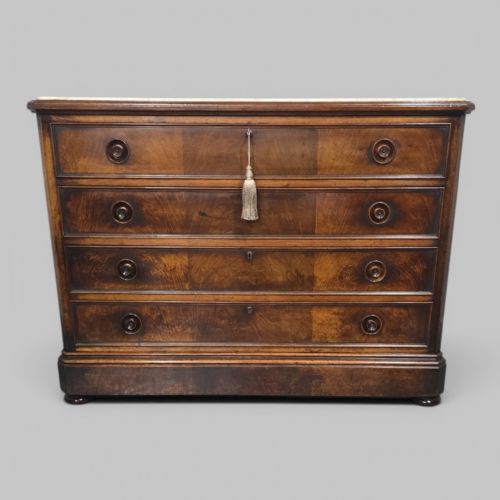
A vintage french walnut commode brings substantial presence to a room, offering deep drawers and a fitted marble top.
Vintage French Walnut Commode
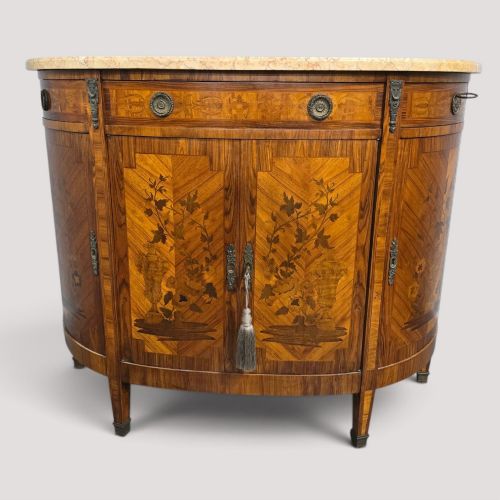
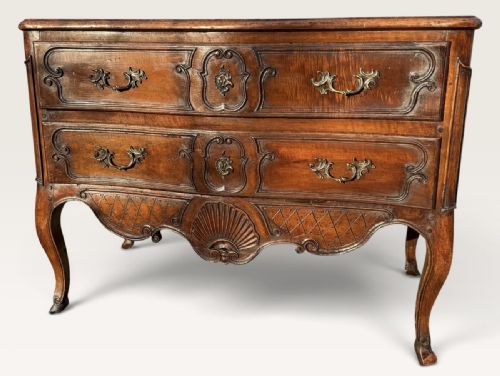
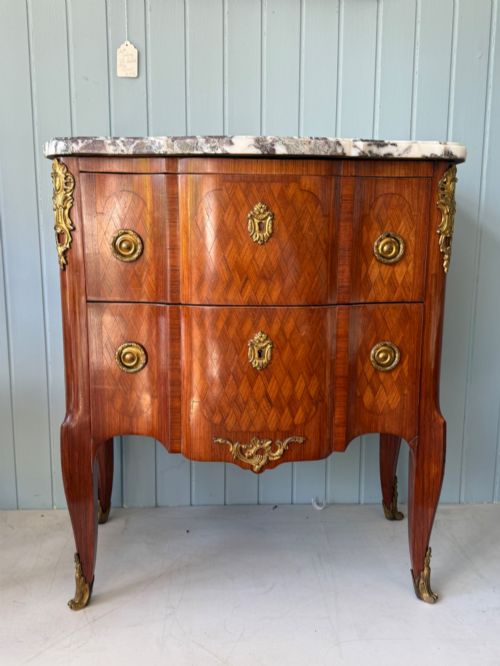
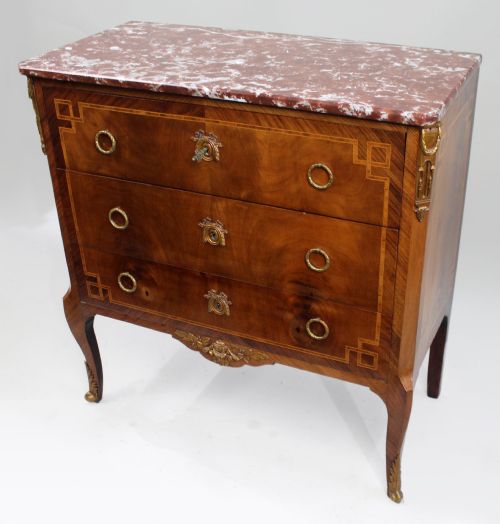
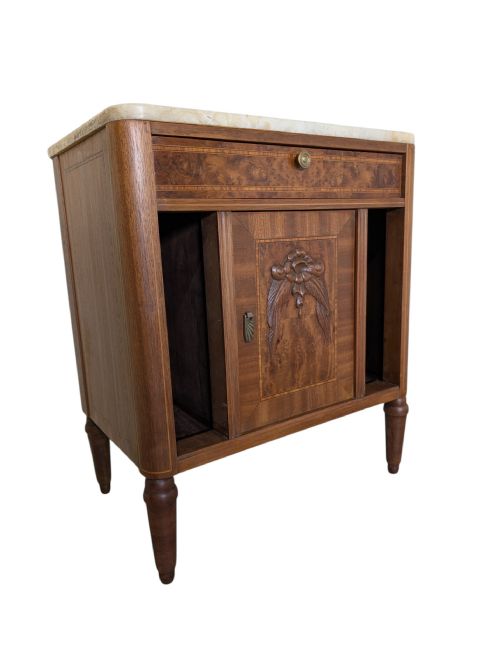
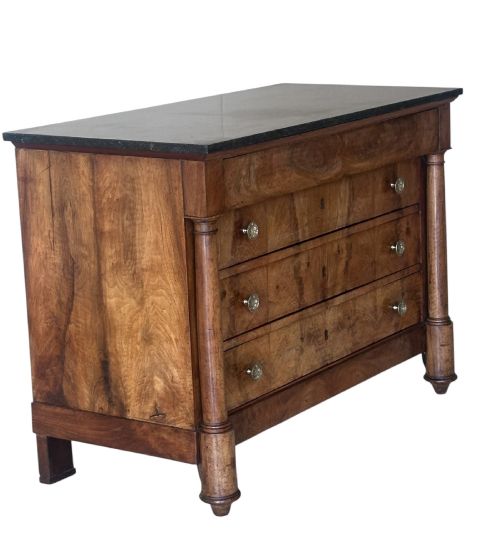
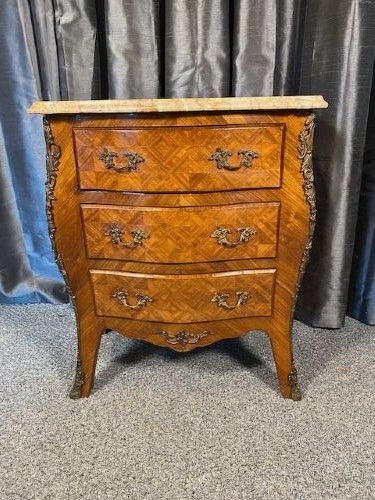
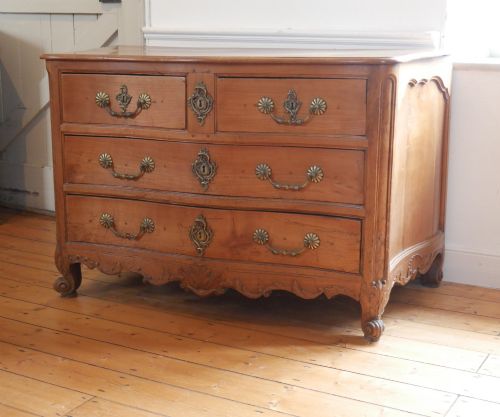
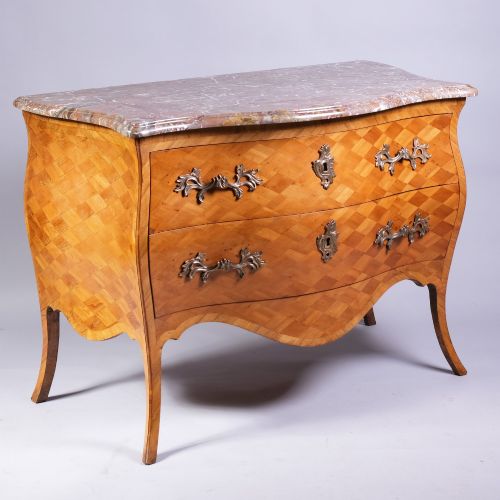
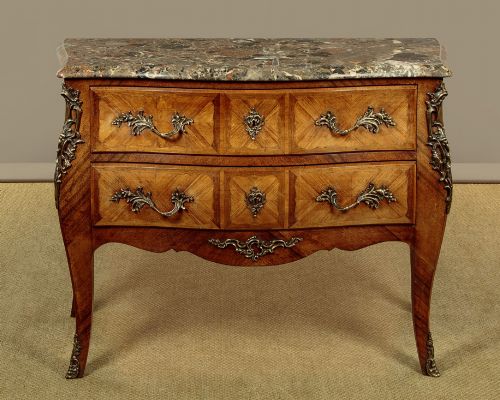
A vintage french walnut commode is a low chest of drawers designed for domestic storage, often topped with heavy stone and finished with decorative veneers. The forms range from strict rectangular carcases to swelling serpentine and bombe shapes built across multiple centuries.
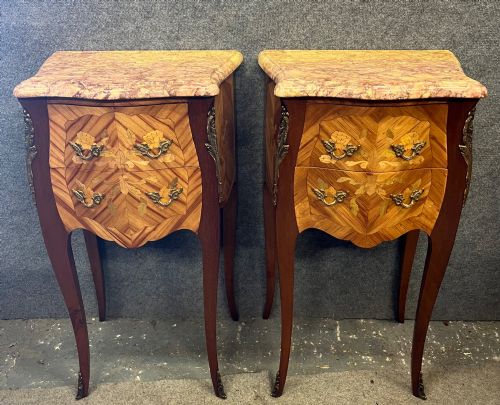
Buyers meet examples spanning from the eighteenth century through various revival periods into the early twentieth century. These include both grand salon pieces and smaller bedside cabinets or lamp tables suited for intimate spaces.
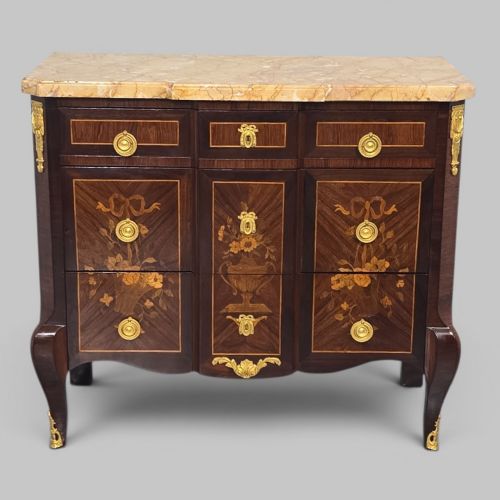
The regional variations draw on distinct design idioms, including Louis XV, Louis Philippe, and Louis XVI styles. Walnut remains the unifying timber, frequently paired with contrasting marquetry work and polished stone surfaces.
How they were made
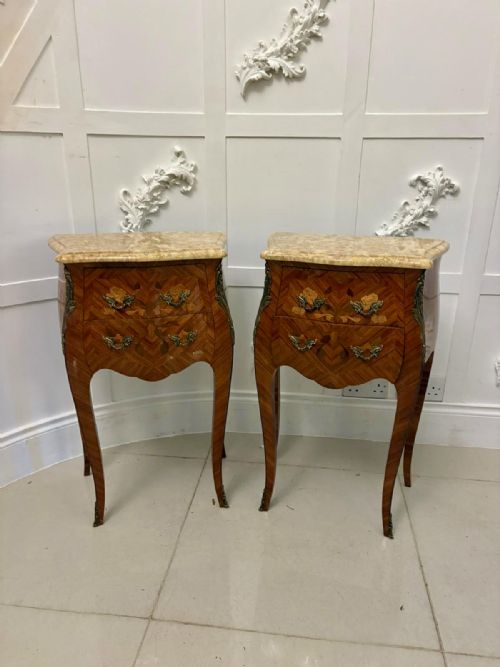
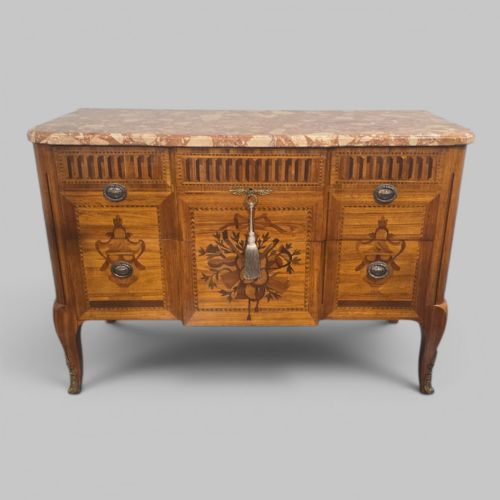
Cabinet makers constructed the primary carcases using solid walnut and secondary timbers, applying fine veneers and burr walnut sections across the drawer fronts and sides. Floral marquetry details introduce contrasting woods into the surface designs.
Heavy marble tops in grey or other shades rest directly upon the wooden frames, matched with cast brass and ormolu mounts fitted to handles, key escutcheons, and feet.
Several bedside cabinets arrive in matching pairs, ready to supervise opposite sides of the chamber.
What varies in quality
The sophistication of the marquetry and the crispness of the bronze or brass mounts distinguish standard production from finer workshops. Hand-cut veneers and complex curved serpentine forms demand advanced carpentry skills.
The integrity of the timber and the original match of the marble top influence the overall standing of an individual commode.
The Vintage French Walnut Commode Glossary
- Bombe
- A bulging, convex shape swelling outward on the front and sides of the commode. This profile requires specialised joinery to shape the timber accurately.
- Marquetry
- Decorative patterns formed by fitting small pieces of veneer into the carcase surface. Floral designs and geometric motifs appear frequently.
- Ormolu
- Gilded bronze used for decorative mounts, handles, and sabots. These cast elements accent the corners and drawer fronts.
- Serpentine
- A wave-like front contour curving outward in the centre and inward at the sides. This outline defines many eighteenth and nineteenth-century examples.
- Scagliola
- A composite material made from plaster, glue, and pigments to imitate marble. It provides durable decorative surfaces on specific tops.
Vintage French Walnut Commode: Frequently Asked Questions
How do I clean a marble top?
Wipe the surface regularly with a soft cloth dampened in warm water and mild soap. Avoid acidic cleaners or vinegar, which etch polished stone.
Dry the marble thoroughly afterwards to prevent water spots and maintain the natural lustre of the stone.
What rooms suit a commode?
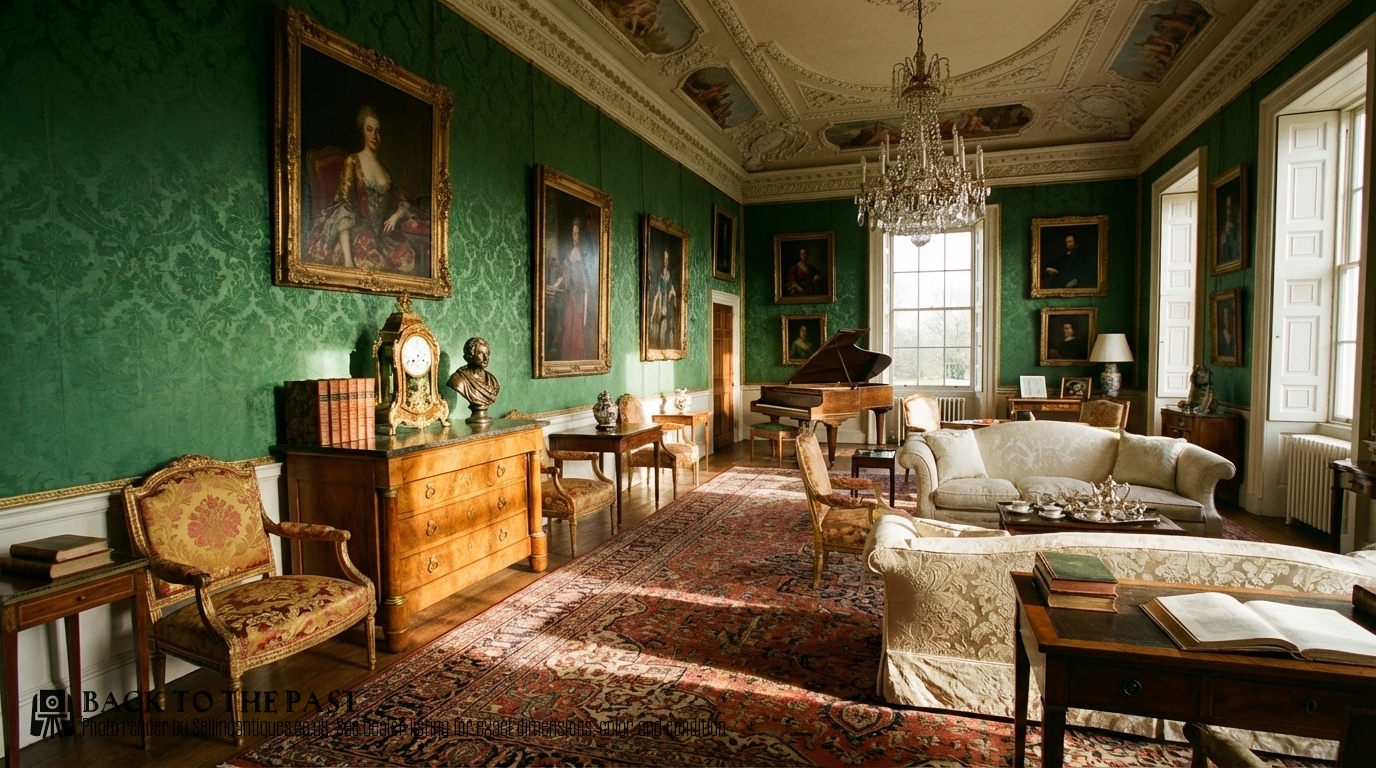
These low chests fit well in bedrooms as primary storage units or living rooms serving as sideboards. Smaller bedside versions work beside low bed frames.
The finished backs and polished sides on certain pieces allow placement away from walls.
How are different periods told apart?
Eighteenth-century pieces display hand-cut dovetails and structural wear consistent with early domestic use. Revival models from the nineteenth and twentieth centuries adopt historic Louis styles with machine-sawn elements.
Examining the internal drawer construction reveals the working methods of the period.
Can these hold heavy items?
The solid walnut frames and heavy timber drawer construction provide strong structural support for everyday items. The thick stone tops distribute weight evenly across the carcase.
Drawer runners built into the interior frame keep the drawers stable during daily use.