
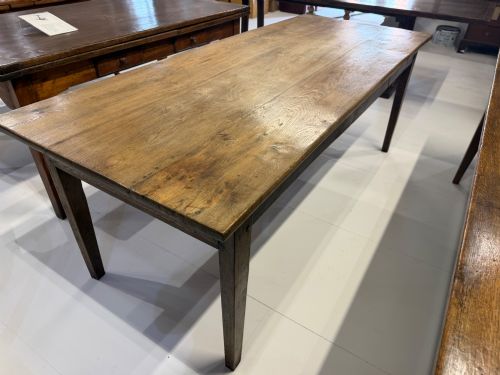
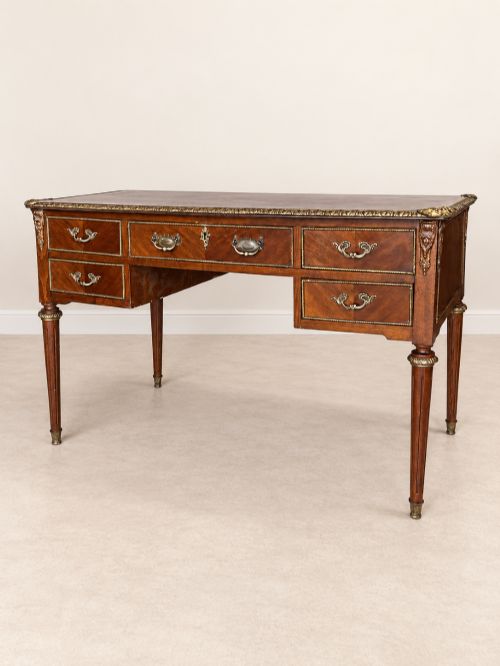


Vintage French Table Desk
A vintage french table desk offers compact writing surfaces grounded in periods from the nineteenth century to art deco classicism.
Vintage French Table Desk
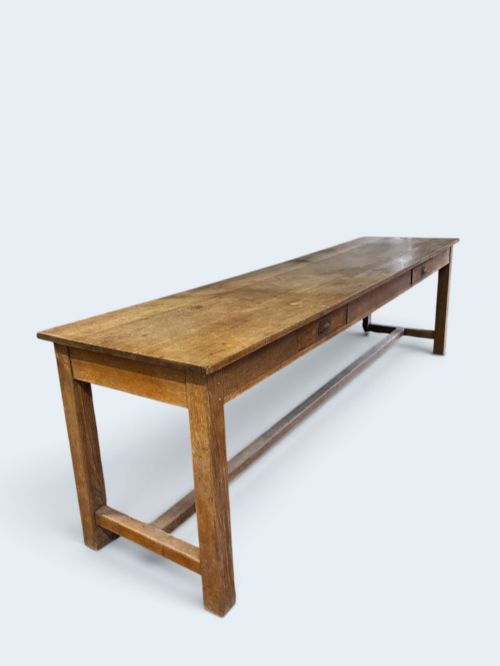
A vintage french table desk brings domestic utility and continental flair together, appearing as freestanding centre tables, bureau plat forms, and writing tables. These pieces span the nineteenth century into the twentieth, drawing on Louis XV, Louis XVI, and Art Deco design vocabularies.
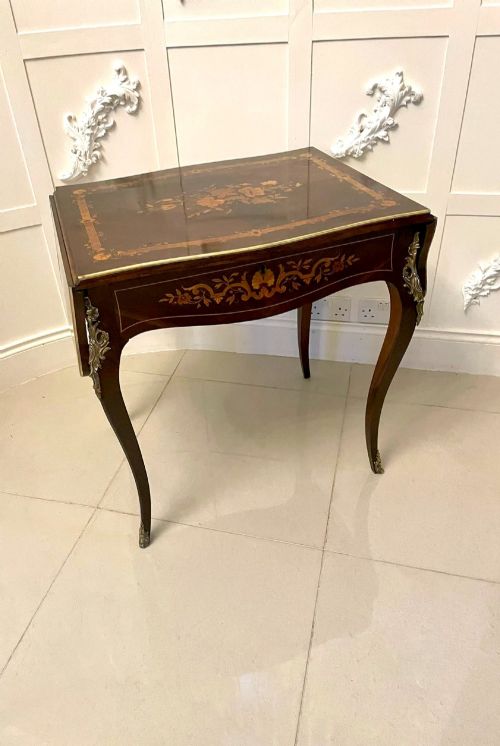
Buyers encounter walnut, mahogany, and satinwood foundations, often enhanced by marquetry inlay or painted finishes with suede inserts. Forms range from petite writing desks to larger bureau plat models equipped with drawers and cabriole legs.
Construction and materials
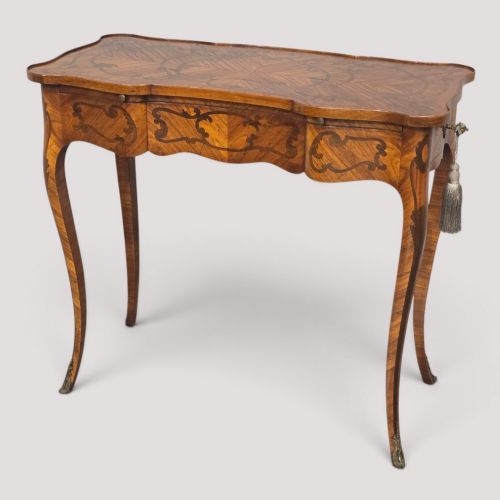
Cabinetmakers utilised hardwoods such as walnut, oak, and mahogany as carcasses for these desks, frequently applying delicate rosewood or satinwood veneer in geometric or floral marquetry patterns. Ormolu mounts, gilt bronze trims, and brass details provide structural accent and edge protection.
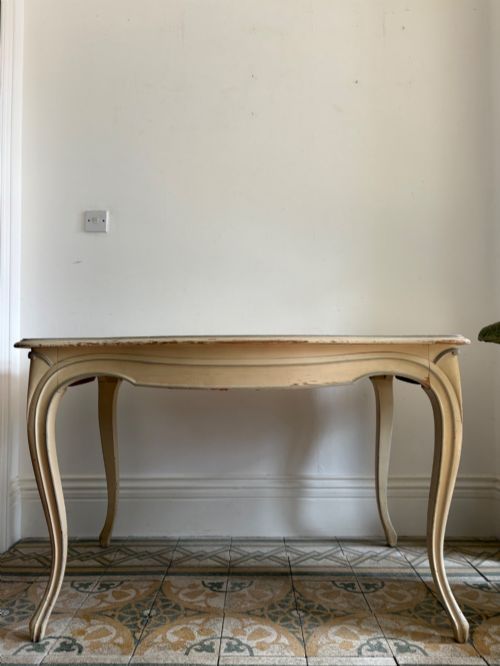
Surfaces often incorporate inset materials like leather or suede to create suitable writing planes, while structural elements rely on traditional joinery and curved cabriole legs. Painted finishes with applied metal or brass hardware appear across later twentieth-century iterations.
Listings span periods from the Victorian era and nineteenth century through to Art Deco production around nineteen thirty.
Judging quality in continental writing furniture
The refinement of the wood marquetry and the crispness of the cast ormolu mounts set finer examples apart from simpler utilitarian pieces. Hand-cut veneers and precise inlay demonstrate superior cabinetmaking skill.
Proportion and the integrity of the original surface finish dictate the standing of a desk. Original bronze mounts and patinated leather or suede inserts retain historical weight compared to later replacements.
CH Jeanselme and Co·R Varnier·Walker and Hall·R Lalique·Eileen Grey
The Vintage French Table Desk Glossary
- Bureau Plat
- A freestanding writing desk with drawers, typically finished on all sides to allow placement in the middle of a room. This form became popular in France during the eighteenth century and persisted in later revivals.
- Ormolu
- Gilded bronze used for decorative mounts and hardware on furniture and clocks. The technique involves applying a mercury and gold amalgam to bronze.
- Marquetry
- Decorative veneer work arranged in pictorial or geometric patterns using various coloured woods. Craftsmen cut thin slices of wood and fit them together precisely.
- Cabriole Leg
- A furniture leg that curves outward at the knee and tapers inward at the ankle, ending in a pad or foot. This line defines much of French Rococo and Louis XV revival design.
- Parquetry
- Geometric wood inlay forming patterns such as cubes or chequers across a table top or desk surface. It differs from marquetry by using strictly geometric arrangements.
Vintage French Table Desk: Frequently Asked Questions
Where should I place a vintage french table desk?
These desks suit studies, bedrooms, or living spaces where a compact surface is required. Freestanding models look particularly striking when positioned away from walls.
Ensure adequate light reaches the writing surface, and avoid placing antique wood near direct heat sources or strong sunlight.
How do I clean an antique wood desk surface?
Dust regularly with a soft, dry cloth to prevent accumulation in carved details and marquetry crevices. Avoid modern chemical polishes that can degrade historical finishes.
Feed dry wood periodically with appropriate wax or polish suited to antique furniture to maintain the lustre of walnut and mahogany.
What is the difference between a bureau plat and a standard desk?
A bureau plat is finished on all sides so it can stand in the middle of a room rather than against a wall. Standard desks often feature plain backs intended for wall placement.
Bureau plat designs frequently incorporate ornate ormolu mounts and leather writing inserts reflective of formal French aesthetics.
How can I date my french writing table?
Examine the timber species, construction joinery, and decorative style such as Art Deco geometric lines or Rococo revival curves. Maker marks and hardware styles also offer chronological clues.
Compare the primary materials and decorative motifs against documented periods spanning the nineteenth and early twentieth centuries.