
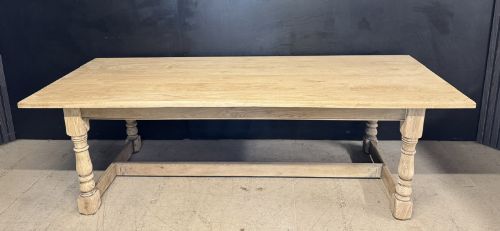
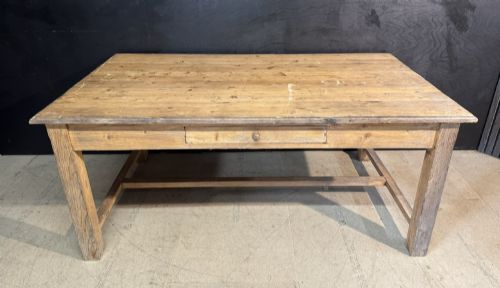
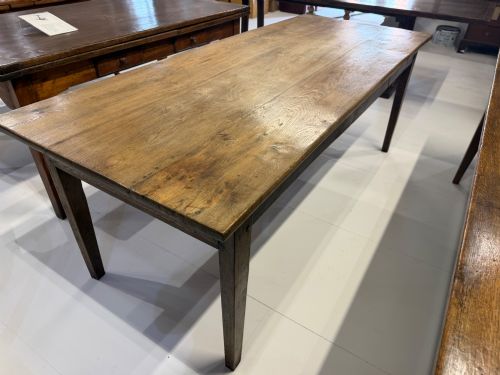
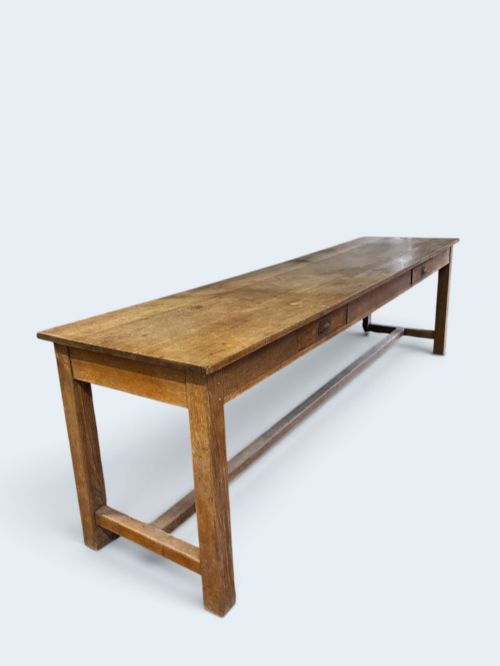
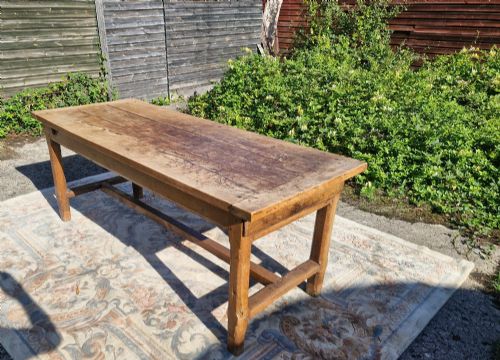
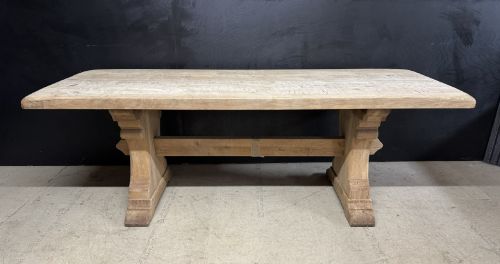
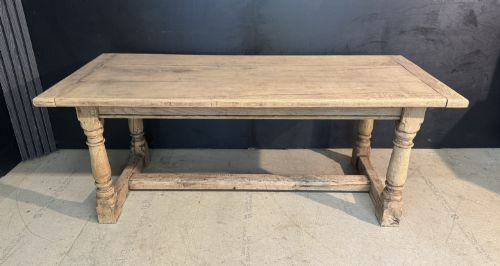
Vintage French Refectory Table
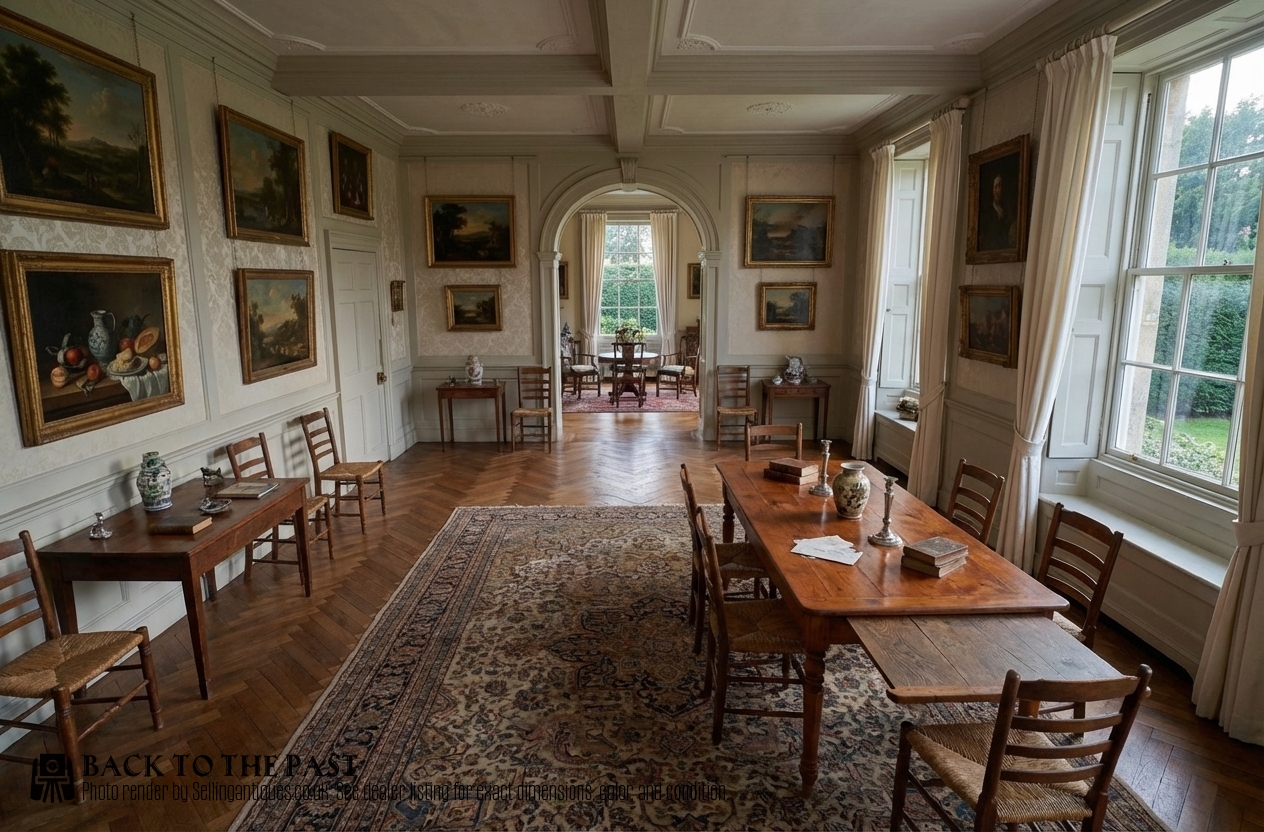
A vintage french refectory table anchors a room with sturdy proportions and hard-wearing timber built for daily communal dining.
Vintage French Refectory Table
A vintage french refectory table brings together centuries of provincial dining tradition and robust construction. Buyers seeking this search phrase encounter substantial wooden surfaces designed originally for communal meals in farmhouses, chateaux, and village kitchens. The inventory leans heavily toward nineteenth-century examples and pieces from the early decades of the twentieth century.
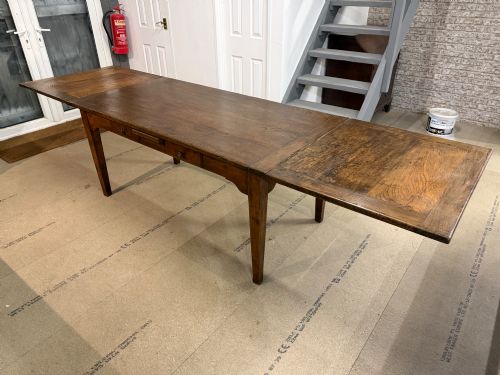
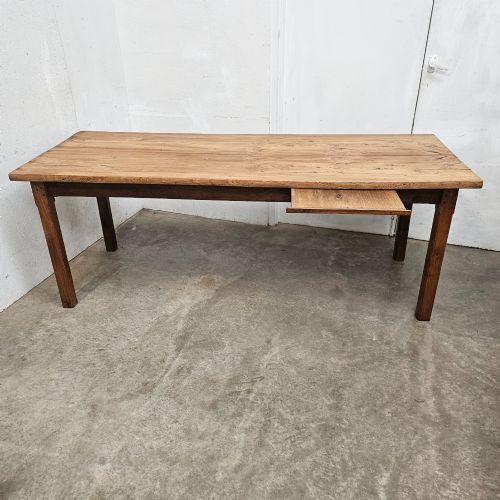
Most items on display take the form of large dining tables or serving tables, occasionally featuring extension mechanisms like draw leaves or sliding boards. The aesthetic embraces rustic farmhouse and French provincial styles, prioritizing scale and utility. These boards served as the literal centre of domestic life, handling everything from food preparation to family gatherings.
Origins trace across regional French workshops where local artisans adapted designs to suit rural interiors. The results include heavy double extending formats alongside simpler single-board tops. Selecting one of these pieces means bringing home a functional antique carrying distinct marks of domestic history.
How they were made
Makers relied on solid hardwoods such as oak, cherrywood, fruitwood, and chestnut, paired frequently with pine for supporting elements or secondary structures. Carpenters joined heavy timber tops to sturdy underframes using traditional joinery designed to withstand heavy daily use. Iron hardware appears on specific mechanisms like extending leaves and drawers, providing mechanical strength where wood alone falls short.
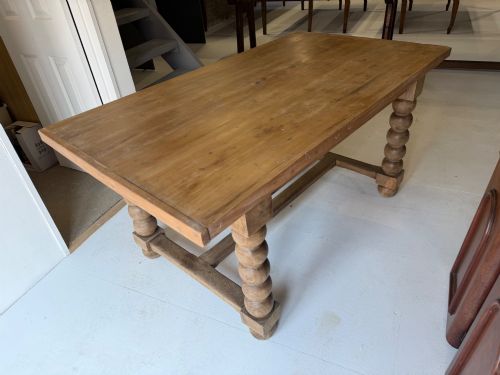
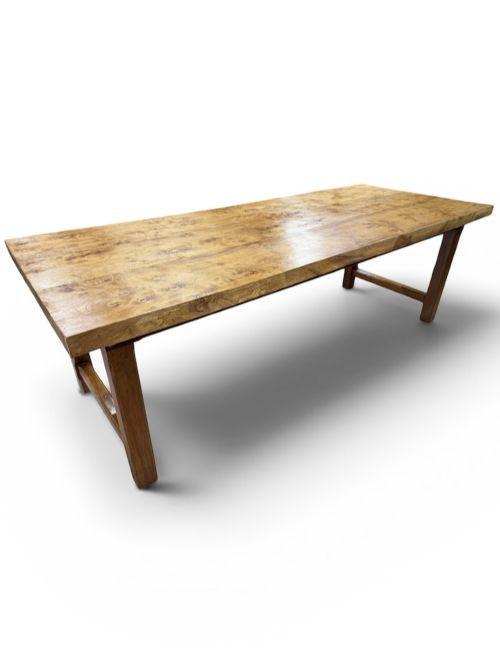
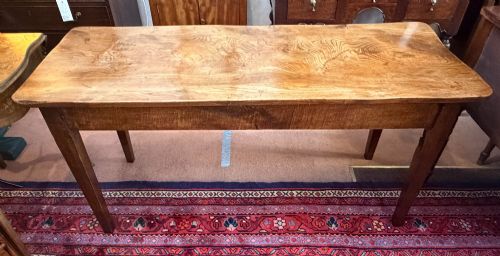
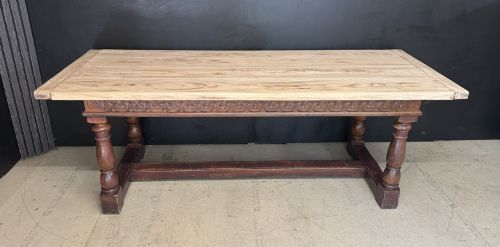
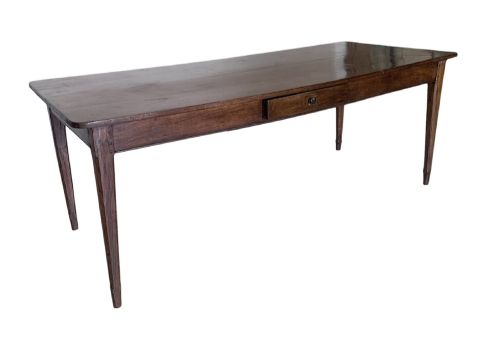
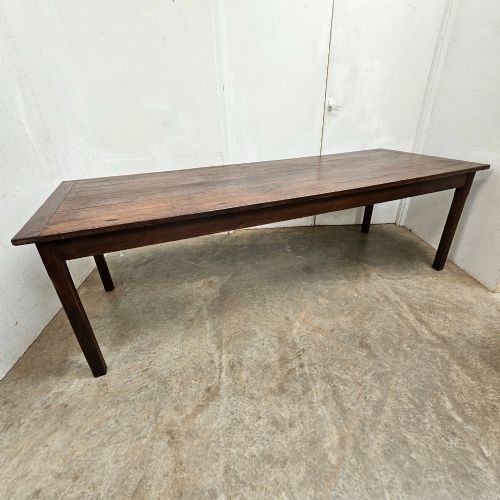
Surface treatments vary from untreated natural timber to bleached finishes that lighten the appearance of dense oak or pine. Many surfaces show the natural grain and two-board construction methods typical of regional workshops. Artisans shaped legs with tapered, bobbin, cabriolet, or barrel turnings depending on the period and regional style.
Listings feature oak, pine, fruitwood, chestnut, and cherrywood, spanning the nineteenth century and early twentieth century up to the 1920s.
What varies in quality
Quality rests upon the selection of timber and the integrity of the original construction. Superior examples utilise dense, well-figured oak, cherry, or fruitwood for the top boards, showing minimal warping across wide spans. The joinery between the legs and apron determines the physical stability of the table during everyday use.
Proportion and execution of detail separate standard utility furniture from finer provincial commissions. Tables featuring integrated drawers, sliding bread boards, or complex leg turnings demonstrate greater craftsmanship by the original carpenter. The character of the wood surface, whether left in a mellowed natural state or deliberately bleached, dictates visual success in a modern interior.
The Vintage French Refectory Table Glossary
- Refectory table
- A long, narrow dining table originally built for monastic dining halls and later adopted in domestic provincial settings. These pieces prioritize length and sturdy undercarriages to seat large households.
- Draw leaf table
- An extending table featuring two hidden leaves stored beneath the main top that pull out to lengthen the surface. This mechanism allows the table to expand for guests without removing the central board.
- Bleached oak
- Oak timber treated to remove its dark original stain, resulting in a pale, matte finish. This finish is popular for softening the heavy visual weight of nineteenth-century furniture.
- Fruitwood
- Timber harvested from fruit-bearing trees such as pear, apple, or cherry, known for a warm tone and fine grain. Cabinetmakers favored these woods for provincial French tables due to their smooth texture.
- Bread board
- A pull-out wooden board mounted beneath the top edge, historically used for slicing bread or expanding prep space. It slides neatly away when not in use.
Vintage French Refectory Table: Frequently Asked Questions
How do I care for a vintage wooden table?
Maintain the timber by dusting regularly with a dry cloth and avoiding harsh chemical polishes that strip natural oils. Treat spills promptly to prevent moisture rings from penetrating the aged wood surface.
Keep the table away from direct heat sources and strong sunlight to prevent the timber from drying out or splitting. Applying a gentle beeswax periodically helps nourish the grain and protects the finish.
Were these tables used in kitchens?
Many examples served as the primary work surface for food preparation in large provincial kitchens before fitted cabinetry existed. They handled heavy domestic tasks ranging from kneading dough to butchery and general meal assembly.
Their robust construction made them ideal for the rigorous demands of daily rural life. Today, they transition seamlessly into modern dining rooms while retaining their utilitarian heritage.
How can I tell the period of a table?
Examine the construction methods, tool marks on the underside, and the type of timber used in the frame. Nineteenth-century examples often feature hand-sawn boards and traditional pegged joinery rather than modern metal screws.
Leg styles also offer strong chronological clues, shifting from simple tapered shapes to elaborate cabriolet or bobbin turnings depending on the decade. Comparing the wear patterns around the edge of the top provides further context regarding age.
Will these tables fit in modern dining rooms?
Their generous proportions require careful measurement of your dining space to ensure comfortable clearance around all sides. Many pieces offer substantial length, making them ideal for open-plan living areas or large country kitchens.
Pairing a heavy wooden top with diverse seating styles helps integrate the antique into contemporary interiors. The natural warmth of oak, pine, or fruitwood anchors modern design schemes effectively.