
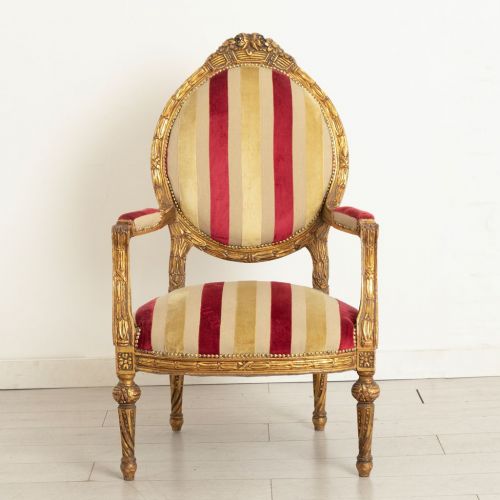
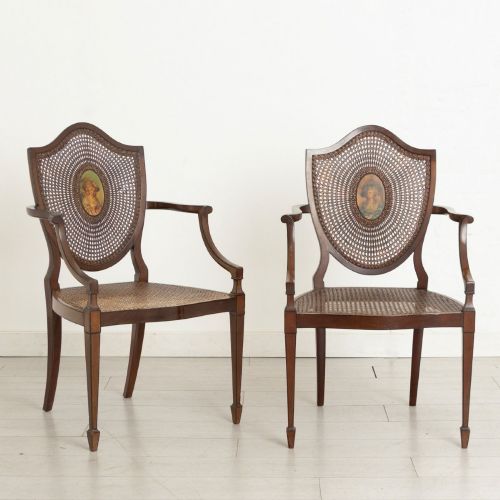


Vintage French Open Armchair
A vintage french open armchair brings classic continental seating into a room, offering exposed wooden frames and upholstered comfort.
Vintage French Open Armchair
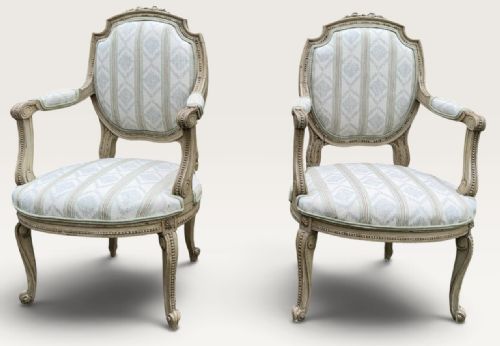
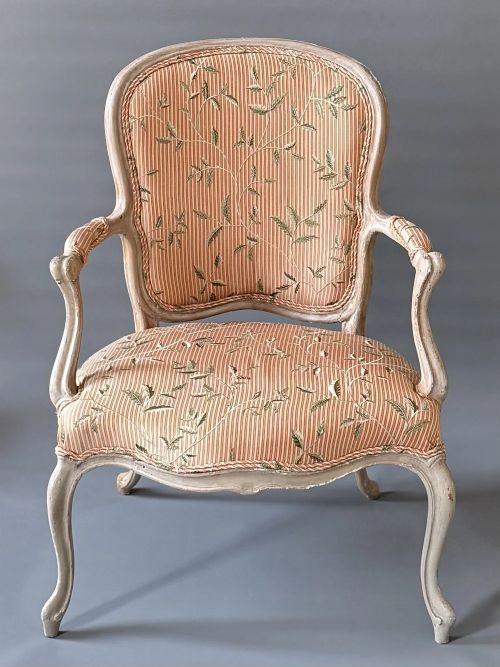
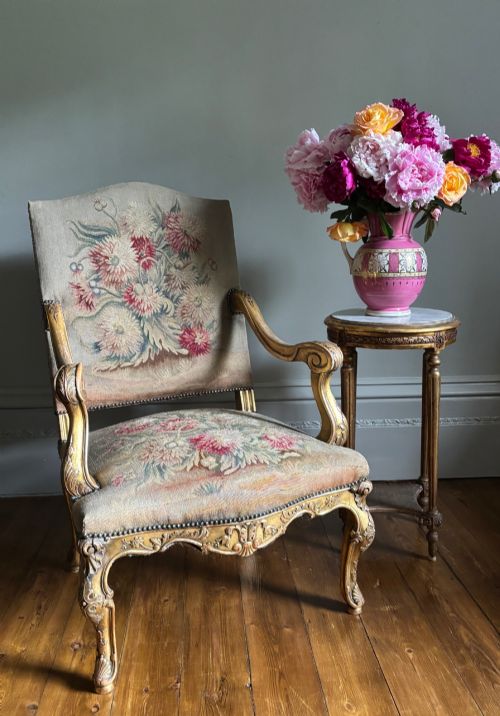
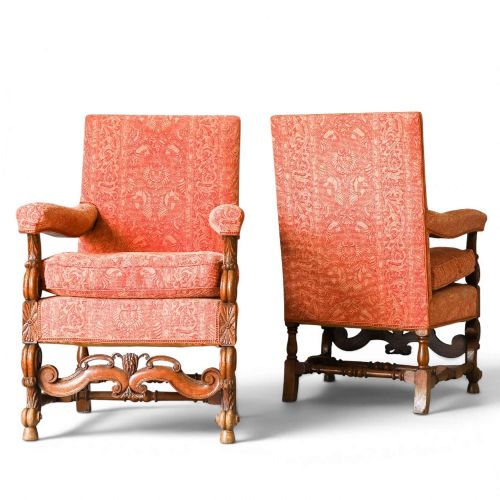
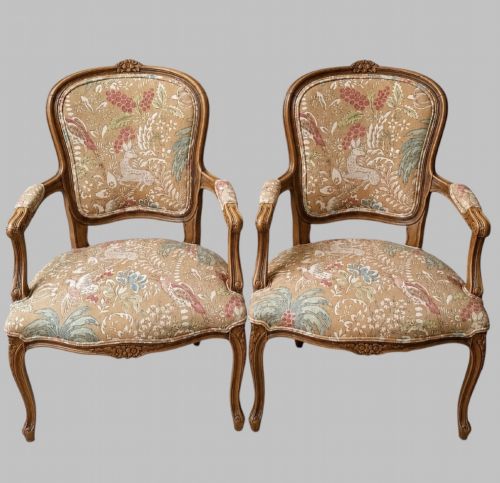
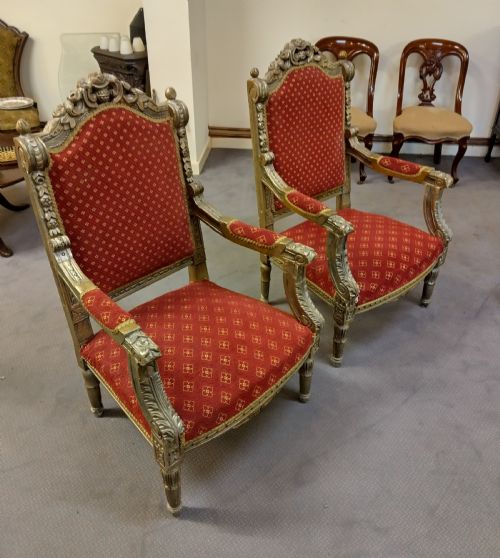
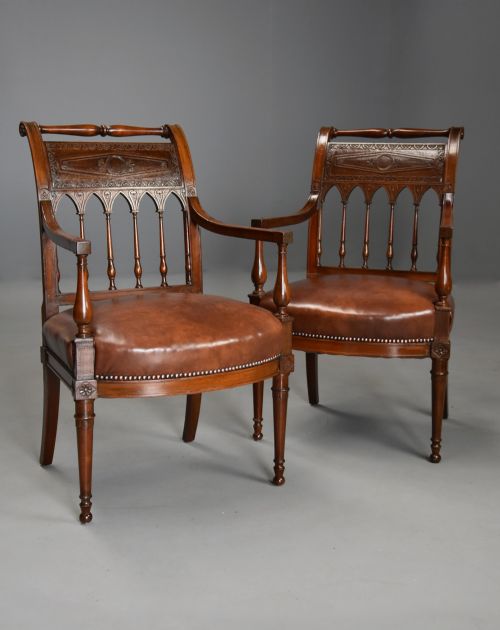
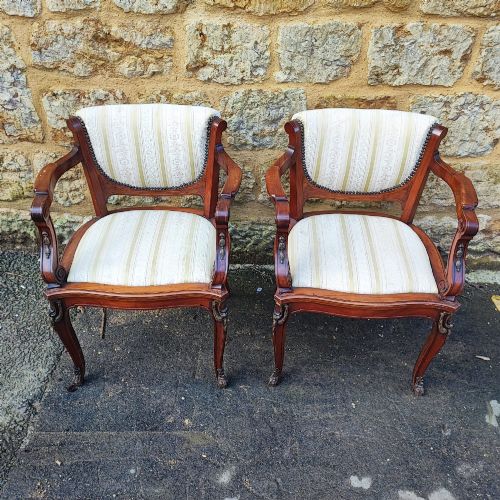
A vintage french open armchair combines exposed wooden frames with upholstered seats and backrests designed for domestic reception rooms. These chairs span periods from the eighteenth century through to the early decades of the twentieth century, reflecting shifting tastes in continental design.
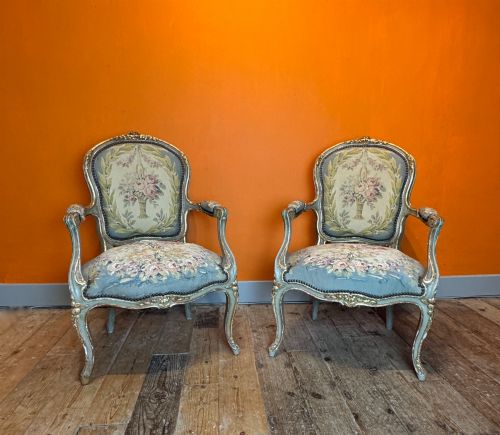
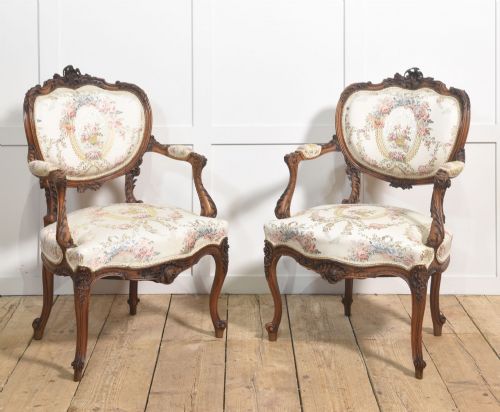
Most examples encountered here belong to the nineteenth century or early twentieth century, drawing heavily on earlier royal styles like Louis XVI, Louis XV, and Regence. Buyers will find both single chairs and matched pairs finished in original paint, giltwood, or polished walnut.
Materials and Construction
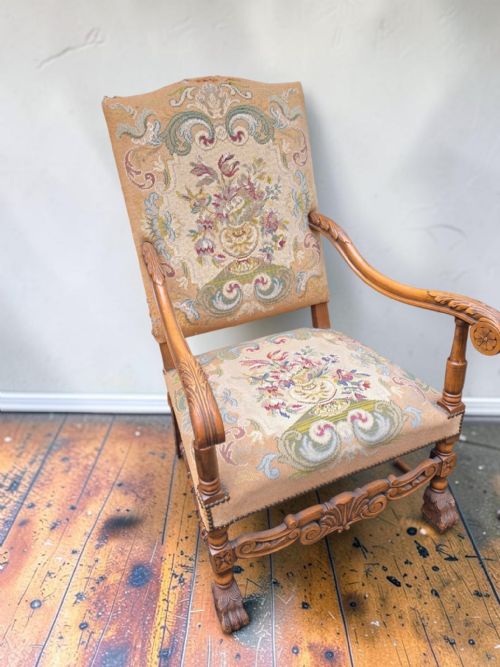
Frames rely predominantly on native hardwoods such as walnut, beech, oak, and occasionally mahogany, selected for their tensile strength in slender carved components. These timbers receive hand-carved decorative motifs ranging from restrained neoclassical fluting to exuberant rococo scrolls and floral crestings.
Surface finishes vary widely, utilising applied giltwood leaf, parcel gilding, or layered historical paint schemes that often show genuine patina. Upholstery methods combine traditional webbing and stuffing with contemporary or period textiles, frequently incorporating needlepoint panels, tapestry, or silk coverings.
Vintage French Open Armchair Retail Price Guide 2026
Typical asking prices for vintage french open armchair among the pieces listed under this phrase on Sellingantiques today, from the lower quarter to the upper quarter. They describe what is for sale here now, not the wider market.
Some frames bear the ghostly impressions of ancient upholstery tacks, recording forgotten layers of silk and velvet.
Assessing Quality and Execution
Quality reveals itself in the crispness and depth of the hand-carving on the wooden frame, where superior examples display sharp botanical details and clean joint lines. Lesser pieces often show softened mouldings or mechanical replication where hand chiselling was omitted.
The integrity of the timber frame and the retention of original surface treatments dictate the standing of a piece within the market. Chairs retaining their original painted or gilded surfaces command greater appreciation than those stripped and refinished in later decades.
The Vintage French Open Armchair Glossary
- Fauteuil
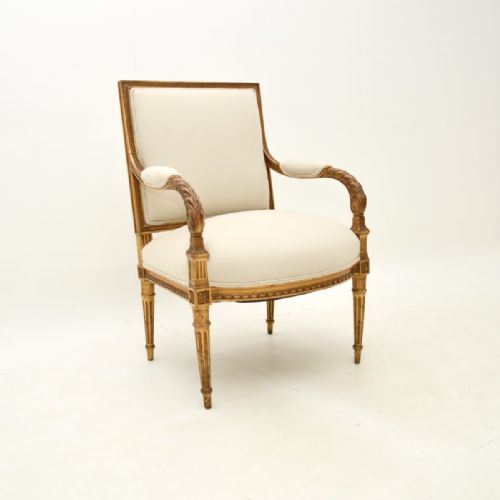
- An open-framed armchair with upholstered seat and back, originating in France during the seventeenth century. These chairs typically feature padded armrests and exposed wooden structural members.
- Giltwood
- Timber treated with a thin layer of gold leaf applied over a prepared gesso ground. This finish appears frequently on formal revival seating.
- Needlepoint
- Embroidery stitched onto an open-weave canvas foundation to create dense decorative panels for seat backs and squab cushions. It provides a tactile, durable textile surface.
- Regence
- A transitional stylistic period bridging the seventeenth and eighteenth centuries in France, characterised by curving asymmetrical lines and early rococo ornamentation. Surviving pieces display bold structural carving.
- Directoire
- A transitional French style spanning the late eighteenth century, marked by a turn towards restrained classical geometry following the revolution. Ornamentation becomes more linear and archaeological.
Vintage French Open Armchair: Frequently Asked Questions
How do I identify a Louis XVI style chair?
Louis XVI style seating relies on straight tapered legs, often fluted, and geometric back frames shaped as rectangles or ovals. These design elements reflect an eighteenth-century shift away from curved rococo forms toward neoclassical symmetry.
Carvings on these frames typically incorporate classical motifs such as acanthus leaves, bead reels, and ribbon twists. Original pieces or later revivals both adhere to this vocabulary of straight lines and architectural proportion.
Can I use these chairs for everyday seating?
These antique frames possess sturdy hardwood construction that accommodates regular domestic use when structurally sound. Professional conservators can reinforce traditional joinery if loose joints develop over time.
Modern users often place them in reading corners, studies, or reception rooms where their decorative presence stands out. Periodic inspection of webbing and internal stuffing ensures the upholstery maintains proper support.
How do I care for original paint and gilt finishes?
Preserving historical surfaces requires dusting with a dry, soft cloth and avoiding chemical polishes that can lift fragile gold leaf or paint layers. Keeping chairs away from direct sunlight and moisture prevents timber shrinkage and flaking finishes.
If cleaning becomes necessary, specialised conservator wax applied sparingly protects the underlying patina without altering the appearance. Gentle handling preserves the delicate surface layers built up over generations.