
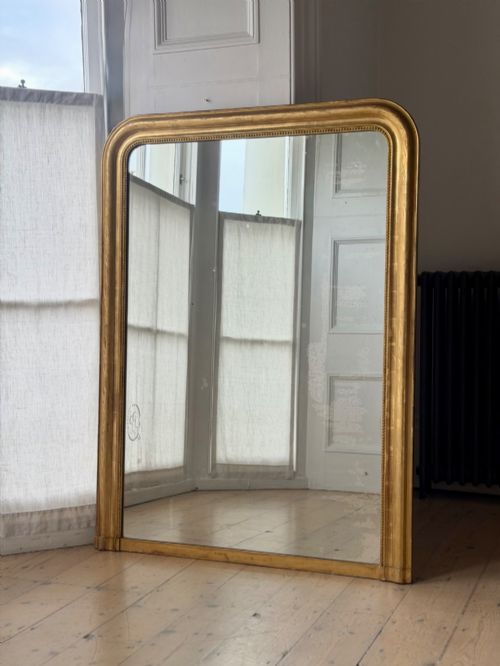
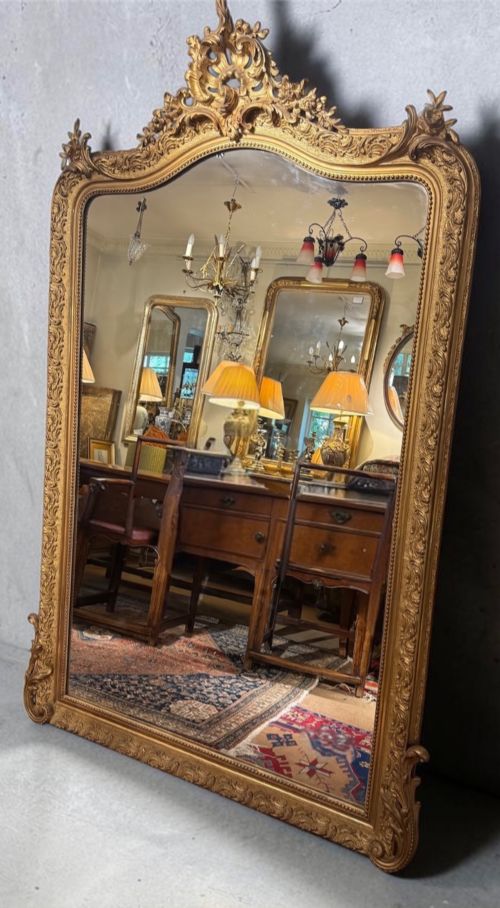
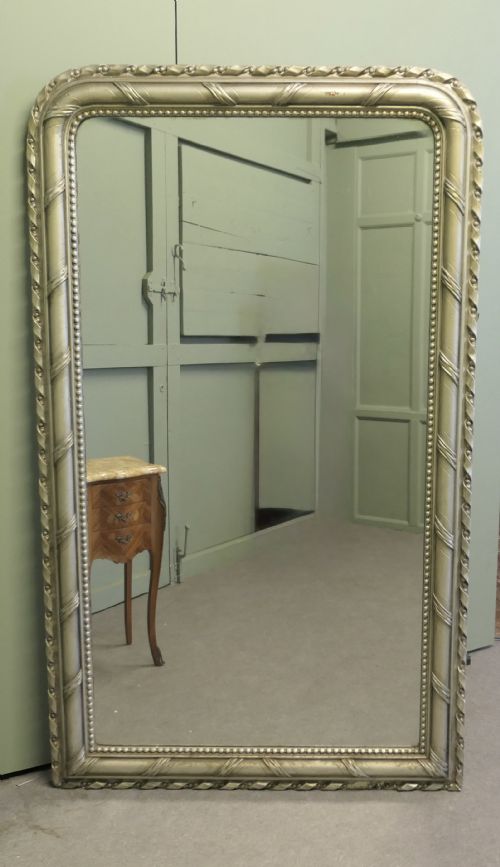


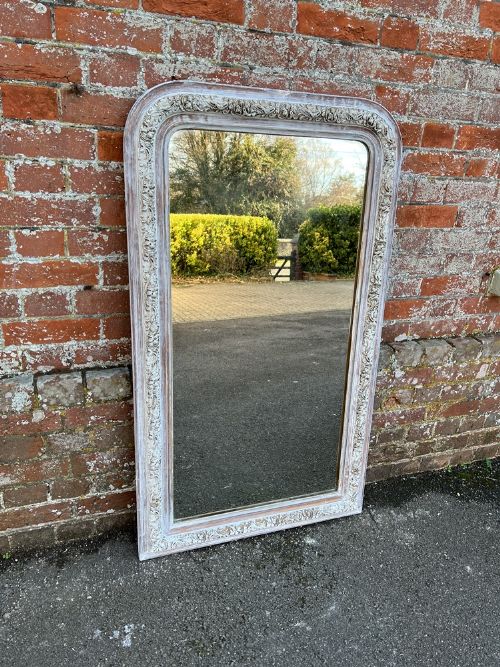

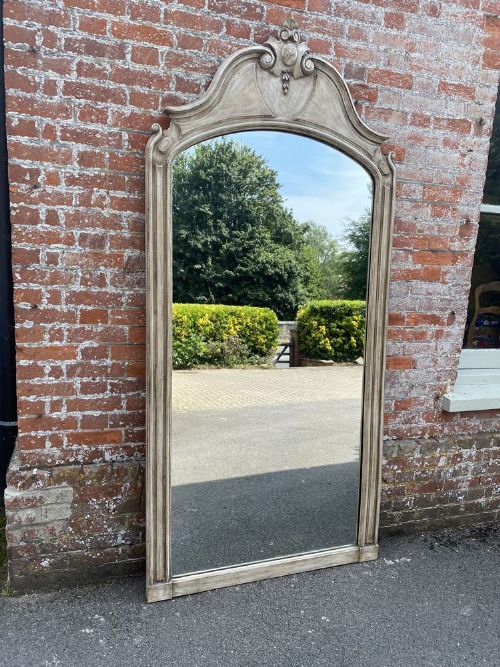

Vintage French Lean Mirror
These vintage french lean mirror examples bring grand proportions and distressed surfaces into a room, offering height and reflection.
Vintage French Lean Mirror
When you search for a vintage french lean mirror, you are looking at substantial wall mirrors and large glass panels designed to stand against a wall rather than hang securely from a single hook. These pieces derive from nineteenth-century origins, spanning the mid-nineteenth century through to early twentieth-century examples.
The forms on this page include large gilt mirrors, Louis Philippe wall mirrors, and arched or shaped top designs. You will also encounter plain bistro mirrors and painted rectangular formats, all built to command attention in a hallway or drawing room.
Origins cluster around nineteenth-century French workshops, encompassing French Rococo Revival, French Provincial, and French Chateau styles. These pieces range from grand gilded showpieces to simpler painted wooden frames with honest patination.
How they were made
Makers constructed these frames using carved wood, gesso, and plaster built over a wooden carcass. Carvers worked directly into the timber to create scrolling motifs, cartouches, and linear mouldings before applying surface finishes.
Finishes applied to the wood and gesso foundation rely on traditional gilding with gold leaf, silver leaf, or layered paint. Artisans built up these surfaces by hand, allowing the underlying gesso to show through where wear occurs naturally over time.
Materials recorded across these listings include glass, gesso, wood, giltwood, silver leaf, paint, carved wood, and plaster.
What varies in quality
The distinction between standard examples and finer pieces lies in the depth and crispness of the hand carving within the wood and gesso. Superior frames exhibit sharply defined ornamentation and well-proportioned architectural framing that holds its structural integrity.
Surface application also separates the grades, where original gilding or layered paint possesses depth and harmonious ageing. Lesser examples show unsympathetic later repainting or heavy-handed repairs that obscure the original hand of the maker.
The Vintage French Lean Mirror Glossary
- Giltwood
- Wood that has been coated with a thin layer of gold leaf or metal powder. This finish is typical of formal nineteenth-century French frames.
- Gesso
- A plaster-like mixture applied to wood frames to create a smooth surface for carving or gilding. It allows for intricate relief decoration.
- Louis Philippe
- A nineteenth-century French style characterised by understated elegance, often featuring rounded top corners and simple frames. It bridges classical restraint and nineteenth-century domestic comfort.
- Silver Leaf
- Thin sheets of hammered silver applied to a prepared surface as an alternative to gold. It tarnishes gracefully over time into a soft grey tone.
Vintage French Lean Mirror: Frequently Asked Questions
How do I safely lean a heavy mirror?
These large mirrors rely on their substantial weight and height to stand stable against a wall. Ensure the floor surface is level and secure the top frame to the wall using hidden brackets for safety.
Position the base slightly out from the skirting board so the glass tilts back securely at a natural angle.
Can these mirrors be hung on a wall?
Most pieces in this category are designed primarily as leaners due to their significant scale and weight. Hanging requires specialist heavy-duty mirror plates and professional wall fixings suited to masonry.
Check the reverse of the frame for original hanging hardware before attempting any wall-mounted installation.
How do I clean the original glass?
Use a soft microfiber cloth and a mild glass cleaner sprayed onto the cloth rather than directly onto the mirror. This prevents moisture from seeping behind the silvering or into the old wooden frame.
Take care around the edges where silver backing often shows age and foxing.
How do I identify a Louis Philippe frame?
Look for the characteristic gently rounded top corners that soften the rectangular geometry of the frame. The mouldings are typically restrained without excessive ornamentation.
These pieces date from the mid-nineteenth century and offer a versatile silhouette for both traditional and modern interiors.