





Vintage French Harbour Painting
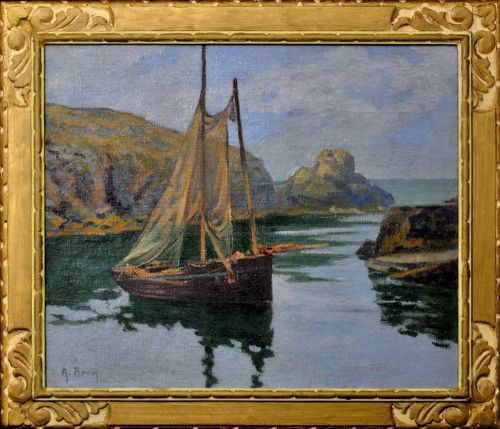
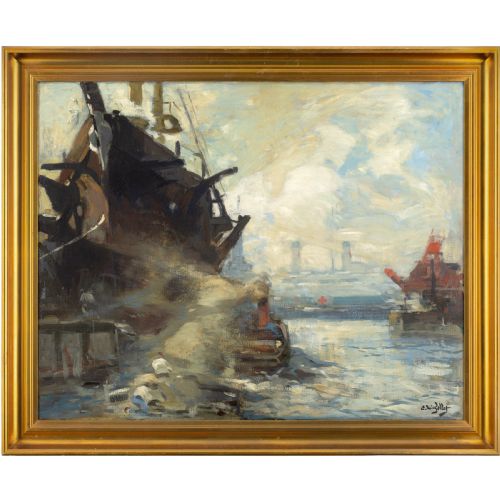
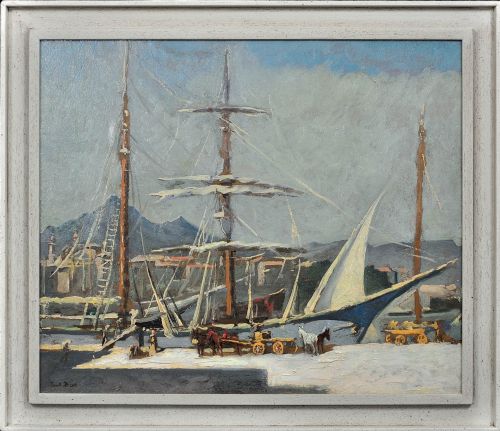
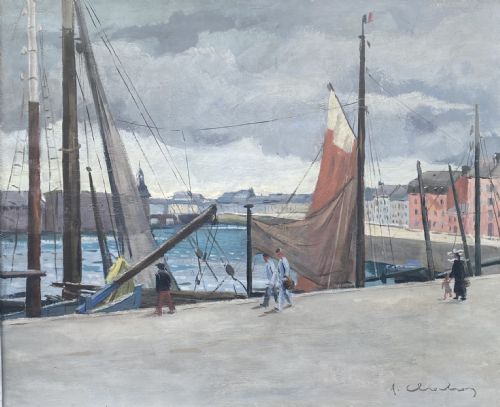
A vintage french harbour painting captures maritime life along the coast, offering buyers a window into bustling quaysides and sunlit coastal towns.
How they were made
Artists creating a vintage french harbour painting utilised oil paint applied to canvas, board, or wood, allowing for rich textures and layered depictions of light on water. Watercolour and pastel on paper also appear frequently, capturing more immediate, fluid impressions of coastal atmospheres.
Works are commonly housed within wood frames that complement the period of creation, protecting the delicate surfaces of canvas and paper. The application of paint ranges from the precise brushwork of nineteenth-century realists to the looser, expressive marks characteristic of post-impressionist and mid-century modern painters.
What varies in quality
The strength of composition and the artist's handling of light and atmosphere distinguish exceptional examples within this genre. Works that capture the specific quality of light in locations like Normandy or the French Riviera demonstrate a higher degree of artistic observation.
The provenance and documentation associated with specific artists or named locations elevate certain pieces above anonymous studies. Historical context, such as a documented wartime setting or association with known artistic groups, adds depth to the individual work.
Vintage French Harbour Painting Retail Price Guide 2026
Typical asking prices for vintage french harbour painting among the pieces listed under this phrase on Sellingantiques today, from the lower quarter to the upper quarter. They describe what is for sale here now, not the wider market.
The inventory includes regional depictions spanning Brittany, Normandy, and the French Riviera.
Eugène-Louis Gillot·Paul Bret·Paul-Jean Anderbouhr·Jean-Baptiste Olive·Raymond Picque·William Lee Hankey·Fred Pailhes·Edward Henry Holder·Owen Bowen·Charles Euphrasie Kuwasseg·Yves Brayer·Augustus William Enness
The Vintage French Harbour Painting Glossary
- Post-Impressionism
- A French art movement developing roughly from the late nineteenth century that extended impressionism while rejecting its limitations. Artists focused on heavier symbolic value and vivid colours in their harbour scenes.
- Oil on Canvas
- A traditional painting medium where pigmented oil is applied to a stretched woven fabric support. This combination allows for rich colour blending and textured brushstrokes.
- Watercolour
- A painting method in which the paints are made of pigments suspended in a water-based solution. It produces transparent washes of colour particularly suited for coastal light effects.
- Pastel
- A dry painting medium in the form of a stick, consisting of powdered pigment and a binder. It offers immediate, vibrant colour application often seen in atmospheric coastal sketches.
- Quayside
- The solid stationary structure alongside a water body where ships load and unload. It forms a central architectural feature in many maritime paintings.
Vintage French Harbour Painting: Frequently Asked Questions
What periods do these paintings cover?
The works span from the nineteenth century through the mid-twentieth century, capturing evolving artistic interpretations of French ports.
Most pieces date from the early decades of the twentieth century up to the 1960s, reflecting various modernist and impressionist movements.
Where do these harbour scenes take place?
The paintings depict locations across the French coastline, including Mediterranean ports in the south and Atlantic harbours in the north.
Specific regional settings frequently include Brittany, Normandy, Marseille, Cannes, and the French Riviera.
What materials are commonly used?
Oil paint on canvas or wood panel is the primary medium found across these historic maritime artworks.
Works on paper, including watercolours and pastels, also appear alongside traditional wood framing.
How should I display a vintage painting?
These framed works suit various interior settings, often serving as focal points in living spaces or studies.
Placement should avoid direct sunlight to preserve the integrity of oil pigments, watercolours, and paper supports over time.