

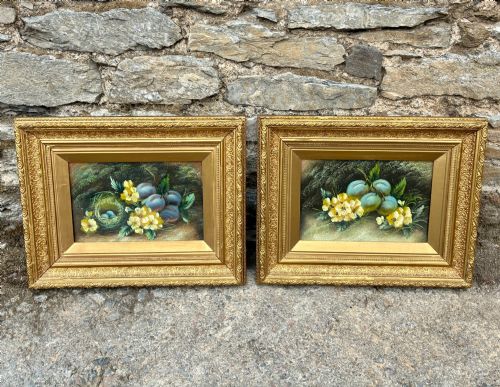
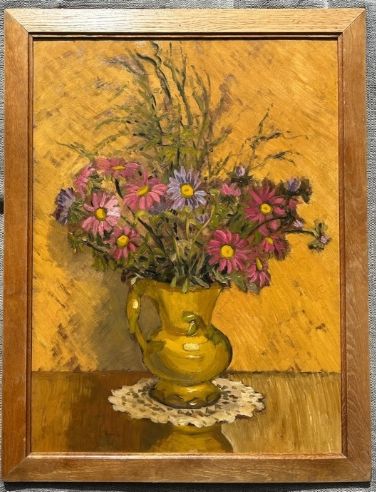
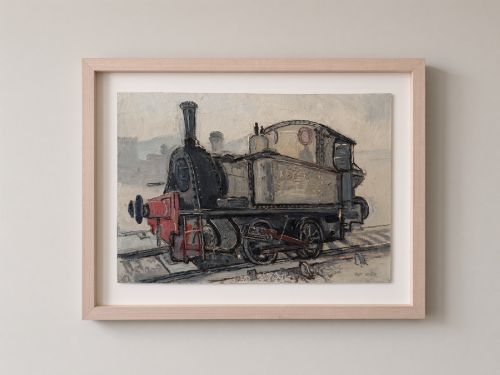
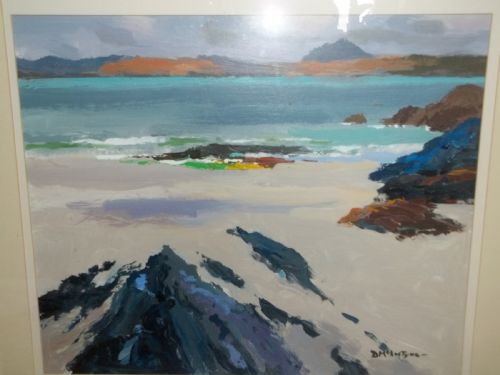
Vintage Framed Oil Board
A vintage framed oil board brings together pigment, rigid support and period timber to anchor a room.
Vintage Framed Oil Board
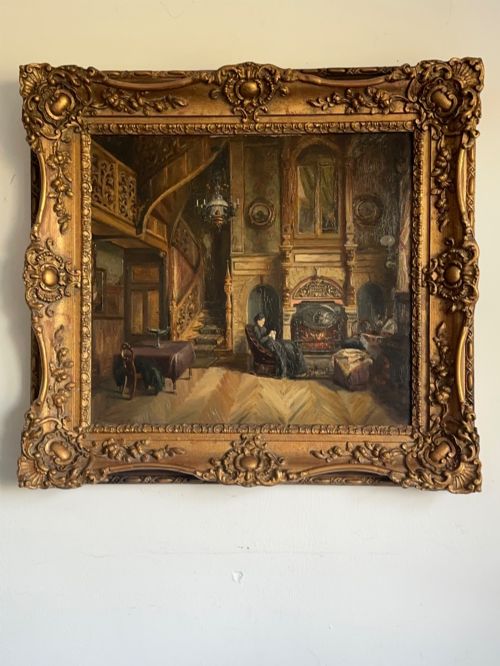
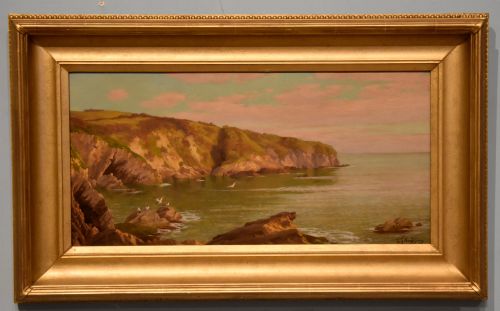
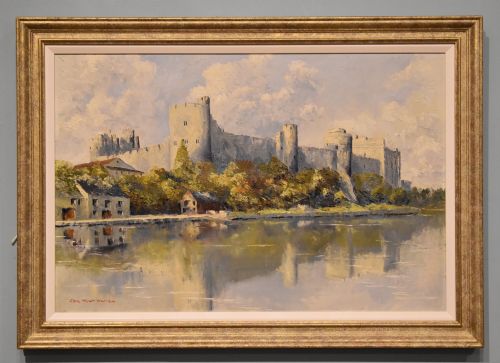
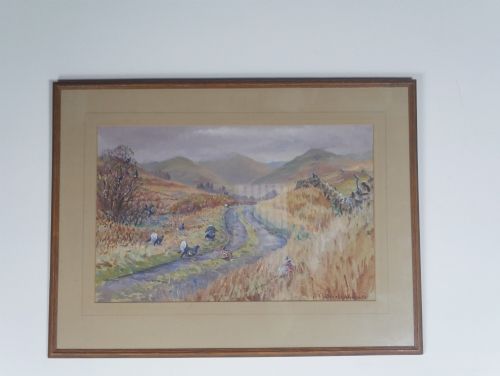
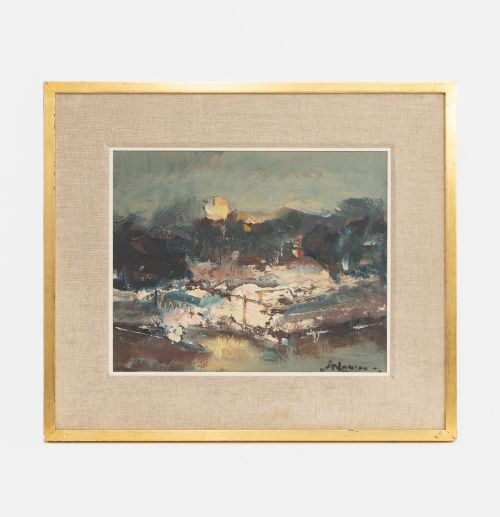
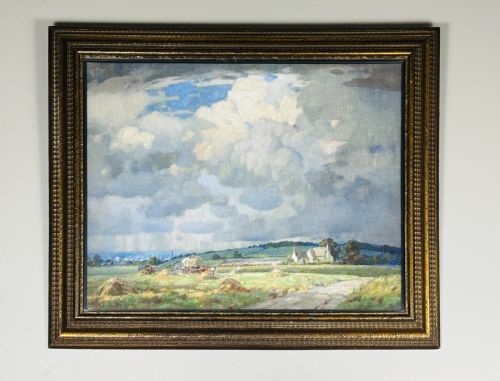
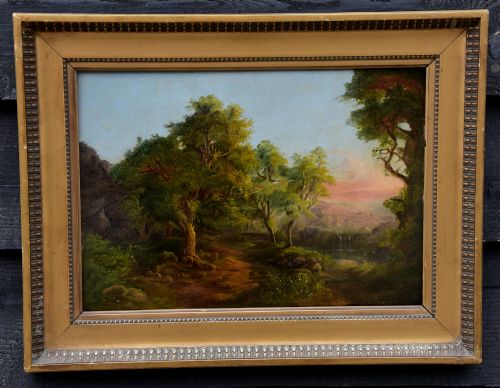
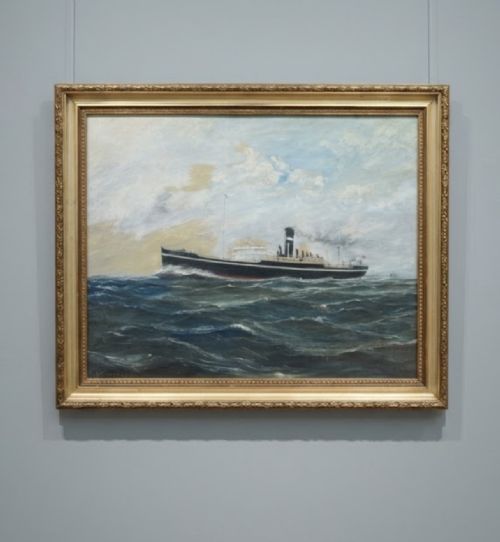
When you search for vintage framed oil board, you encounter painted works executed directly onto stiff panels rather than stretched canvas, enclosed within period wooden or gesso frames. The selection spans the nineteenth century through the mid-twentieth century, encompassing landscape paintings, portraits, seascapes and abstract compositions.
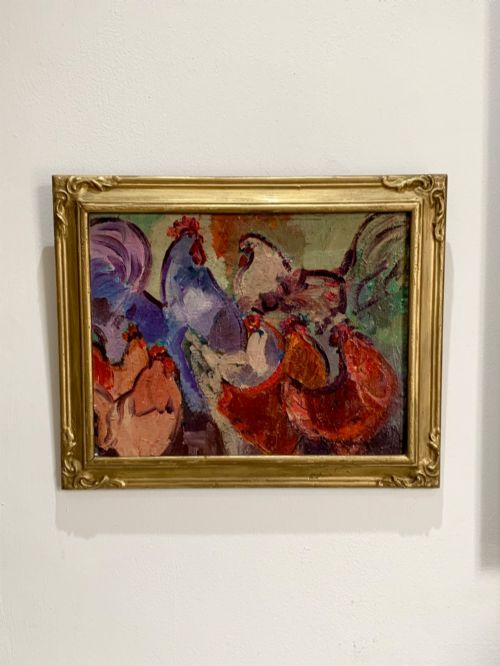
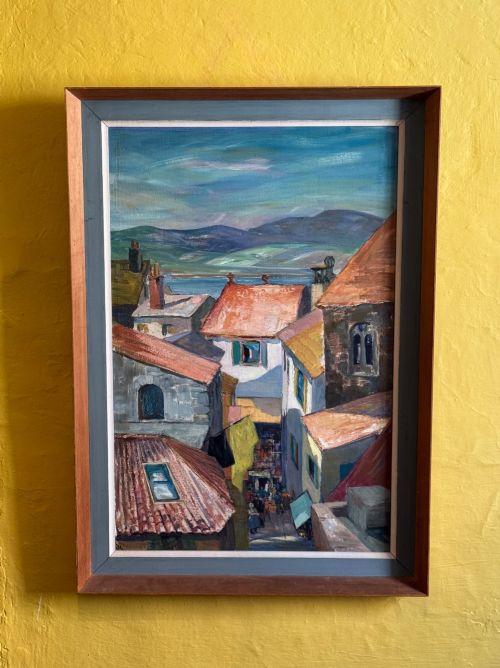
The version you are most likely to meet on this page dates from the mid-twentieth century, often reflecting Mid-Century Modern, Modern British or Post-Impressionist sensibilities. These pieces range from naive folk art depictions to accomplished works by named British and European artists.
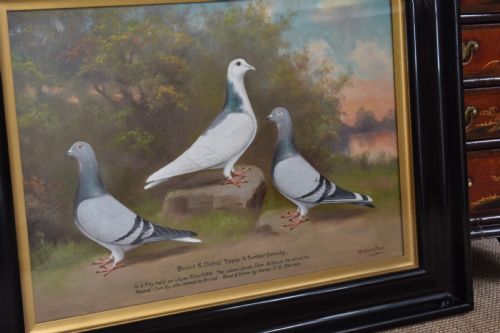
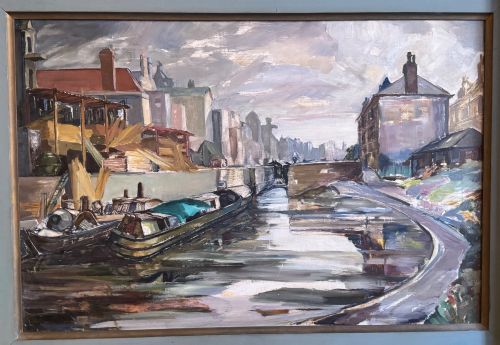
Subjects vary widely, covering industrial scenes, quiet farmyard views, floral still lifes and animal portraits such as dogs and steam locomotives. Each painting retains the character of its original mounting, combining oil paint with wood, board and gilt frames.
Materials and Technique
Artists applied oil paint directly onto rigid supports, utilising wood panels, heavy boards or occasionally canvas later laid onto board to create a stable painting surface. Some compositions employ thick impasto techniques, building up pigment to lend physical depth and texture to the surface.
Frames are constructed from wood, frequently finished with gesso and gilt detailing, designed to complement the palette and period of the artwork within. These surrounds range from simple moulded timber to elaborate nineteenth-century gilt frames.
Vintage Framed Oil Board Retail Price Guide 2026
Typical asking prices for vintage framed oil board among the pieces listed under this phrase on Sellingantiques today, from the lower quarter to the upper quarter. They describe what is for sale here now, not the wider market.
Steam locomotives and beloved terriers share wall space here with serene French seascapes and industrial factory scenes.
Assessing Quality
Quality rests upon the confidence of the brushwork, the handling of light and pigment, and the harmony between the painted composition and its frame. Works displaying assured handling by notable artists stand apart from simpler decorative or naive examples.
The condition and integrity of both the board and the original frame influence the standing of a piece. Original matching frames that complement the era of the painting elevate the overall coherence of the work.
Andrew Beer·Evelyn Harris·Fred Yates·Donald McIntyre·Kershaw Schofield·Charles Houben·Stuart Walton·Lilian Colbourn·Philip Rideout·George Morland·Gabriel Puig Roda·James Fry
The Vintage Framed Oil Board Glossary
- Oil on Board
- A painting technique where oil paint is applied directly to a rigid wooden or composite board rather than woven canvas.
- Impasto
- A technique where paint is laid onto a surface in thick layers, standing proud of the board to create visible texture and relief.
- Gesso
- A plaster-like mixture applied to wood frames to provide a smooth base for subsequent gilding or painting.
- Post-Impressionism
- An art movement extending French Impressionism while rejecting its limitations, favouring bold colours and distinctive brushstrokes.
- Naive Art
- Visual art created by a person without formal training, characterised by a childlike simplicity in perspective and proportion.
Vintage Framed Oil Board: Frequently Asked Questions
What is an oil board painting?
An oil board painting is a work of art created using oil-based paints upon a rigid wooden panel or stiff board rather than stretched fabric.
This method provided artists with a sturdy, portable surface that required less preparation than traditional canvas.
How do I date an oil board?
Dating relies upon stylistic markers, framing techniques, and the type of board or wood used for the support.
Mid-century works often feature distinct modernist palettes, while nineteenth-century pieces typically display heavier gilt frames and traditional realism.
Where should I hang these paintings?
These works suit dining rooms, studies and hallways, where their framed presence adds texture and historical character to a wall.
Position them away from direct sunlight and damp environments to protect the oil pigment and wooden frame.
Are all boards made of wood?
Supports vary across periods, encompassing solid timber panels, manufactured wood boards, and occasionally canvas laid onto a rigid backing.
Each material offers a different degree of rigidity and weight to the finished framed artwork.