

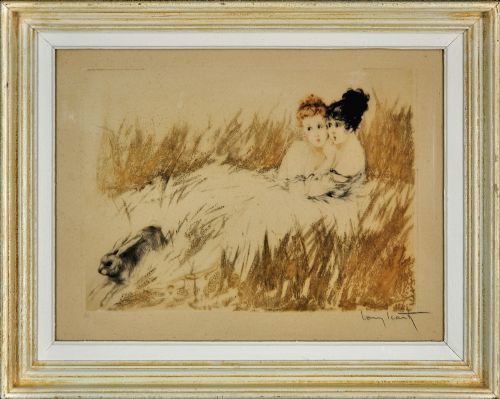
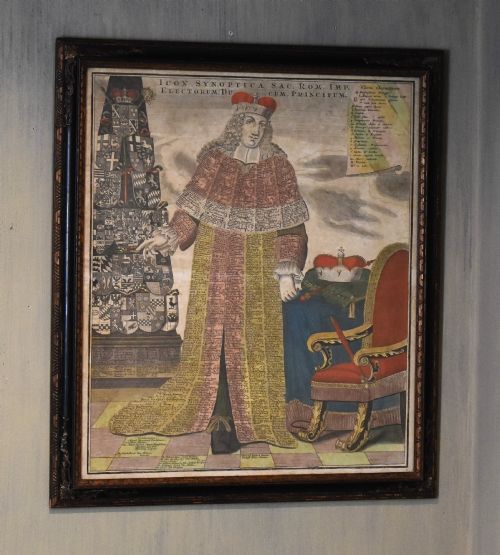


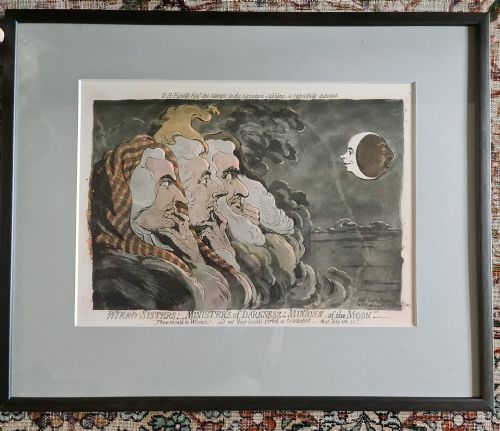


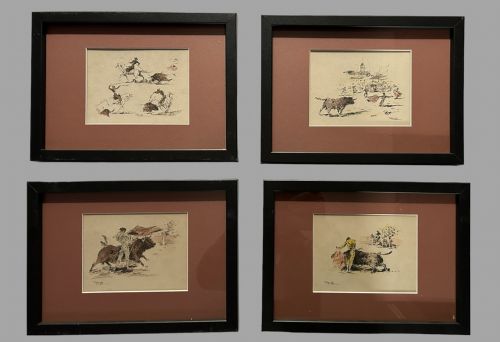


Vintage Framed Coloured Etching
These vintage framed coloured etching pieces bring hand-tinted ink on paper into domestic spaces behind glass and wood.
Vintage Framed Coloured Etching
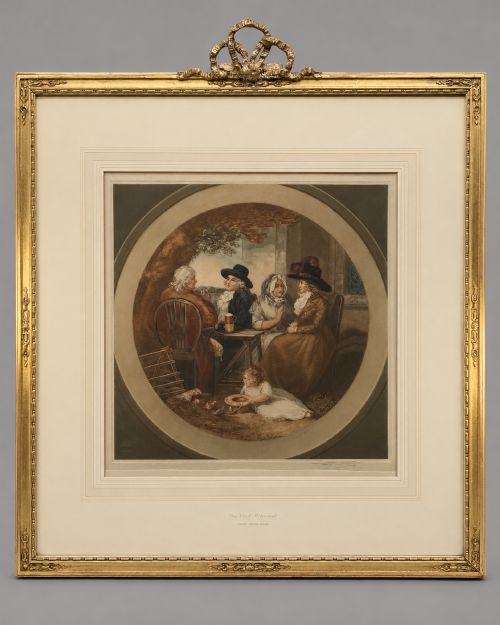
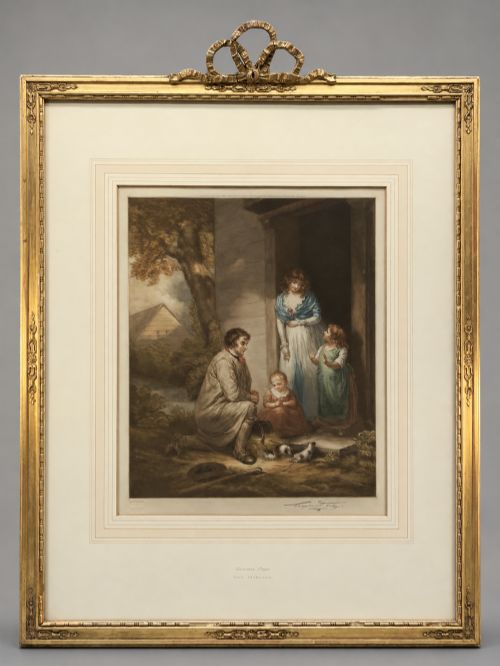
A vintage framed coloured etching presents works on paper secured behind glass in wood, giltwood or gold leaf frames, spanning periods from the eighteenth century to the mid-twentieth century.
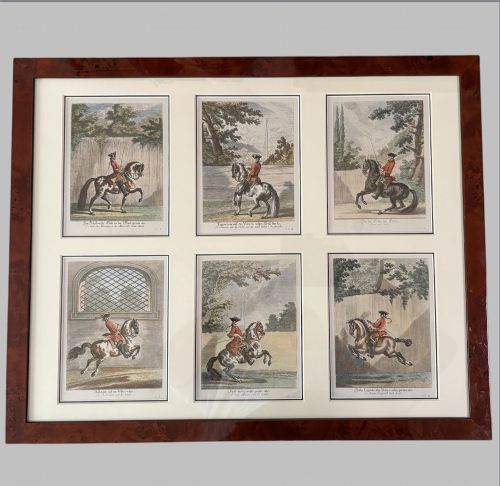
The selections on this page encompass various origins and aesthetics, including Edwardian colour mezzotints, Georgian hand-coloured copper equestrian engravings, and Art Deco works.
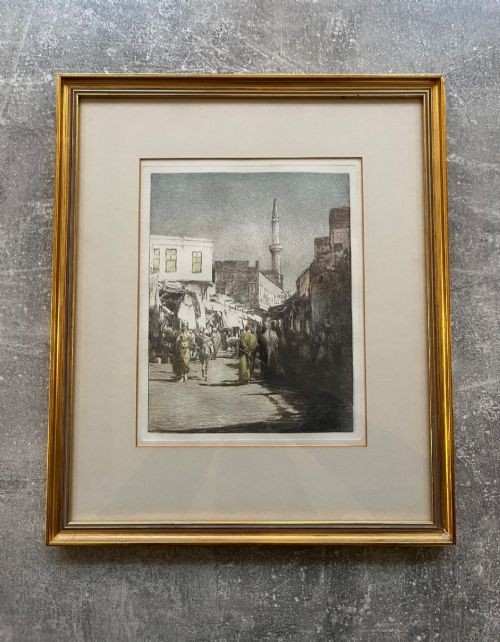
Buyers seeking vintage framed coloured etching examples will encounter subjects ranging from Orientalist street scenes and architectural prints to ornithological studies and sporting prints.
Materials and techniques
Makers applied ink to metal plates using etching and engraving techniques before working pigment by hand onto the printed paper surface with watercolour.
Finished works received protection beneath glass housed within frames constructed from wood, gilt wood, and gold leaf.
Vintage Framed Coloured Etching Retail Price Guide 2026
Typical asking prices for vintage framed coloured etching among the pieces listed under this phrase on Sellingantiques today, from the lower quarter to the upper quarter. They describe what is for sale here now, not the wider market.
Listings feature paper, glass, wood, ink, and gold leaf spanning Georgian, Victorian, Edwardian, and Art Deco styles.
Judging quality in coloured prints
Quality rests in the crispness of the plate impression on the paper and the precision of the hand-applied watercolour tinting.
The integrity of the original framing materials, such as period giltwood and gold leaf mouldings, influences the overall character of the piece.
Eugene James Tily·Mortimer Menpes·Louis Icart·Joaquim Terruella Matilla
The Vintage Framed Coloured Etching Glossary
- Etching
- A printmaking method where acid bites lines into a metal plate to hold ink. The resulting plate produces detailed lines on paper when pressed.
- Mezzotint
- A printmaking process that achieves tone and rich dark areas by roughening the metal plate. It allows for smooth tonal gradations.
- Giltwood
- Wood carved and coated with gold leaf or metallic paint. It provides a bright decorative border for antique artworks.
- Engraving
- A technique where an artist cuts lines directly into a metal plate using a sharp tool. This method produces clean and precise lines.
- Hand coloured
- Pigment applied manually to a printed sheet using watercolour or other media. This step adds individual colour variation to each impression.
Vintage Framed Coloured Etching: Frequently Asked Questions
How are these framed?
These works sit behind glass within wood, gilt wood, or gold leaf frames designed to protect the paper.
Original frames often show period characteristics that complement the age of the print.
Are these prints hand painted?
Many examples feature hand-applied watercolour over the printed ink lines to add selective colour.
This technique was common in Georgian and Victorian production to brighten monochrome plates.
What subjects appear in these works?
The inventory covers diverse subjects including architectural scenes, ornithological studies of birds, and sporting events.
Other works depict Orientalist cityscapes, equestrian subjects, and domestic animal studies.
How do I date an etching?
Dating relies on stylistic clues, paper characteristics, and framing materials associated with specific historical periods.
Reference points span from eighteenth-century copper plates to mid-twentieth-century artist impressions.