
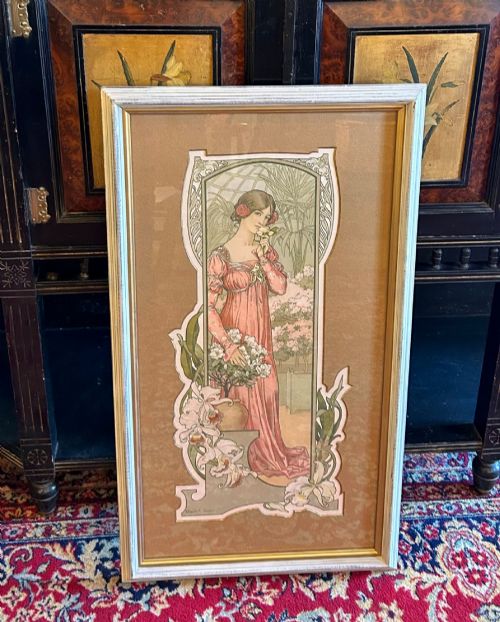
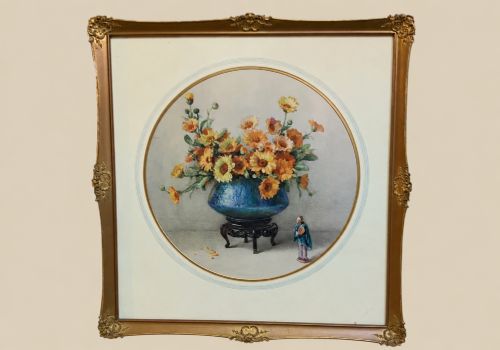
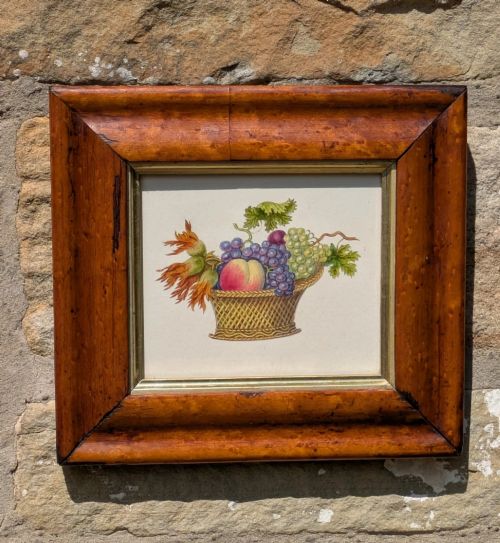
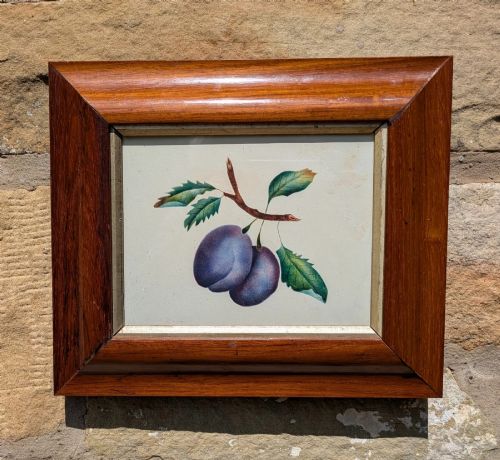
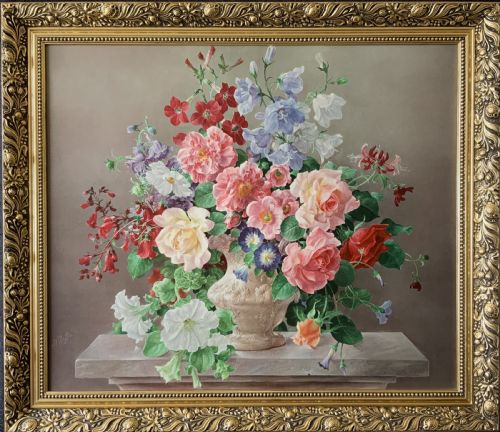
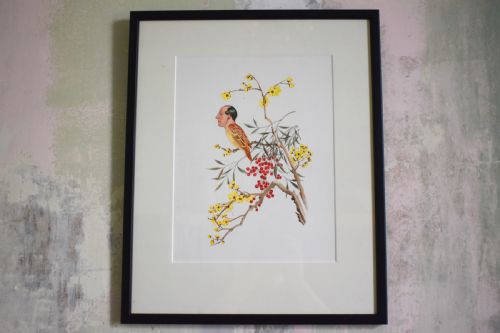
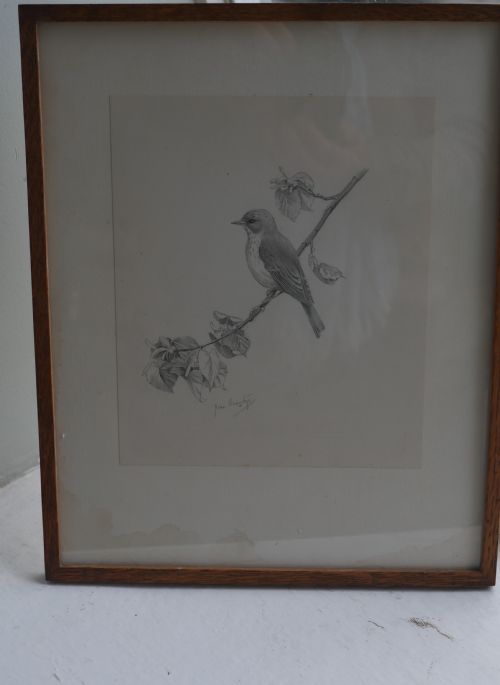


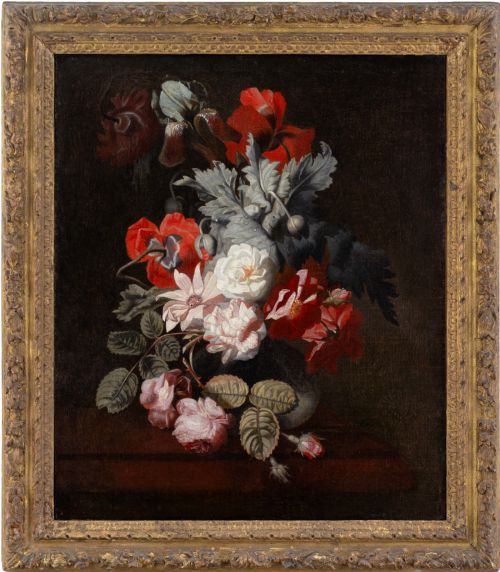


Vintage Framed Botanical Print
A vintage framed botanical print brings natural history and quiet colour into a room through surviving works on paper, canvas and panel.
Vintage Framed Botanical Print
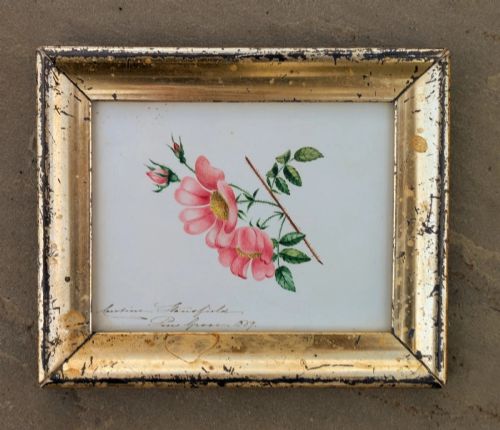
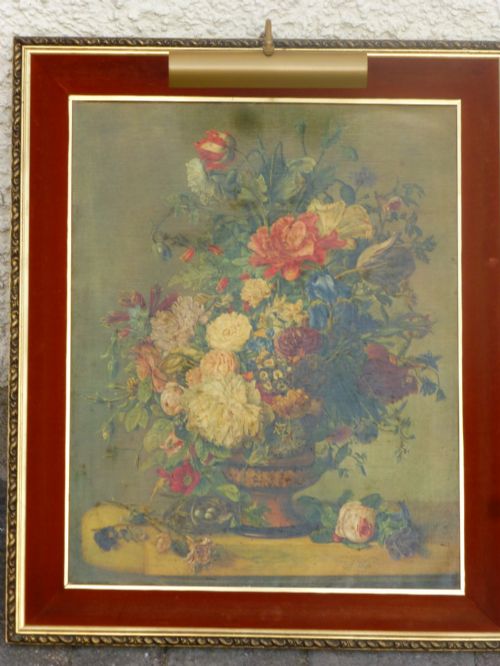
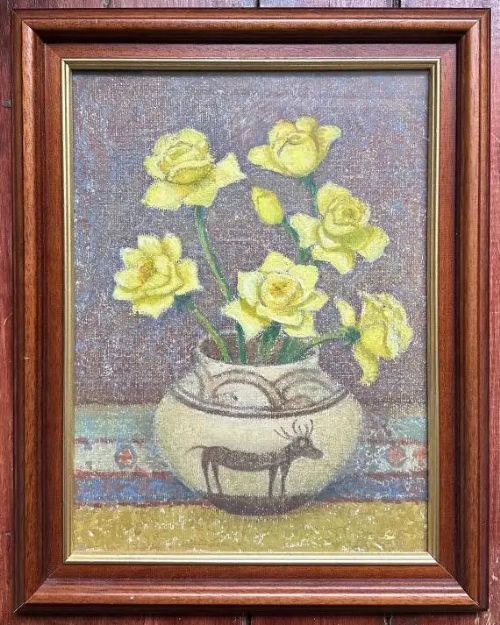
A vintage framed botanical print encompasses hand-coloured engravings, lithographs, watercolours and oils spanning the eighteenth, nineteenth and twentieth centuries. These works record flowers, fruit, garden scenes and natural specimens set within period wood or gilt frames.
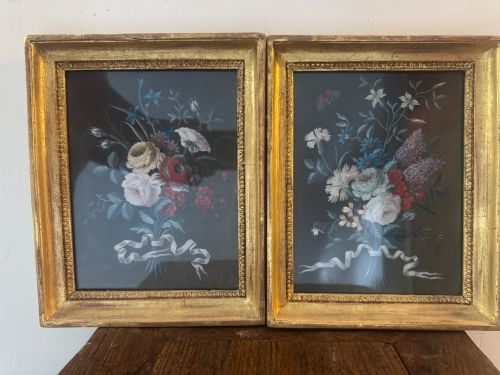
The selections on this page draw from Georgian, Regency and Victorian periods alongside later twentieth-century interpretations. Buyers encounter single sheets, pairs and sets depicting botanical studies, birds, insects and still life arrangements.
How they were made
Makers produced these images using paper, canvas and board as supports for watercolour, gouache, oil, pencil and printed engraving techniques. Many nineteenth-century plates received careful hand-colouring applied over engraved or lithographic lines.
Framing utilised wood, carved pine, gilt wood and rosewood fitted with protective glass to preserve the delicate pigments and paper surfaces over decades and centuries.
The listings span from the eighteenth century through the 1960s, utilising paper, canvas, wood and gilt leaf.
What varies in quality
Quality rests upon the crispness of the original impression, the precision of hand-colouring and the preservation of the paper or canvas support. Examples featuring strong provenance and accomplished brushwork or engraving stand apart from simpler decorative plates.
The enclosure contributes significantly to the overall integrity, with period frames in carved wood, rosewood or gilt leaf offering greater harmony than later replacements.
Elisabeth Sonrel·Anton Weiss·Harold Clayton·Simon Pietersz Verelst·Terence Loudon·Pancrace Bessa·George Edwards·John Curtis·Georg Wolfgang Knorr
The Vintage Framed Botanical Print Glossary
- Lithograph
- A print made by drawing an image on limestone or a metal plate with a greasy substance so that ink adheres only to the drawn areas. This method allowed for accurate reproduction of fine artistic lines.
- Engraving
- A technique where an artist cuts a design into a metal plate with a sharp tool to hold ink for printing. The resulting lines appear exceptionally crisp under magnification.
- Gouache
- An opaque water-based paint that dries to a matte finish and provides dense areas of colour. Artists often combined it with watercolour and pencil in botanical studies.
- Oleograph
- A mechanical print on canvas that simulates an oil painting through textured rollers and layered ink. These emerged in the nineteenth and twentieth centuries as accessible wall art.
Vintage Framed Botanical Print: Frequently Asked Questions
How do I date a framed botanical print?
Dating relies on examining the paper type, printing method, framing materials and any inscribed signatures or publication details on the sheet. Earlier eighteenth-century examples typically feature hand-coloured copperplate engravings on laid paper, while later nineteenth-century pieces often use lithography.
Frame construction and backing materials also offer chronological clues. Old wooden pins, hand-cut glass and period inscriptions help anchor the piece to a specific decade.
Where should I hang these framed prints?
These works suit dining rooms, studies and hallways where their natural subjects complement interior spaces. Grouping pairs or sets creates a balanced display along a staircase or above furniture.
Direct sunlight should be avoided to prevent the fading of watercolours and coloured inks on paper. Placing them away from moisture sources protects both the antique frames and the delicate interior artwork.
Can I remove the print from its frame?
Original period frames often form an integral part of the piece's history and aesthetic value. Opening the frame can expose fragile paper or canvas to damage from handling and environmental changes.
If framing inspection becomes necessary, professionals should handle the seals to maintain the protective environment. Many antique pieces rely on their original backing boards and glass to stay secure.
What is the difference between an engraving and a lithograph?
Engravings involve incising lines into a hard plate, producing sharp, fine strokes that sit slightly depressed in the paper. Lithography relies on chemical repulsion between grease and water on a flat stone or plate surface, yielding softer tonal gradations.
Both techniques served botanical illustration extensively, but close inspection reveals the distinct ink distribution of each process. Engravings show plate marks around the printed image, whereas lithographs do not.