



Vintage Folk Art Chair
These vintage folk art chair pieces bring raw regional character into a room through honest vernacular craftsmanship.
Vintage Folk Art Chair
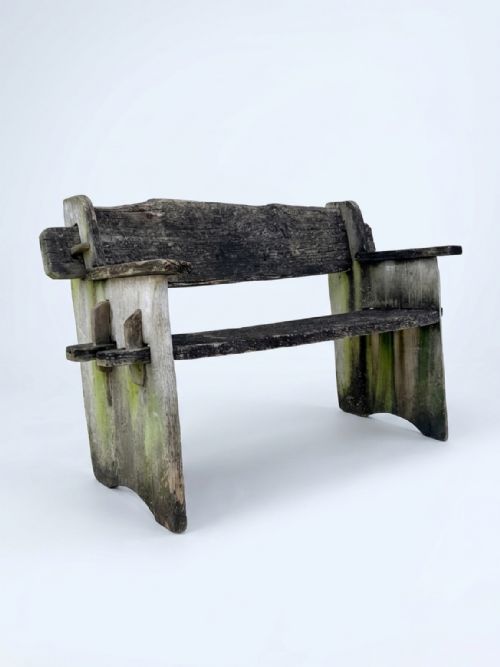
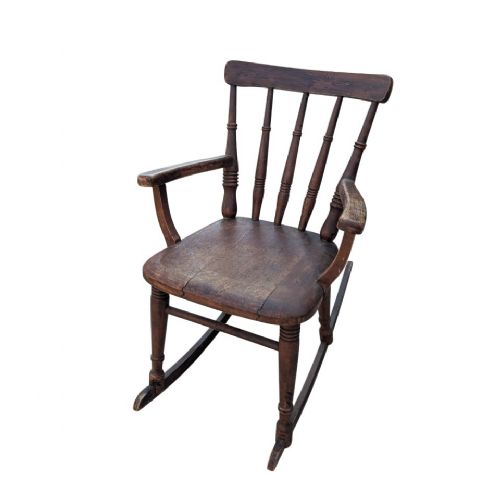
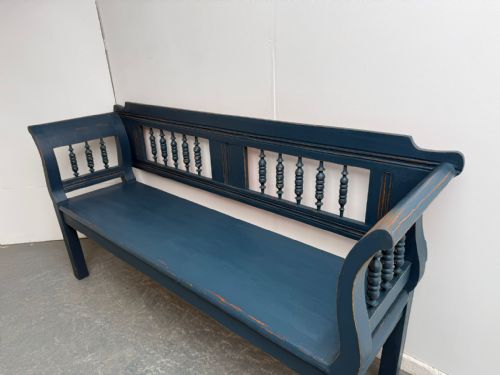
When you search for a vintage folk art chair, you encounter a diverse range of seating born from regional traditions and practical rural life. The selection encompasses armchairs, rocking chairs, side chairs, benches, high chairs, and children's armchairs originating from various European and international localities.
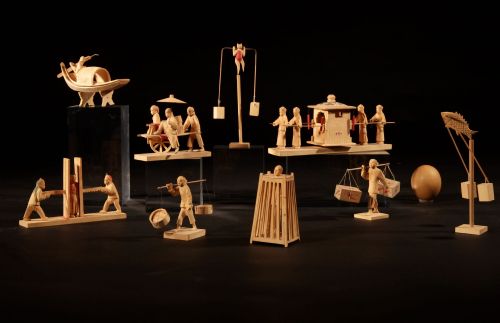
The pieces on this page span the 18th, 19th, and early 20th centuries, covering periods such as the Victorian, Edwardian, and Regency eras. You are most likely to meet rustic wooden chairs and benches exhibiting vernacular styles including Scandinavian, Scottish, Hungarian, Welsh, and Chinese folk art.
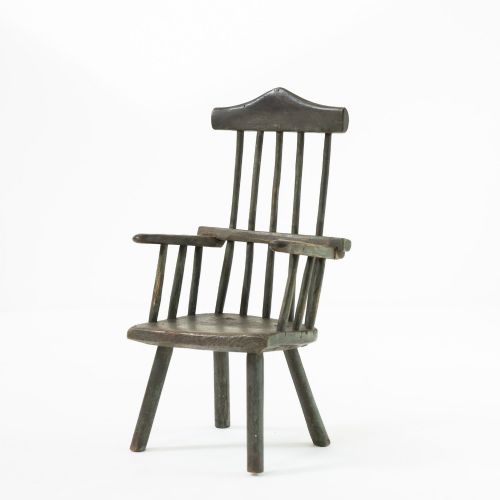
Makers working within these traditions utilised local woods and straightforward construction methods to produce sturdy domestic seating. Many examples feature painted surfaces, rush seats, or primitive stick back designs that reflect the everyday needs of past rural communities.
How they were made
Makers constructed these chairs primarily using native timbers such as pine, oak, and general hardwood, often combining different woods within a single piece. Joinery relied on traditional methods suited to local workshops, including pegged joints and stick back construction.
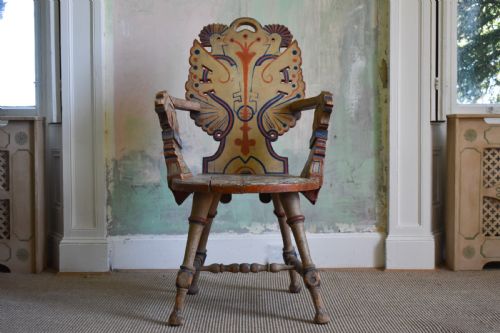
Many surfaces received layers of paint, sometimes surviving in original blue or polychrome finishes that define the folk art aesthetic. Other examples incorporate natural materials like rush for seating or iron hardware for structural reinforcement.
One listed child's chair bears a specific date from 1796, proving that small people have been spilling porridge on antiques for centuries.
What varies in quality
The character of a vintage folk art chair depends heavily on the integrity of its original surface and finish. Pieces retaining uncompromised early paint layers carry greater visual weight than those stripped or repainted in later periods.
Structural honesty and the cleverness of vernacular adaptations also separate ordinary seating from exceptional examples. The harmony between regional design traits and everyday utility dictates the standing of each piece.
The Vintage Folk Art Chair Glossary
- Stick back
- A chair construction method where turned spindles or plain sticks are inserted directly into a solid wooden seat. This technique is common in vernacular seating from various regions.
- Vernacular
- Architecture and objects created by local artisans using traditional methods and regional materials to meet practical needs. These pieces reflect local culture rather than high-style academic design.
- Orkney chair
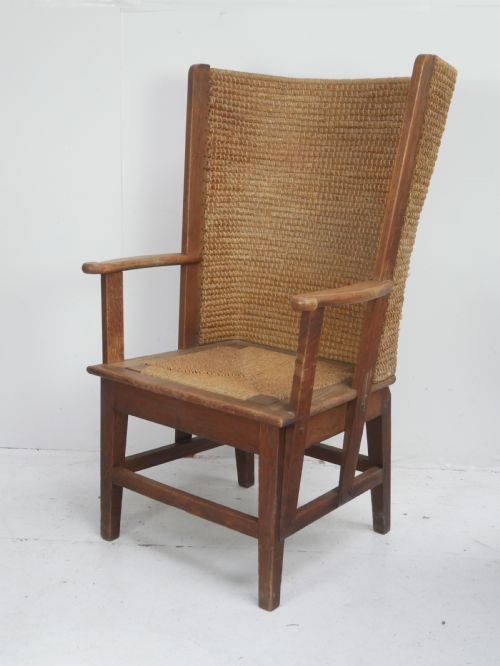
- A distinct type of vernacular seating originating from Scotland, typically featuring a low wooden frame with a high back woven from oat straw. Full sized oak Orkney chairs represent a specific regional form.
- Spinning chair
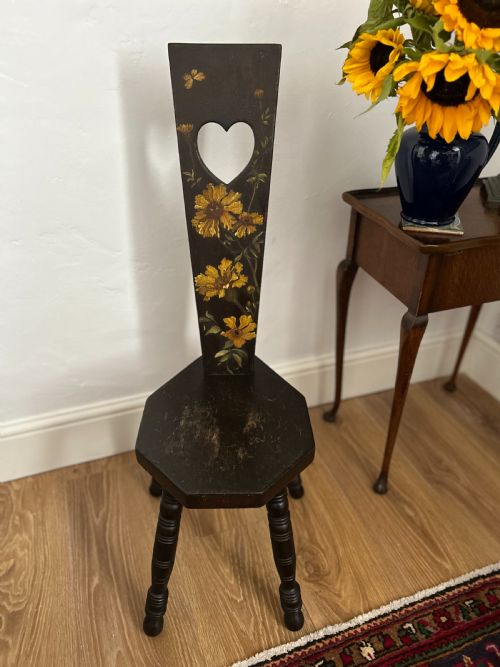
- A small, low chair traditionally used by women while working at a spinning wheel. Many surviving examples feature carved wooden seats and decorative embellishments.
- Hindeloopen style
- A traditional Dutch folk art painting style characterised by colourful floral motifs and detailed ornamentation. Pieces in this style originate from the Friesland town of Hindeloopen.
Vintage Folk Art Chair: Frequently Asked Questions
How do I identify a folk art chair?
Look for regional construction traits, primitive joinery, and traditional decorative finishes that separate these pieces from mass-produced furniture. Local materials and vernacular forms usually point to specific geographic traditions.
Examine the surface for original paint layers and signs of handmade production rather than factory standardisation.
Were these chairs used daily?
Most of these pieces served practical purposes in rural homes, farmhouses, and cottages. Children's high chairs, rocking chairs, and benches were subjected to heavy domestic use.
Their robust construction allowed them to survive generations of everyday family life.
How should I live with a painted chair?
Position painted folk art seating away from direct sunlight and excessive heat fluctuations to protect fragile historical pigments. Allow the natural wear and patination to remain part of the room's character.
Pair these characterful pieces with neutral backgrounds to let the regional forms and colours stand out.