




Vintage Folio Holder
These vintage folio holder examples are sturdy wooden stands built to organise large papers, prints and drawings with simple elegance.
Vintage Folio Holder
A vintage folio holder serves to organise large papers, prints, drawings and sheet music in a domestic or studio setting. When you search for this phrase, you meet practical stands originating from periods such as the Regency, Victorian and Georgian eras.
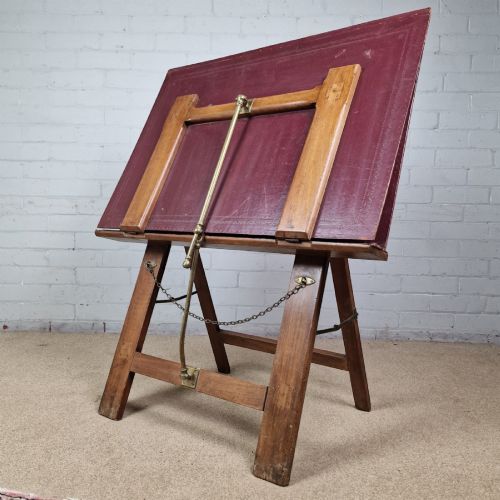
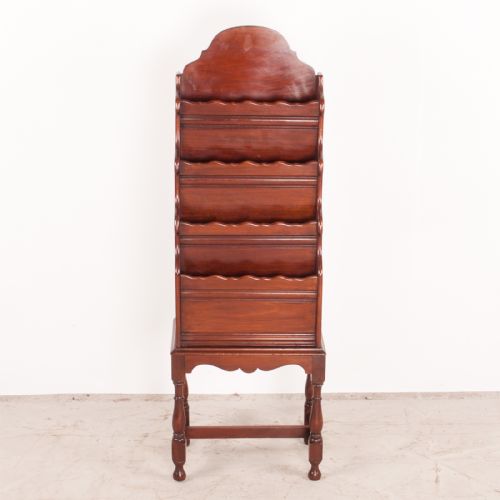
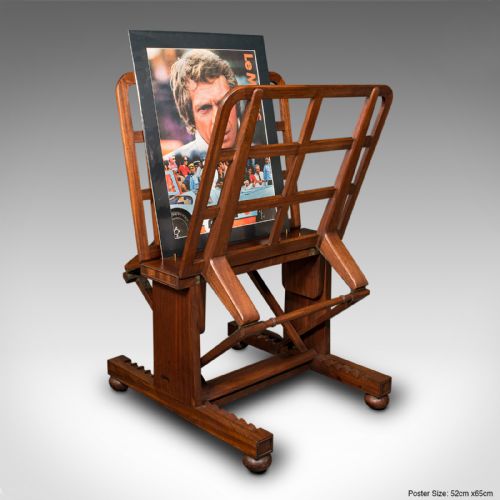
The selection on this page leans heavily toward mahogany and rosewood variants, alongside related forms like canterburys, magazine racks and music stands. These pieces range from grand scale country house designs to adjustable artist and architect picture racks.
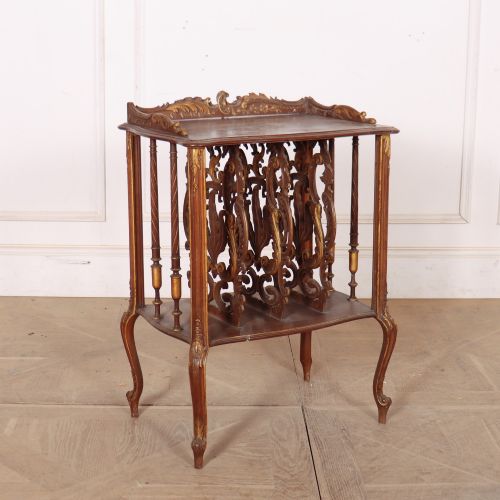
The forms span several distinct design movements, including French Rococo Revival, Georgian Revival and late Georgian styles. Most examples date from the nineteenth century, reflecting the period's need for functional storage of large unbound folios and artwork.
How they were made
Cabinetmakers constructed these stands using dense timbers such as mahogany, walnut, rosewood and oak. These woods provided the necessary strength to support heavy stacks of paper and large picture frames without warping.
Metal components in brass and gilt frequently reinforced the joints, castors and adjustable mechanisms. Leather also appeared in specific construction details, while skilled carvers added decorative elements like the French carved details seen on nineteenth-century examples.
Master artists required adjustable racks to keep their inspiration upright.
What varies in quality
Quality rests upon the choice of timber and the ambition of the scale, moving from simple domestic magazine racks to grand country house folio stands. Dense, figured mahogany and richly grained rosewood separate the finer commissions from ordinary utility pieces.
The sophistication of the mechanical adjustment mechanisms also marks the upper tier of the range. Stands equipped with reliable ratchets or architectural adjustments for artists and architects demonstrate superior workshop capability compared to static frames.
The Vintage Folio Holder Glossary
- Folio stand
- A piece of furniture designed specifically to hold large books, maps, prints or unbound sheets of paper. They usually feature sloping sides to keep the contents upright and accessible.
- Canterbury
- A low stand with partitions, originally intended for sheet music but often used for folios and magazines. These frequently incorporate carrying handles and sometimes a drawer beneath.
- Regency
- An English design style spanning the early nineteenth century, known for classical restraint and occasional revival of Grecian or Roman motifs. Pieces from this era often employ fine rosewood or mahogany.
- Gilt
- A thin layer of gold applied to wood or metal surfaces for decoration. It appears on finer nineteenth-century stands to highlight carved details or brass mountings.
- Architectural
- Pertaining to designs that draw on classical building proportions and structural clarity. In picture racks and stands, this indicates a heavier, more purposeful construction suited to a studio.
Vintage Folio Holder: Frequently Asked Questions
What is a vintage folio holder used for?
These stands hold large sheets of paper, prints, maps, and drawings upright and within easy reach. They prevent large folios from bending or tearing while keeping them organised in a study or studio.
In period homes, they served artists, architects, and collectors who needed to consult oversized books or loose plates regularly. Today, they function similarly for storing contemporary art, prints, and large magazines.
How do I date a folio stand?
Dating relies on observing the timber choice, construction methods, and stylistic cues associated with periods like the Regency or Victorian era. For instance, rosewood and specific brass mountings often point toward the early nineteenth century.
Secondary indicators include the presence of adjustable mechanisms and the turning of wooden legs or uprights. Comparing these details against known pieces from eras such as the Georgian period helps narrow down the decade of manufacture.
How do I live with a folio stand?
Place the stand in a study, library, or living room where its wooden frame complements other antique furniture. It provides a natural display space for large books or framed prints resting against its sides.
Keep the stand away from direct sunlight and strong heat sources to protect timbers like mahogany and rosewood from drying out. Regular dusting with a soft cloth keeps the polished wood and any brass fittings in good condition.