
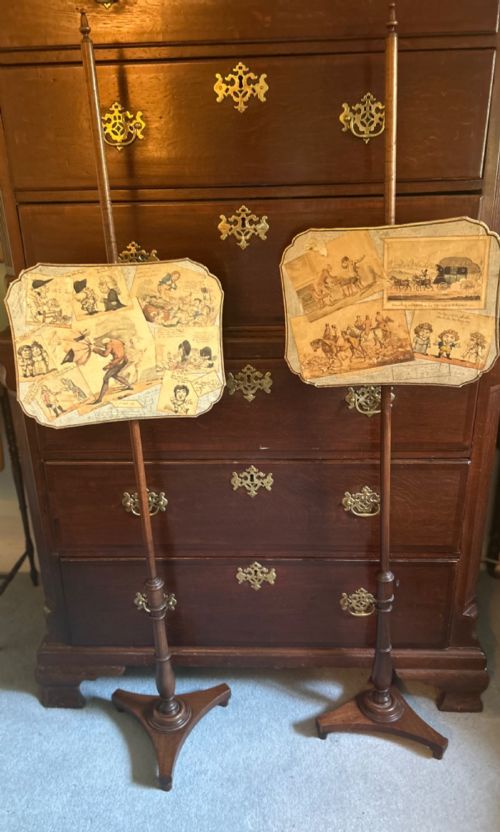


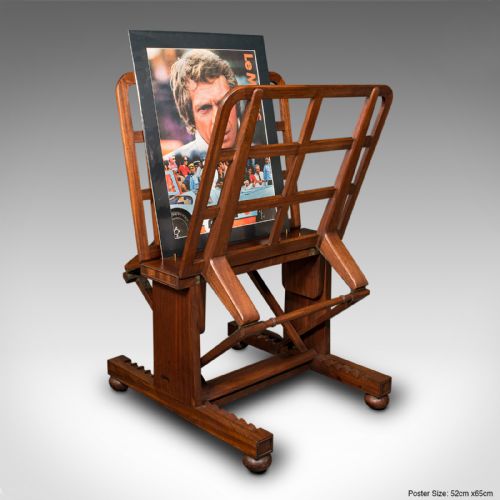


Regency Print Stand
These pieces, known as a regency print stand, organise and display large sheets of paper, prints and drawings with upright or folding frames.
Regency Print Stand
When you search for a regency print stand, you are looking at items designed to hold folios, prints, and large sheets of paper for easy viewing. The selection includes standalone folio stands, adjustable picture racks, and folio cabinets designed for libraries and drawing rooms.
The version you are most likely to meet on this page is an English mahogany folio stand or cabinet dating from the Regency period or the wider nineteenth century. These pieces often feature adjustable mechanisms or large wooden frames tailored for sorting artwork and engravings.
How they were made
Makers utilised solid timbers such as mahogany, birds eye maple, and oak to construct the main frames and cabinets. These hardwoods provided the structural strength required to support heavy paper folios and large wooden uprights.
Brass fittings, hinges, and adjustable rods were frequently incorporated into the design to allow the stands to alter their angle or securely hold open displays of prints.
Recorded forms on this page include folio stands, picture racks, and folio cabinets.
What varies in quality
The distinction between a standard utility piece and a finer example rests in the choice of timber and the sophistication of the adjustable mechanism. Finer pieces employ figured woods like birds eye maple or richly grained mahogany rather than plain secondary timbers.
Proportion and scale also separate the items, ranging from grand country house proportions designed for large folios to more compact library variants.
G & J Cary
The Regency Print Stand Glossary
- Folio stand
- A piece of furniture with vertical or folding wooden frames specifically built to hold large sheets of paper, prints, or maps. These items allow artists and collectors to browse collections without damaging the paper.
- Mahogany
- A durable tropical hardwood with a reddish-brown colour commonly utilised for fine English furniture during the Georgian and Regency periods. It takes a high polish and resists warping.
- Birds eye maple
- A figured timber showing small circular dots resembling bird's eyes, created by local disruptions in the wood grain. Cabinet makers utilised this decorative veneer on select Regency furniture.
- Canterbury
- A low stand featuring vertical partitions, traditionally used for holding sheet music, books, or folios. Some large Regency examples combine this form with a folio stand.
Regency Print Stand: Frequently Asked Questions
What is a regency print stand used for?
These stands were built to hold large folios, maps, and prints so that gentlemen and artists could examine them easily without creasing the paper. They served as functional library and studio furniture.
Today, they perform the same role for displaying large artwork, antique engravings, or modern prints in an interior setting.
How do I identify a Regency period stand?
Look for timber choices like mahogany or birds eye maple combined with classical proportions and brass adjustment hardware typical of the early nineteenth century.
Construction methods and the specific form of the upright frames also help distinguish genuine Regency examples from later nineteenth-century or twentieth-century revivals.
Where were these stands placed in a house?
They typically stood in libraries, drawing rooms, or artists' studios where large portfolios of prints and drawings were kept for entertainment or study.
Their open frame design allowed guests to browse through visual collections while socialising or studying.
Are all folio stands adjustable?
Many examples feature mechanical hinges or brass ratchets that allow the user to alter the angle of the display frames. This adjustability accommodated different sizes of paper and viewing preferences.
Some stationary cabinets and simpler racks, however, maintain a fixed upright position for holding folios.