



Vintage Folding Screen
A vintage folding screen divides a room, catches a draft, or frames a hearth with panels of brass, lacquer, leather, and painted wood.
Vintage Folding Screen
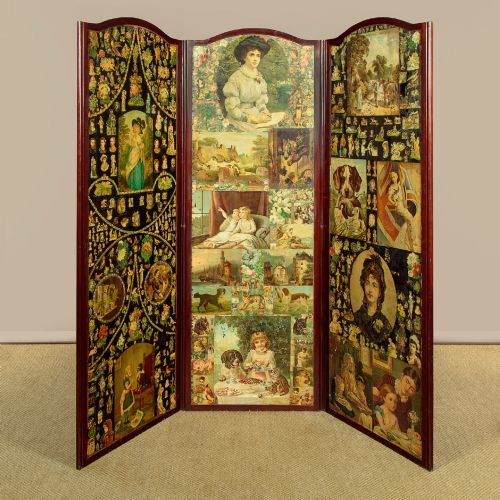
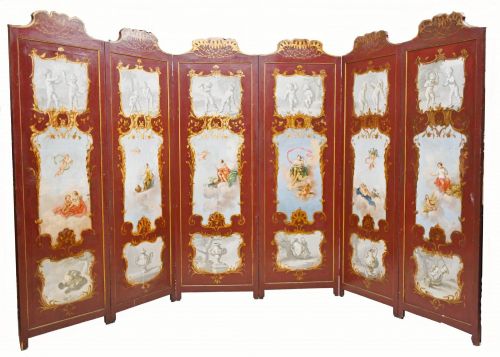
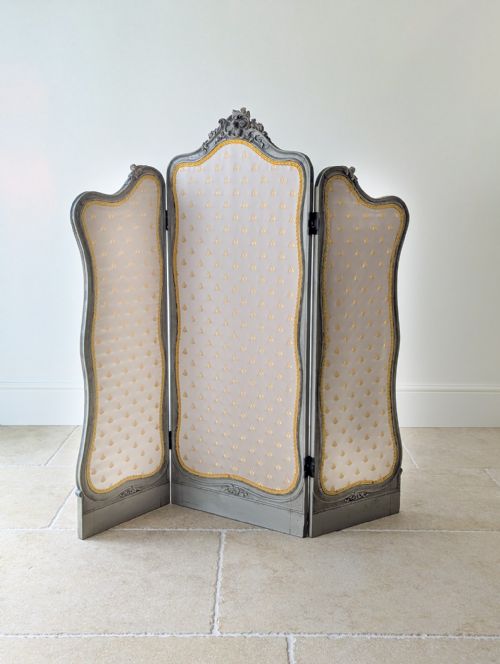
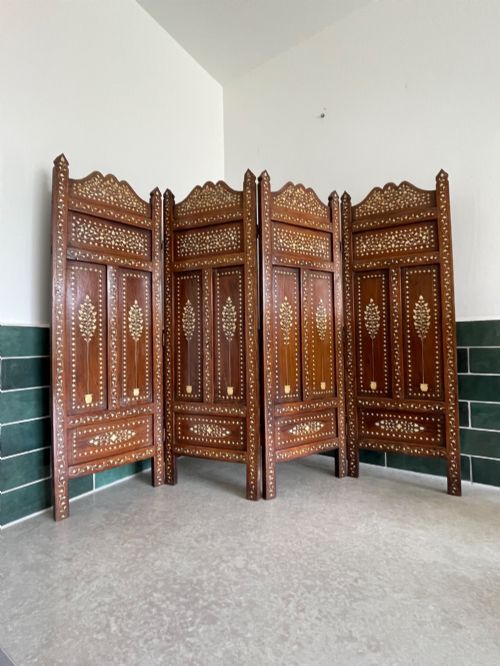
A vintage folding screen serves as a movable partition, room divider, or protective fire guard across various domestic settings. These pieces span multiple decades, from nineteenth-century examples to mid-century items, taking the form of multi-panel room dividers and smaller hearth accessories.
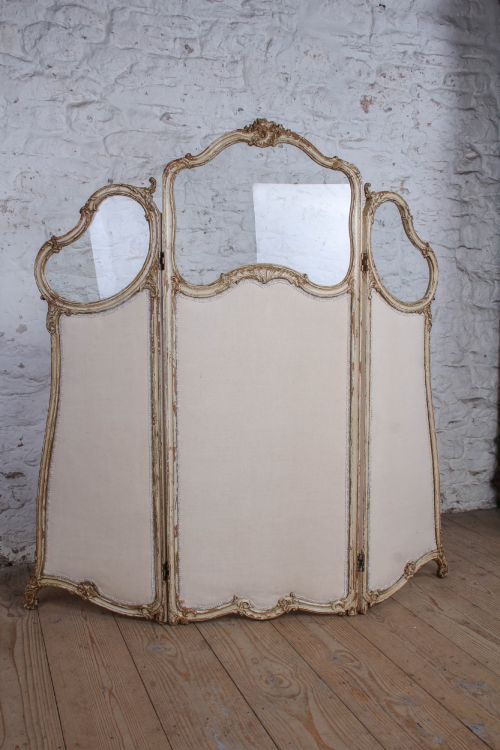
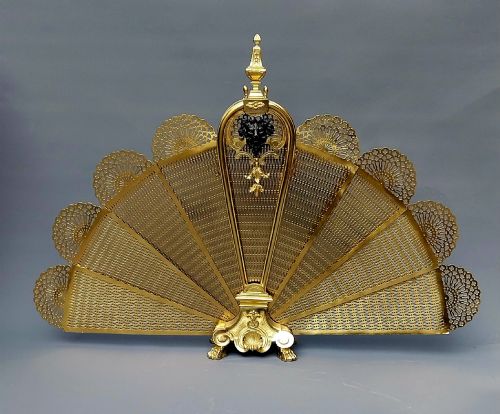
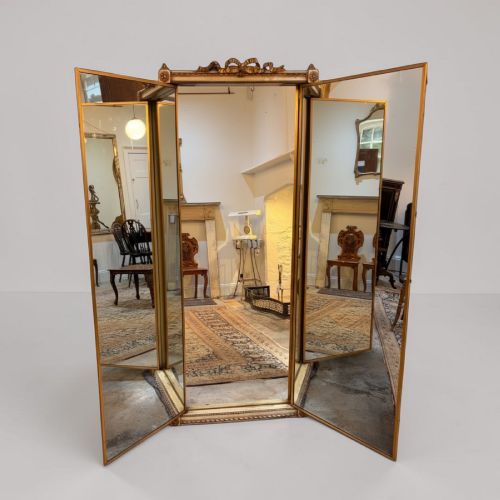
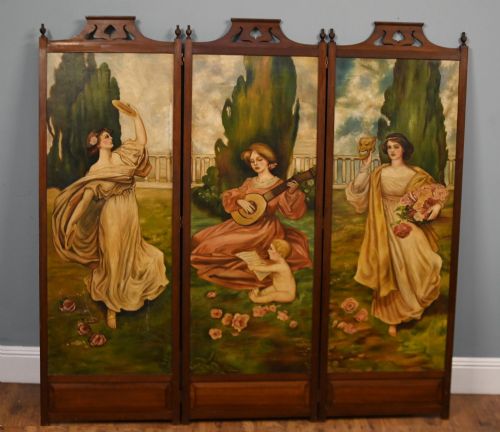
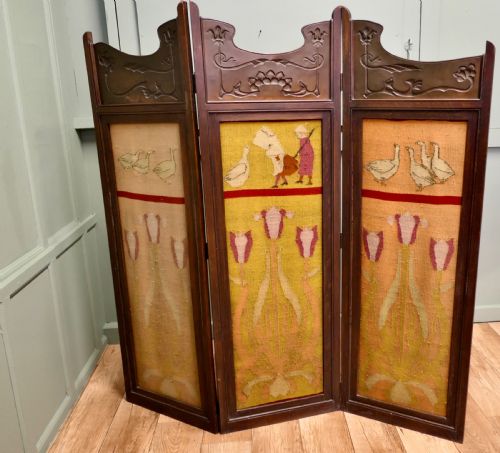
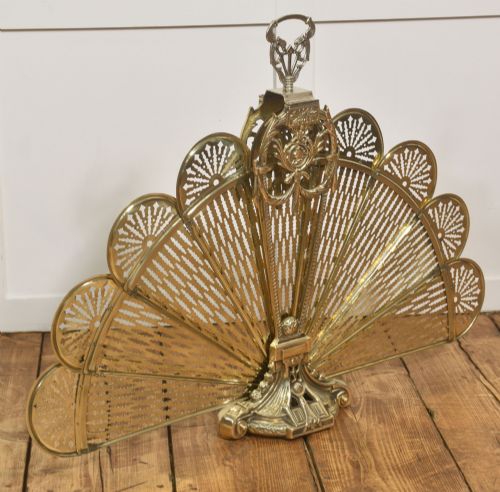
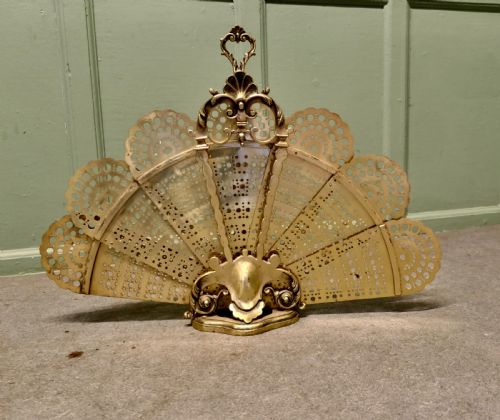
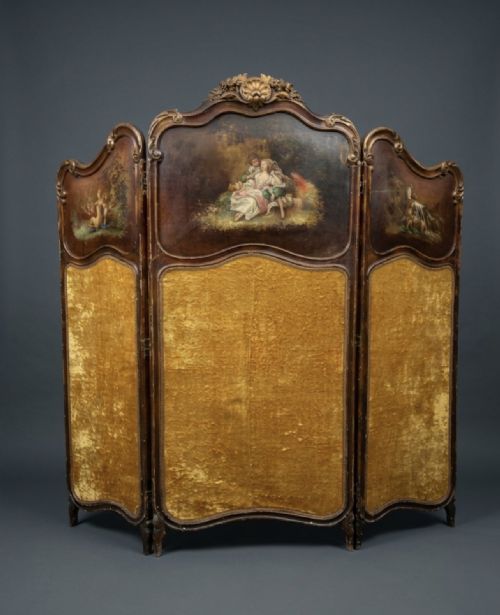
The selections encountered here range from tall privacy screens in wood and leather to decorative brass peacock fan fire screens. Buyers frequently encounter French triptych mirrors, Chinoiserie lacquer panels, and Arts and Crafts oak frames alongside utilitarian modesty screens.
Origins stretch from European revivals to Oriental and Anglo-Indian workshops, encompassing diverse cultural motifs. Whether separating a dressing room or shielding a fireplace, each object relies on hinged sections to alter its footprint.
Judging the work
Quality rests upon the integrity of the hinges and the stability of the panel joints, which must support the weight of wood, glass, or metal over multiple folds. Superior pieces maintain alignment without sagging or straining the connecting hardware.
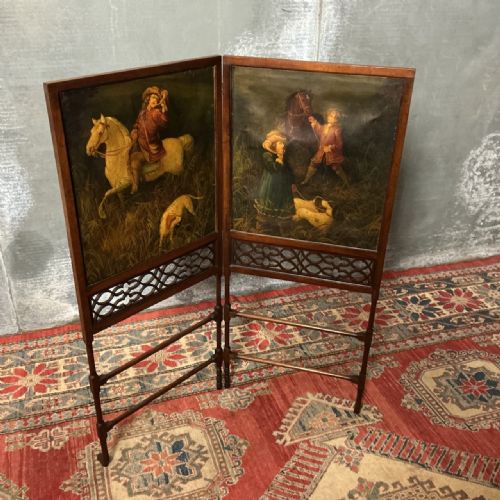
The artistic execution of the surface defines the upper tier of these items, distinguishing hand-painted leather, detailed embroidery, and refined lacquerwork from simpler decorative treatments. Depth of material and precision in inlay separate standard domestic partitions from exceptional examples.
Vintage Folding Screen Retail Price Guide 2026
Typical asking prices for vintage folding screen among the pieces listed under this phrase on Sellingantiques today, from the lower quarter to the upper quarter. They describe what is for sale here now, not the wider market.
Some screens served as debating society backdrops, hiding eager politicians behind solid oak frames while arguments unfolded.
The Vintage Folding Screen Glossary
- Triptych mirror
- A three-panel mirror assembly where the outer wings angle inward to adjust the reflection. This configuration commonly appears in dressing room settings.
- Fire screen
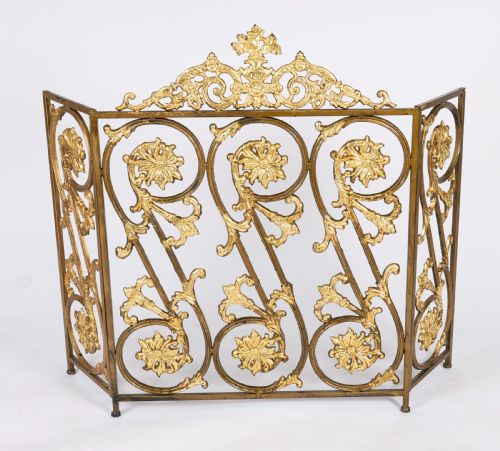
- A decorative guard placed before an unlit fireplace to block drafts or hide the hearth. These often feature folding brass panels or embroidered fabric.
- Modesty screen
- A low freestanding panel used to provide privacy in domestic interiors. They frequently incorporate painted fabric or wooden slats.
- Peacock fan
- A folding hearth screen composed of overlapping metal blades that spread outward like a tail. Brass is the predominant material for this design.
Vintage Folding Screen: Frequently Asked Questions
How do I use a folding screen?
A folding screen creates temporary divisions within larger spaces, shielding corners or sectioning off dressing areas. They adapt easily to changing room layouts by shifting angles.
Smaller versions function specifically around fireplaces as guards or decorative table screens. Their mobility allows you to alter the flow of a room instantly without permanent construction.
Are these screens stable on hard floors?
Multi-panel screens rely on an accordion fold to maintain their stance and balance on flat surfaces. Correctly angled panels support their own weight securely.
Heavier wood and leather models hold their position firmly, while lighter brass fire guards require careful placement. Adjusting the folds prevents tipping in high-traffic areas.
Can fire screens withstand active heat?
Many vintage metal fire screens were built to block radiant heat and contain stray embers from open grates. Brass and copper components handle proximity to fire safely.
Fabric or needlepoint panels should remain at a safe distance from active flames to prevent scorching. Use them primarily when the hearth is cold or banked.