

Vintage Fob Chain
A vintage fob chain brings substantial weight and individual character to the wrist or neck, offering a tangible link to historical watchkeeping traditions.
Vintage Fob Chain
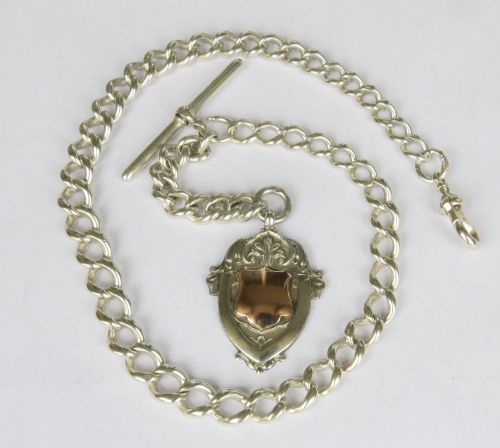
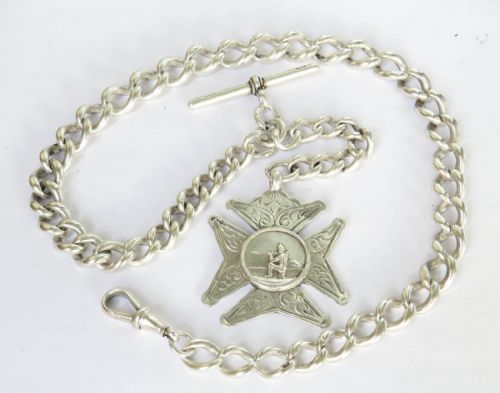
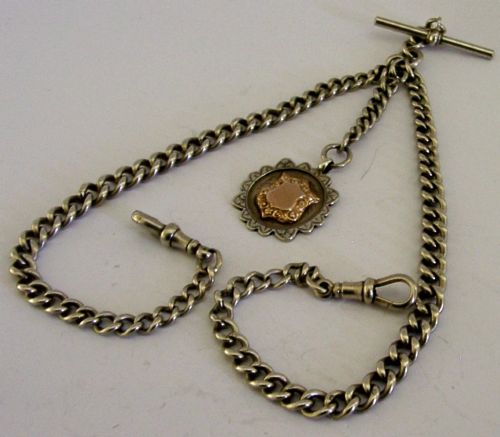
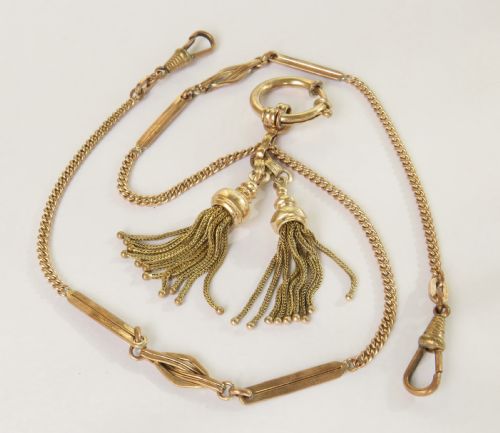
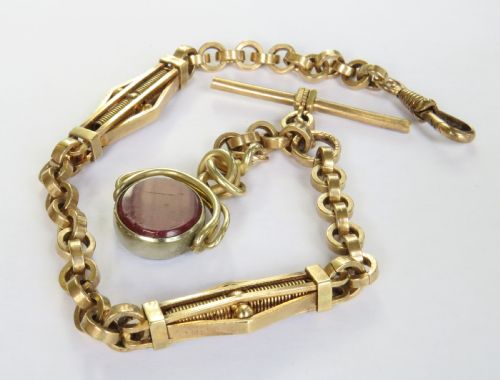
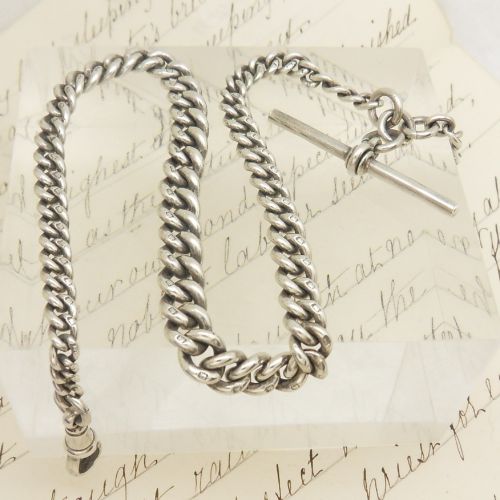
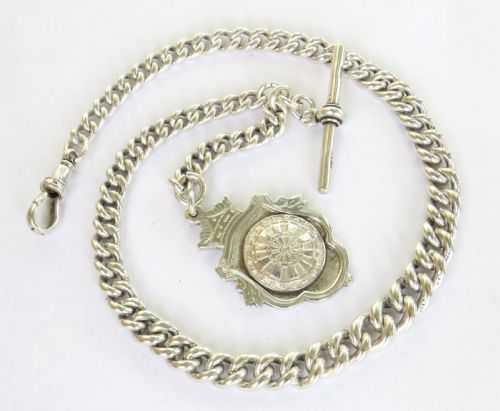
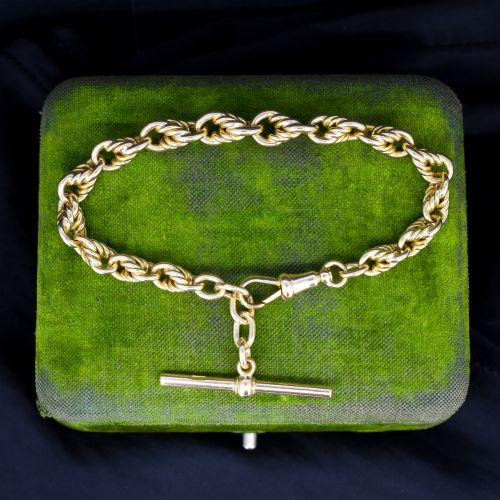
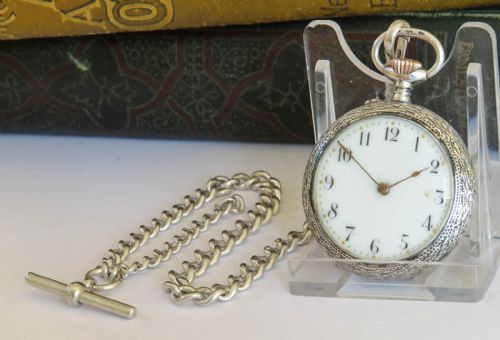
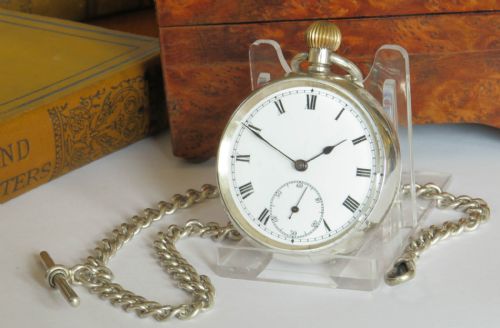
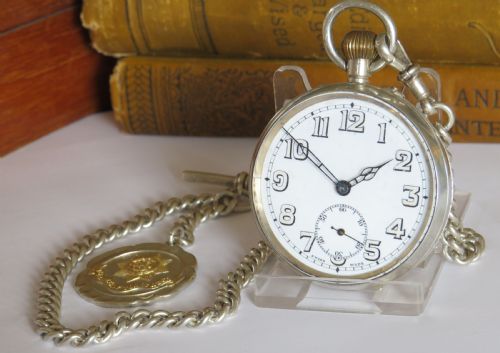
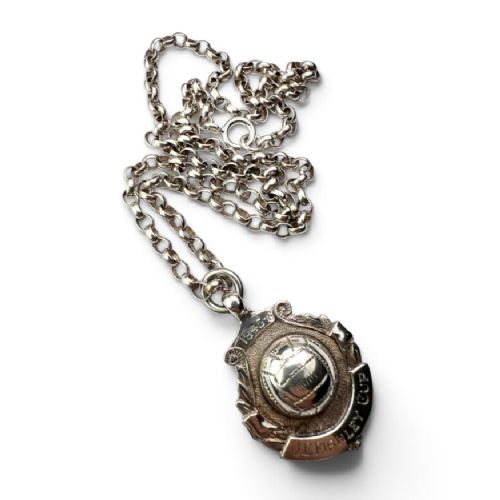
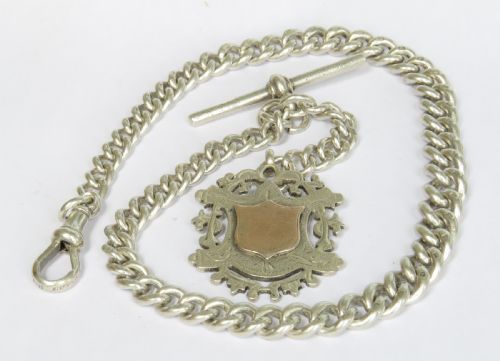
A vintage fob chain serves as a wearable accessory that originally secured a pocket watch to a waistcoat, spanning periods from the late Victorian era through the mid-twentieth century. Buyers seeking a vintage fob chain will encounter various forms, including single and double albert chains, heavy link bracelets, and converted necklaces.
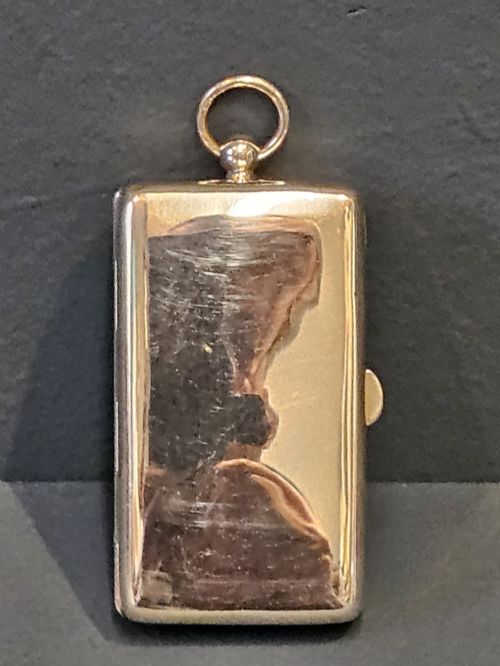
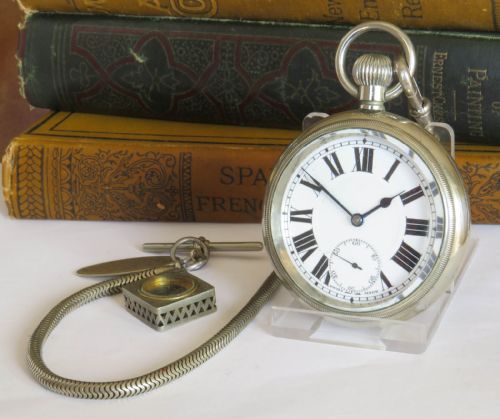
The pieces present on this page originate predominantly from the Victorian, Edwardian, and Art Deco periods, extending into the 1940s and 1950s. Silver, rolled gold, and nine-carat gold dominate the material selection, frequently accompanied by decorative attachments such as spinning fobs, medals, and compasses.
Materials and construction methods
Makers constructed these chains using sterling silver, rolled gold, and nine-carat yellow or rose gold, employing interlocking links such as curb, trombone, and love knot patterns. Hallmarks stamped onto individual links and T-bars often record the assay office, such as Chester or Birmingham, alongside the year of manufacture.
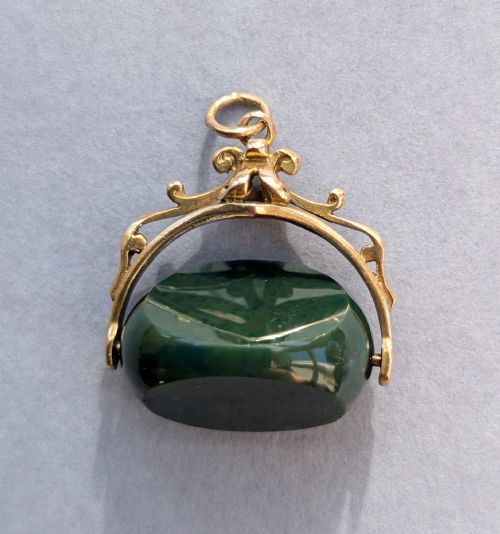
Craftsmen integrated functional elements like swivel clasps, spring rings, and T-bars directly into the link structure, combining durability with ornamental detail. Supplementary items like bloodstone spinning fobs, enamel medals, and glass compasses demonstrate the varied metalwork and stone-setting techniques of the period.
Vintage Fob Chain Retail Price Guide 2026
Typical asking prices for vintage fob chain among the pieces listed under this phrase on Sellingantiques today, from the lower quarter to the upper quarter. They describe what is for sale here now, not the wider market.
Listings for this phrase span the Victorian, Edwardian, and Art Deco eras, extending through the 1940s and 1950s in silver, rolled gold, and nine-carat gold.
Distinguishing quality in historical chains
Quality rests in the structural integrity of the individual links and the original matching components, such as the T-bar and swivel clasp. Heavy, substantial link construction paired with crisp hallmarks denotes a higher tier of craftsmanship compared to lighter, more worn examples.
The presence of original associated elements, such as spinning fobs with bloodstone or commemorative medals, elevates the completeness of the piece. Rolled gold quality depends upon the preservation of the gold layer over the base metal core, whereas solid gold and silver chains rely on the clarity of the metal stamps and the tightness of the link joints.
J W Benson·Omega·Elgin·Syren·Tavannes·Horos·Tellus·Crisford & Norris
The Vintage Fob Chain Glossary
- Albert chain
- A type of pocket watch chain named after Prince Albert, designed to attach a watch to a garment buttonhole via a T-bar.
- T-bar
- The short transverse bar attached to the centre of a watch chain, used to secure the chain through a buttonhole.
- Fob
- An ornament or medal attached to a watch chain, which historically hung downward from the main chain.
- Rolled gold
- A material made by bonding a thin sheet of gold to a base metal core, providing the appearance of solid gold with greater durability than plating.
- Spinning fob
- A pendant containing a rotating centre stone, such as bloodstone or carnelian, often engraved on both faces.
- Swivel clasp
- A pivoting spring-loaded hook attached to the end of a chain for securing a pocket watch or pendant.
Vintage Fob Chain: Frequently Asked Questions
How do I wear a vintage fob chain?
These chains adapt easily for modern wear by wrapping them around the wrist as a multi-strand bracelet or fastening them to be worn as a necklace.
The T-bar and swivel clasps provide practical attachment points that allow you to style the piece with or without additional pendants and medals.
How can I date my watch chain?
Dating relies heavily on British hallmark stamps found on the individual links, T-bars, and attached medals, which indicate the assay office and year of production.
Stylistic shifts, such as the transition from ornate Victorian love knots to geometric Art Deco curb links, also provide clear chronological indicators.
What are spinning fobs used for?
Spinning fobs house a rotating gemstone, such as bloodstone or carnelian, within a metal frame that turns on a central axis.
Historically, owners used the flat stone surfaces for pressing into sealing wax to authenticate letters and documents.