



Vintage Florentine Wall Lights
These vintage florentine wall lights bring ornate Italian character and warm illumination to any room.

Vintage Florentine Wall Lights
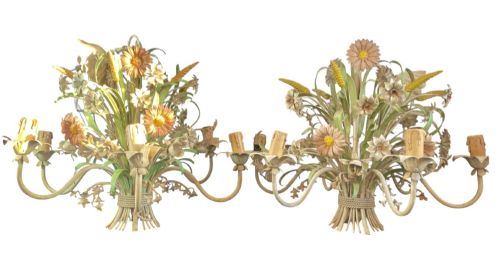
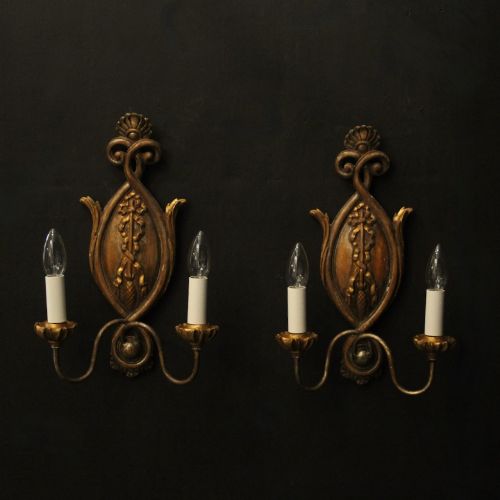
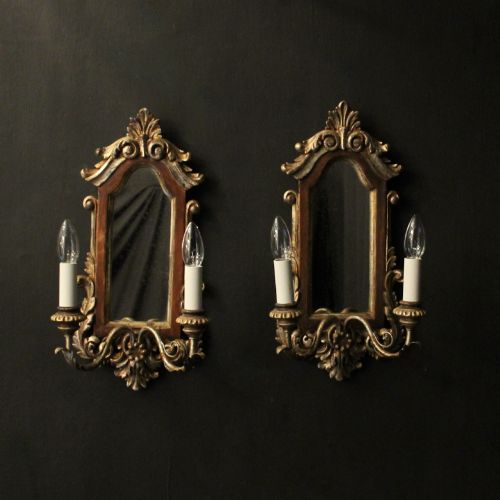
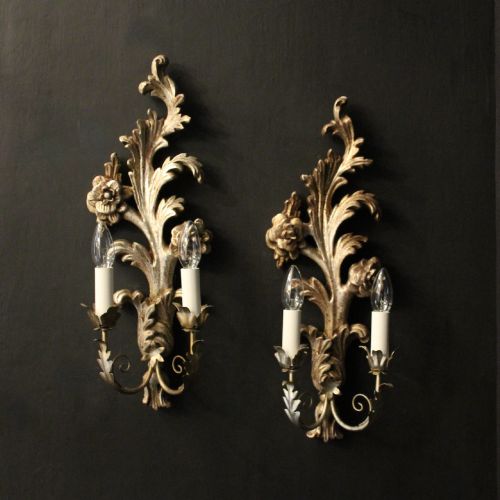
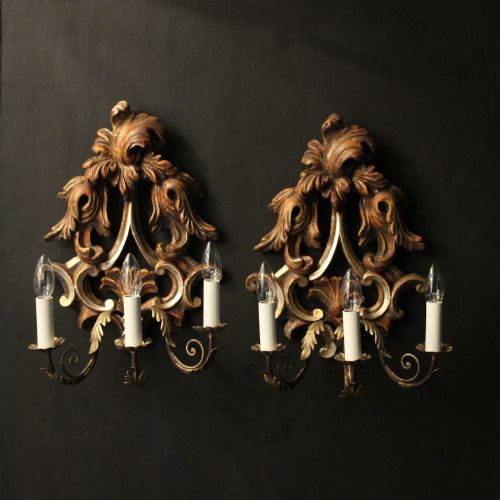
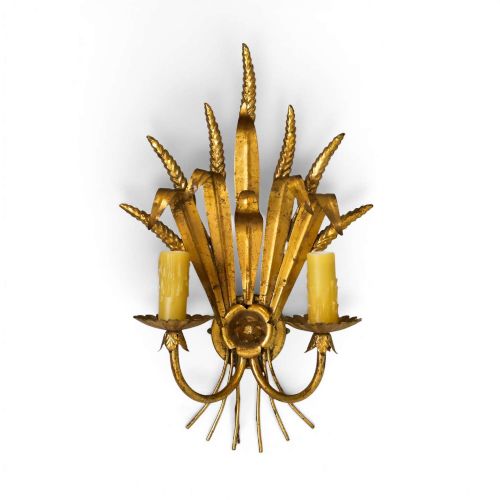
When you search for vintage florentine wall lights, you encounter elaborate wall mounted fixtures designed to hold candles or electric bulbs. These pieces typically take the form of wall lights, wall sconces and girandoles created in Italian workshops.
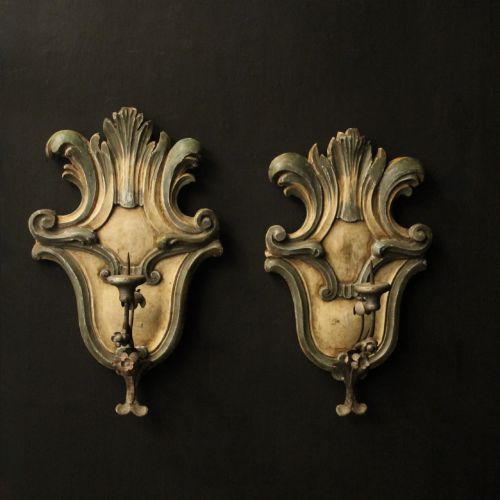
You are most likely to meet giltwood pairs featuring twin or triple arms dating from the 1920s and 1930s. The selection also includes earlier 19th-century pricket candle sconces and polychrome wooden variations.
The aesthetic draws heavily on Florentine Rococo and Baroque traditions, often incorporating carved leaf motifs and beaded details. These decorative sconces function primarily to frame mirrors or anchor room corners with dramatic illumination.
How they were made
Artisans built these fixtures using carved wood and gesso as a base before applying intricate surface finishes. Gilding methods involved laying gold leaf or silver leaf over the prepared wooden armature.
Many examples incorporate metal components alongside wooden frames to support multiple candle arms. Polychrome versions received hand-painted colour applications over the carved gesso details to enhance the ornamental depth.
Vintage Florentine Wall Lights Retail Price Guide 2026
Typical asking prices for vintage florentine wall lights among the pieces listed under this phrase on Sellingantiques today, from the lower quarter to the upper quarter. They describe what is for sale here now, not the wider market.
Some wall lights wear their age with chipped gesso revealing the red bole underneath, proving even Italian illumination has a dramatic past.
What varies in quality
The depth and crispness of the wood carving distinguish finer examples from simpler production. Superior pieces exhibit hand-chiseled leaf work and delicate beaded detailing rather than flat or moulded surfaces.
The application of gold leaf or silver leaf dictates the richness of the finished appearance. Lustre and durability depend on the quality of the original gilding technique and the preservation of the underlying gesso.
The Vintage Florentine Wall Lights Glossary
- Giltwood
- Wood that has been coated with gold leaf or a gold-coloured metallic finish. This technique creates a luminous surface that catches candlelight.
- Gesso
- A plaster-like mixture applied to wood surfaces as a smooth base for gilding and painting. It allows craftsmen to carve intricate relief ornaments.
- Girandole
- An ornamental wall bracket with branches for holding multiple candles, often featuring an integrated mirror. These fixtures multiplied the available light in dark rooms.
- Pricket
- A sharp metal spike on a candleholder designed to secure the base of a wax candle. This medieval form persisted in traditional Italian ecclesiastical and domestic lighting.
- Polychrome
- Decorated in multiple colours, often using hand-painted pigments over a gesso or wooden ground. This finish adds vibrant contrast to carved architectural details.
Vintage Florentine Wall Lights: Frequently Asked Questions
How do I wire these for electricity?
Most vintage pieces require adaptation by a qualified electrician to safely integrate modern wiring. Professional installers can route flex through the carved wooden arms without damaging the historic structure.
Consider using low-wattage LED candle bulbs to replicate the warm glow of original wax while protecting the delicate gilt finish from excessive heat.
How do I date these wall lights?
Dating relies on stylistic clues, construction methods and the condition of the materials. Pieces from the 1920s and 1930s frequently show specific interpretations of Florentine revival styles.
Earlier 19th-century examples often feature heavier pricket configurations and deeper patination on the exposed gesso and leaf.
How should I clean giltwood surfaces?
Dust these fixtures gently with a very soft, dry brush to remove particulate matter without disturbing the leaf. Avoid liquid cleaners, polishes or abrasive cloths entirely.
Moisture and harsh chemicals strip away the delicate gold leaf and soften the underlying gesso layers.