

Gilt Candle Wall Brackets
Gilt candle wall brackets bring warmth and reflected light to a room, carrying the weight of French and Italian design into domestic spaces.

Gilt Candle Wall Brackets
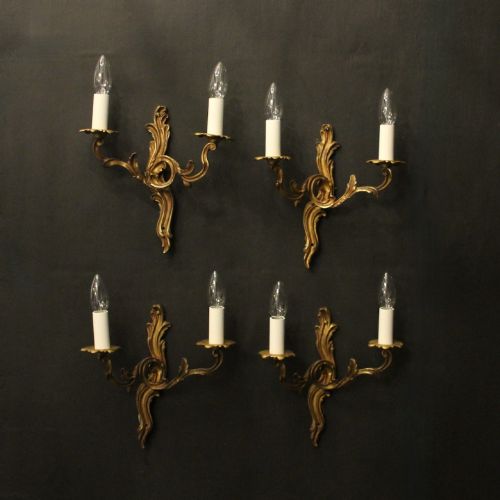
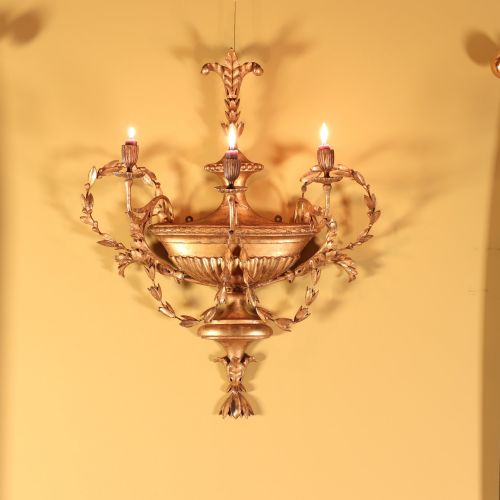
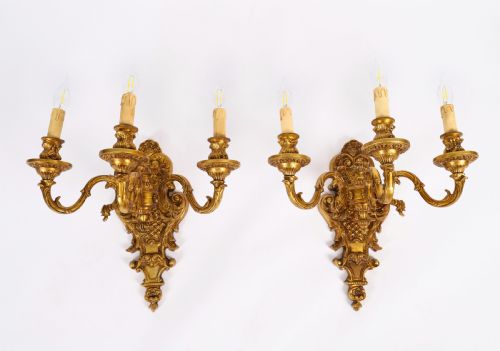
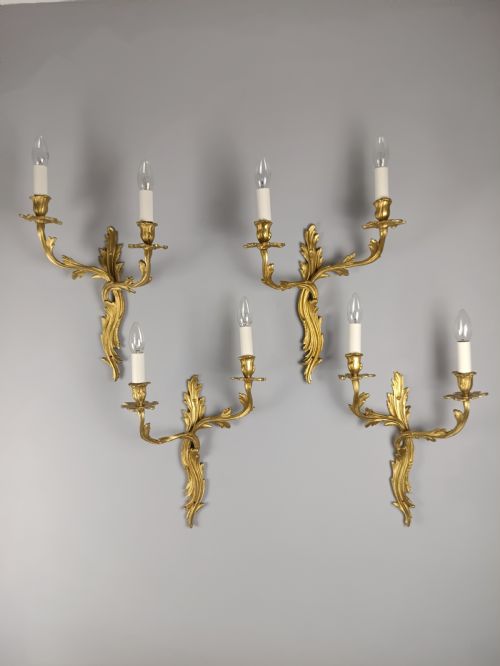
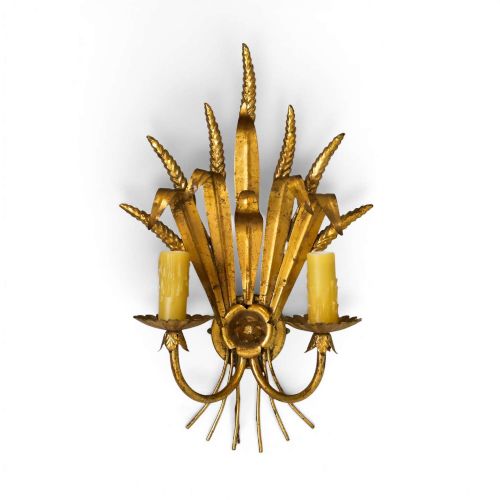
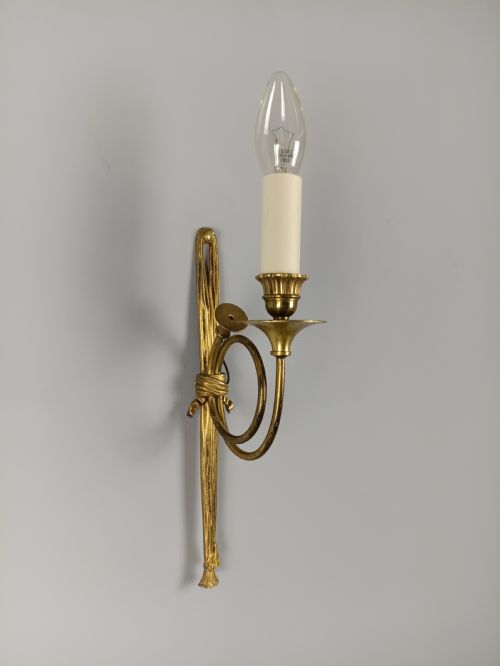
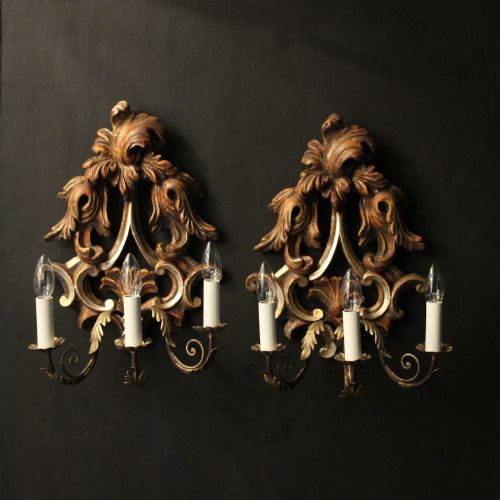
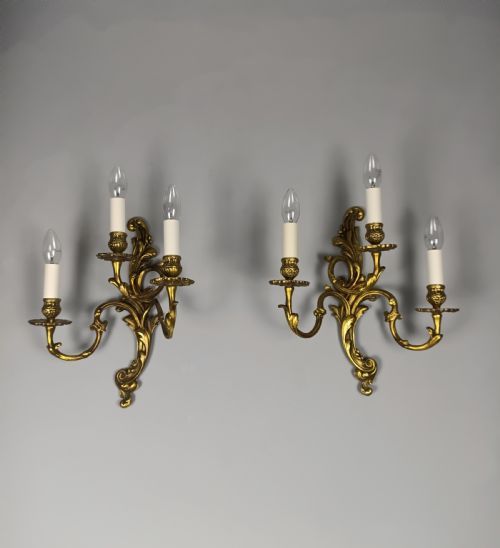
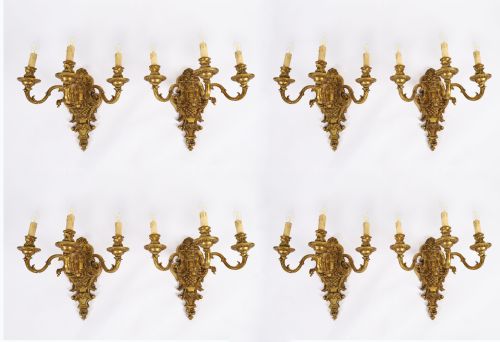
Gilt candle wall brackets are decorative light fittings designed to mount directly onto vertical surfaces, combining structural metal or carved timber with a metallic gold finish. Buyers encounter these pieces primarily as pairs or sets originating from French and Italian workshops spanning the eighteenth to the twentieth centuries.
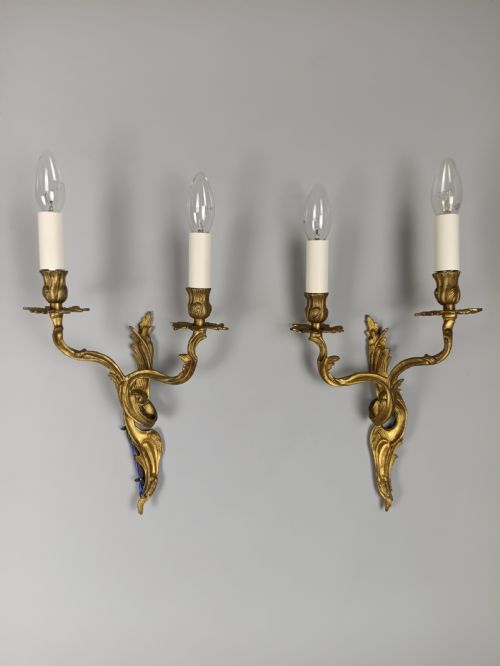
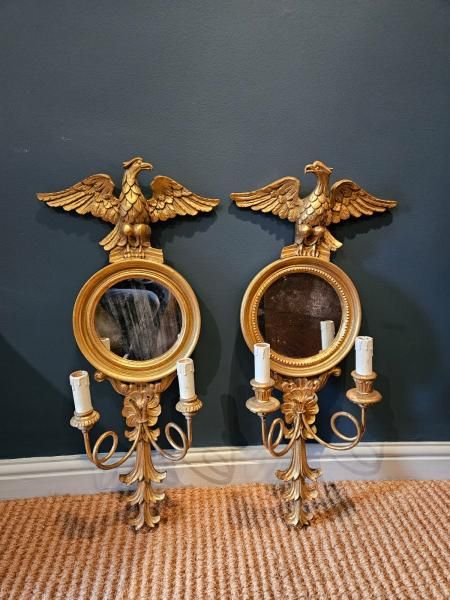
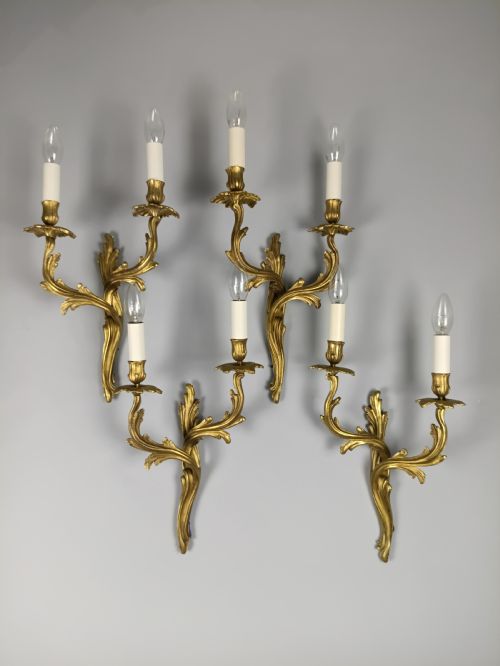
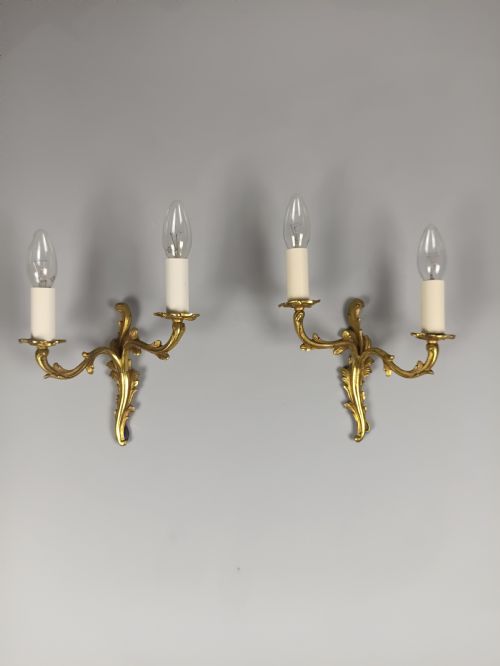
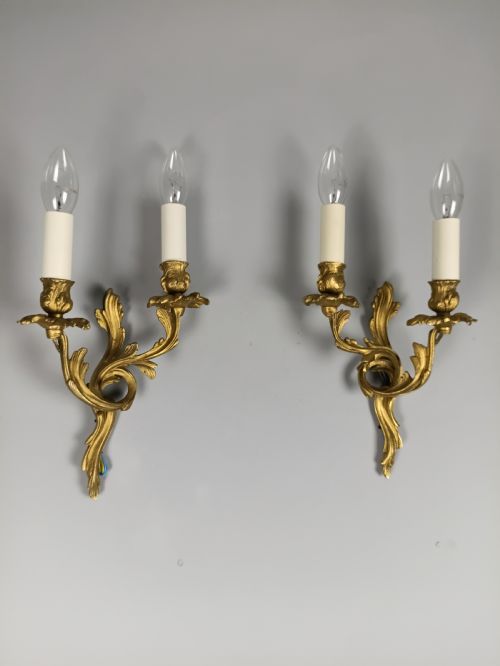
The form encompasses twin-arm, triple-arm, and larger multi-branch configurations often styled in the French Rococo, Louis XVI, or Florentine traditions. Many examples incorporate mirror backs or porcelain elements to amplify the ambient candle illumination within domestic interiors.
Dating ranges from seventeenth-century survivals through nineteenth-century revivals up to mid-century electric adaptations. Wall lights and wall sconces appear frequently, reflecting varied historical demands for domestic illumination.
How They Were Made
Gilt bronze and ormolu pieces involve casting metal into intricate floral or scrollwork shapes before applying a fine layer of gold amalgamation. Brass and gilt metal provide alternative metallic foundations for pressed or cast arms.
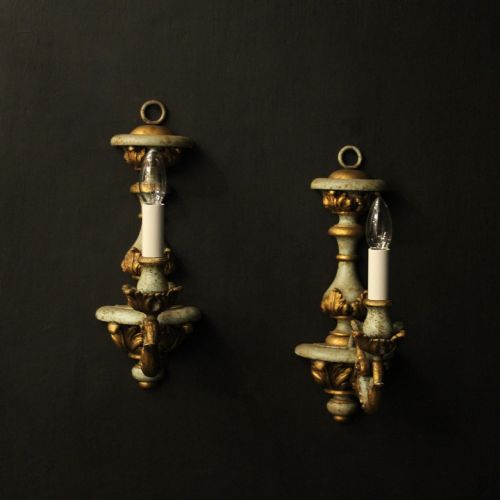
Carved wood examples rely on timber bases shaped by hand, subsequently coated in gesso and finished with gold leaf or silver gilt. Polychrome additions introduce painted colour alongside the dominant metallic surfaces.
Materials span gilt bronze, brass, carved wood, gesso, and crystal, reflecting centuries of decorative lighting traditions across Europe.
What Varies in Quality
The crispness of the casting or carving dictates visual clarity, separating sharp acanthus leaves and scrollwork from softer, worn impressions. Superior examples retain depth in their chased details and integrity within their applied gilding.
Substantial bronze or solid carved wood frames offer better structural stability than lighter pressed metal alternatives. The quality of the original fire gilding or gold leaf application determines how light plays across the metal surface.
The Gilt Candle Wall Brackets Glossary
- Ormolu
- Finely ground high-carat gold applied to a bronze base through a mercury amalgamation technique. This historic process creates a durable, warm metallic surface found on French pieces.
- Gesso
- A plaster mixture applied to carved wood surfaces to prepare them for gilding. It provides a smooth base that takes fine detail during the carving process.
- Giltwood
- Timber that has been coated with gold leaf over a prepared ground. It defines Florentine and eighteenth-century British decorative brackets.
- Applique
- A wall-mounted light fitting synonymous with sconces. The term originates from French decorative arts terminology.
- Rococo
- An ornate design style characterised by asymmetrical scrolls, shell motifs, and natural curves. It heavily influences French and Italian lighting pieces from various periods.
Gilt Candle Wall Brackets: Frequently Asked Questions
How do I mount them securely?
These fixtures require direct attachment to wall studs or the use of appropriate wall anchors to support their weight. Metal and carved wood brackets carry substantial mass, particularly when extended on multiple arms.
Professional installation ensures the fitting hangs plumb and connects safely to any integrated electrical wiring. Many examples arrive adapted for modern electrical supply while retaining their candle-form aesthetics.
Are pairs more desirable than singles?
Pairs and sets remain highly sought after for achieving symmetrical placement on either side of a fireplace, mirror, or doorway. Single brackets frequently serve in narrower alcoves or specific transitional spaces.
Historical domestic interiors relied heavily on balanced lighting arrangements, making matched sets particularly practical for traditional room layouts.
How do I clean gilt surfaces?
Dusting gently with a soft, dry brush prevents the accumulation of debris within intricate scrollwork and carved recesses. Avoid abrasive cloths, water, and chemical cleaning agents that strip delicate gold leaf or ormolu.
Original gilt finishes require a gentle touch to preserve the microscopic layers of gold applied by past makers.
How do I distinguish nineteenth-century revivals?
Nineteenth-century revival pieces adopt earlier Rococo or Louis XVI motifs but often feature standardised fixing plates and machine-finished secondary elements. Examining the casting seams, screw types, and backplates helps reveal the actual manufacturing era.
Stylistic confidence remains high in these revival pieces, as makers deliberately emulated the grandeur of earlier centuries for contemporary homes.