





Vintage Floral Wall Decor
Vintage floral wall decor brings botanical colour into rooms through needlework, painted canvas, and glazed ceramics.
Vintage Floral Wall Decor
Vintage floral wall decor covers a broad span of decorative arts designed to hang upon interior walls, uniting natural plant motifs with human craftsmanship. When sorting through vintage floral wall decor, the selection ranges widely across media from different decades.
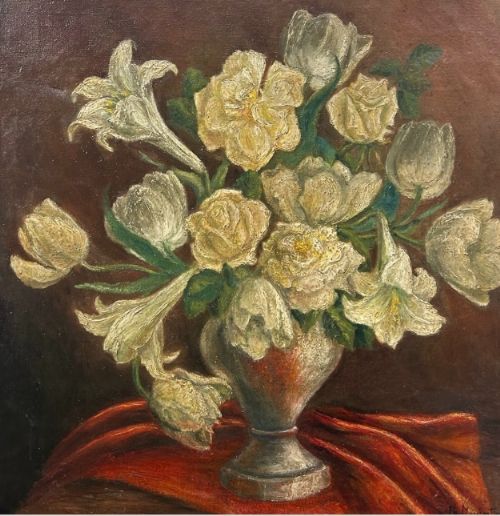
The objects appearing most frequently take the form of framed paintings, embroidered textiles, and ceramic wall plates. Works stretch across the nineteenth and twentieth centuries, showing how diverse makers interpreted garden subjects.
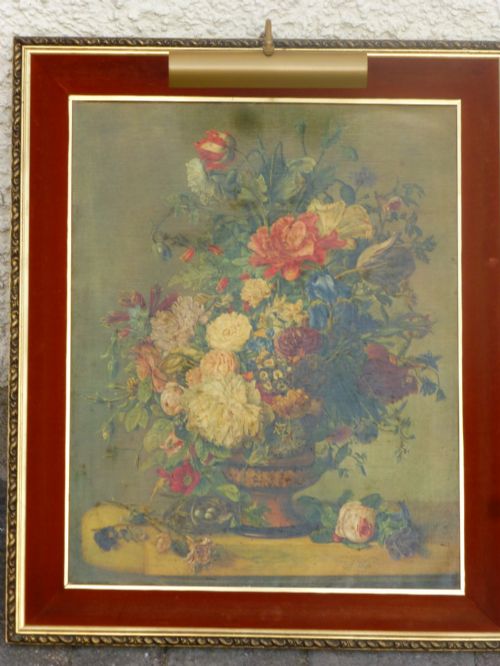
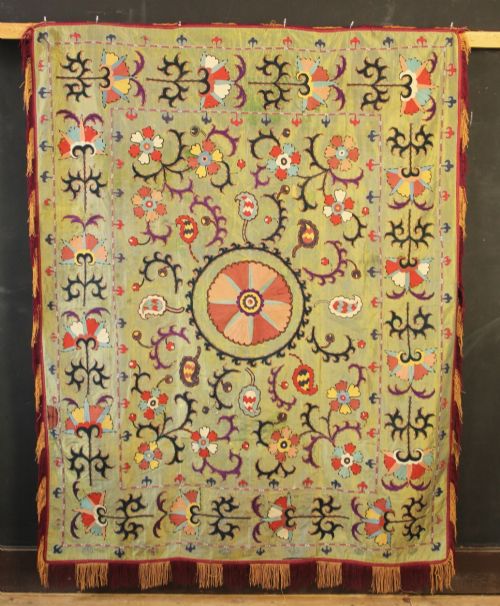
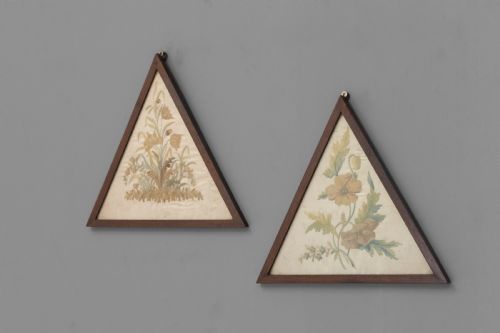
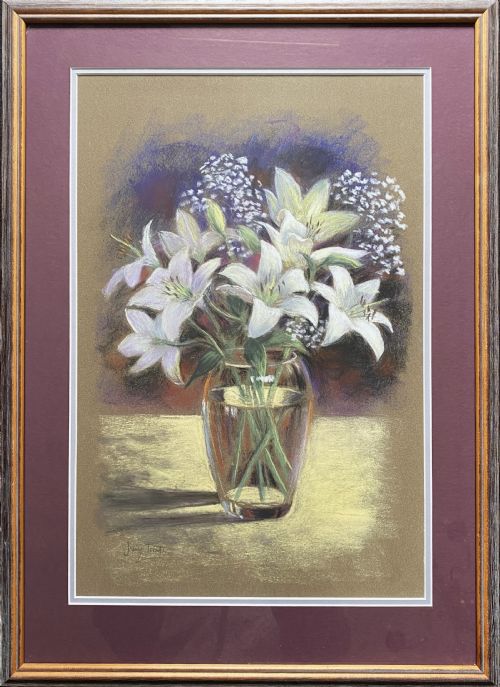
Examples run from oil and watercolour paintings on canvas to silk suzanis, printed botanicals, and intricately carved wooden panels. Each piece offers a distinct method of preserving floral forms for domestic display.
Materials and construction
Makers utilised wood, glass, silk, paper, porcelain, enamel, and canvas to construct these wall pieces. Textiles involve detailed needlework and embroidery on fabrics, while paintings employ oils or watercolours layered upon canvas or paper grounds.
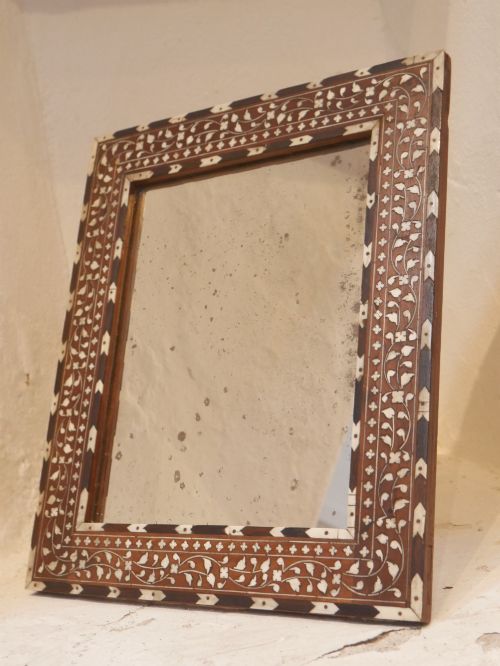
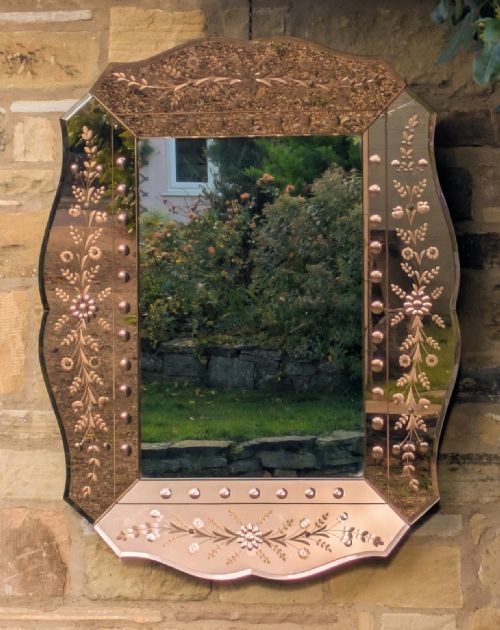
Rigid items incorporate carved wood, brass inlay, peach glass mirror frames, and fired ceramic bodies. Glazed surfaces on plates and chargers rely on traditional kiln-firing techniques to fix colours permanently beneath glassy finishes.
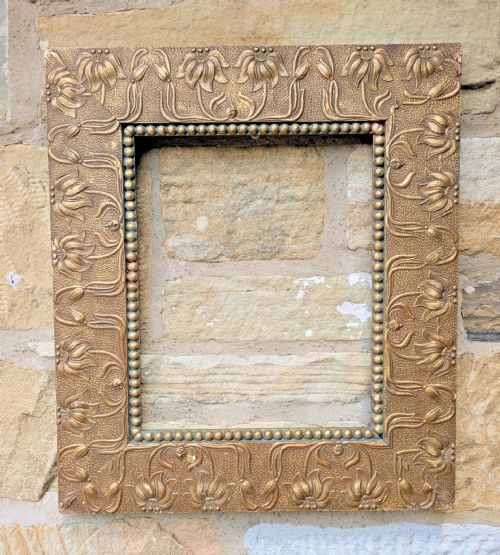
Framing often involves gilded gesso or hand-carved timber elements designed to house fragile works securely. Textile panels frequently use stretched backings to maintain the tension of silk and cotton threads.
Mandarin ducks and garden birds occasionally peek out from behind embroidered silk flowers on nineteenth-century panels.
What separates the best from the rest
Quality rests upon the execution of the botanical drawing and the complexity of the medium. Painted works reveal mastery through brushwork control and composition, while textiles depend on the density and precision of needle stitches.
Materials dictate upper tiers through original framing, genuine period pigments, and undamaged glazed surfaces. The integration of the decorative housing with the central floral artwork determines the overall coherence of the piece.
James Tower·Robin MacKertich·Jennifer Toombs·John Curtis·Emily Selinger·Harold Edward Conway
The Vintage Floral Wall Decor Glossary
- Suzani
- An embroidered tribal textile originating from Central Asia, often worked in silk with vibrant botanical motifs. These large decorative hangings bring rich texture to walls.
- Imari
- A style of Japanese porcelain featuring distinctive underglaze blue and overglaze iron-red, gold, and green pigments. Plates and chargers in this tradition display intricate floral and natural patterns.
- Oleograph
- A mechanical print produced on canvas to simulate the appearance and texture of an oil painting. This technique became common for reproducing popular artworks.
- Gesso
- A plaster-like mixture applied to wooden frames and then carved or moulded before gilding or painting. It provides a smooth base for decorative surface ornamentation.
Vintage Floral Wall Decor: Frequently Asked Questions
How do I hang heavy ceramic plates safely?
Heavy ceramic plates and chargers require specialised wall brackets or spring-loaded wire hangers that distribute weight evenly across the rim. These secure mountings prevent slipping and protect the piece from accidental knocks.
Ensure the fixing enters a wall stud or utilises appropriate wall plugs suited to the plaster or brickwork. Regular checks on the tension of the wire or prongs maintain long-term security.
Where should silk textiles be displayed?
Silk textiles and embroidered panels need placement away from direct sunlight to prevent the fading of delicate coloured threads. Wall spaces in hallways or rooms with controlled indirect lighting suit these fragile materials best.
Keeping them clear of damp environments prevents degradation of the natural fibres. Professional framing behind glass offers an additional layer of protection against dust and atmospheric moisture.
How do I clean antique oil paintings?
Antique oil paintings require gentle dusting with a soft, dry brush to remove surface particles without disturbing the varnish or pigment layers. Avoid using water, household cleaners, or chemical solvents on the canvas.
Professional conservators handle deep cleaning or the removal of aged varnish layers. Preserving the original surface keeps the integrity of the painted floral details intact.
What defines an Anglo-Indian mirror frame?
Anglo-Indian mirror frames often combine rich timber construction with intricate brass wire inlay arranged in geometric and floral patterns. Artisans in regions like Hoshiarpur specialised in this detailed craft during the nineteenth century.
These pieces reflect a distinct cross-cultural aesthetic popular in Victorian interiors. The combination of dark wood and gleaming metal creates high visual contrast around the central glass.