



Vintage Floral Inlay Bureau
A vintage floral inlay bureau brings together centuries of marquetry skill and practical writing space in one striking piece of furniture.
Vintage Floral Inlay Bureau
When you search for a vintage floral inlay bureau, you encounter writing desks and secretaire cabinets originating from eighteenth, nineteenth and early twentieth century workshops. These pieces combine fitted drawers and writing surfaces with elaborate decorative surfaces that catch the eye.
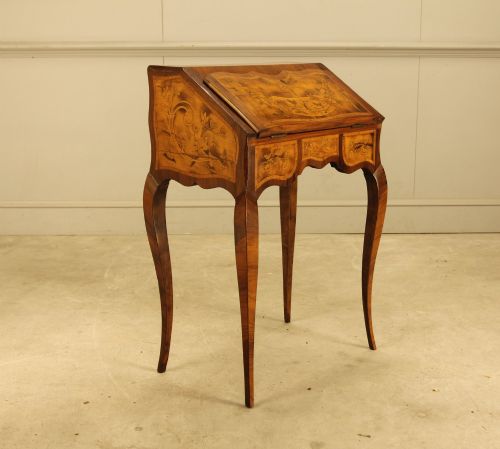
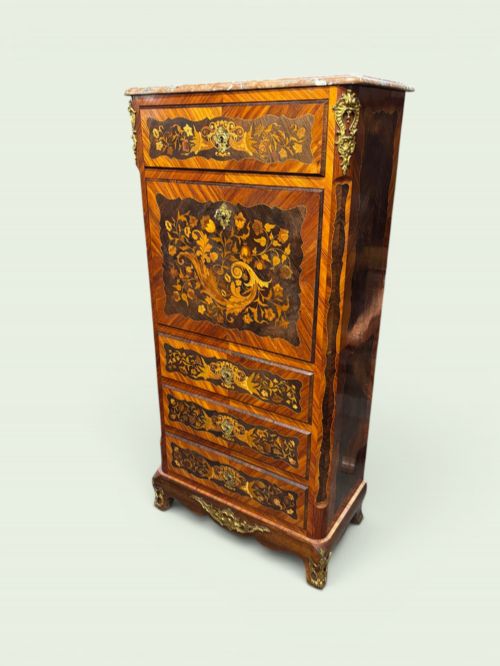
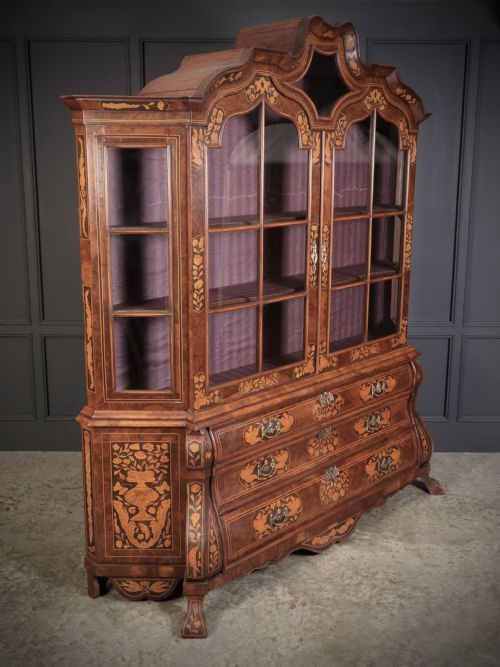
The versions most commonly met on this page range from walnut and rosewood Dutch marquetry desks to French Louis XV revival secretaire-a-abattant cabinets. They span styles from Dutch Baroque to French Rococo Revival, frequently incorporating sloping lids or drop-front writing surfaces.
Beyond standard bureaux, related forms such as dressing tables, centre tables and bombe shaped cabinets appear within the selection. Each piece relies on detailed floral patterns worked into the timber surface to define its character.
How they were made
Cabinet makers utilised foundational timbers such as walnut, rosewood, fruitwood and kingwood to construct the carcase of each desk. Artisans then applied intricate floral marquetry using contrasting veneers to build up the colourful botanical motifs across the drop fronts and drawer faces.
Metal mounts in brass and ormolu often frame the corners and handles, adding structural support and visual weight to the curved forms. On selected cabinets, marble inserts provide a heavy, polished top surface above the inlaid wood.
Vintage Floral Inlay Bureau Retail Price Guide 2026
Typical asking prices for vintage floral inlay bureau among the pieces listed under this phrase on Sellingantiques today, from the lower quarter to the upper quarter. They describe what is for sale here now, not the wider market.
Some nineteenth-century Dutch bureaux hide secret interior drawers behind decorative spring-loaded panels designed to outsmart curious visitors.
What varies in quality
The visual depth of the floral marquetry dictates the standard of the piece, separating simple surface patterns from designs that use varied wood grains to create naturalistic shadows and petal contours. Mastery of veneer selection allows certain makers to achieve a remarkably lifelike botanical arrangement.
The complexity of the underlying woodwork also shapes the quality, particularly where cabinets feature bombe curves or elaborate interior pigeonholes and secret drawers. Heavier use of cast ormolu mounts and finely chased brass hardware distinguishes the finer examples from simpler provincial work.
The Vintage Floral Inlay Bureau Glossary
- Marquetry
- The art of forming decorative patterns by fitting together small pieces of veneer into a wooden panel. This technique allows cabinet makers to depict elaborate floral bouquets across the fall front of a bureau.
- Secretaire
- A piece of furniture containing a drawer or compartment that pulls down or drops open to serve as a writing desk. These often conceal small pigeonholes and hidden document drawers inside.
- Bombe
- A style of furniture featuring outward-bulging convex sides and fronts, particularly popular in continental pieces. This swelling contour requires advanced woodworking skill to maintain structural integrity.
- Ormolu
- Gilded bronze used for decorative mounts, feet and keyhole escutcheons on fine cabinetry. The metallic gleam contrasts with dark woods like walnut and rosewood.
- Veneer
- A thin slice of fine wood applied over a simpler base timber to provide a decorative exterior. Marquetry patterns are assembled entirely from these thin sheets.
Vintage Floral Inlay Bureau: Frequently Asked Questions
What is a floral inlay bureau?
A floral inlay bureau is a writing desk featuring a sloping lid or drop front decorated with botanical patterns made from wood veneers.
These pieces typically date from the eighteenth to the early twentieth century and originate from Dutch and French cabinet making traditions.
How do I use a bureau desk?
The fall front or sloping lid lowers to create a horizontal writing surface while revealing internal compartments for stationery and letters.
When closed, the lid conceals the workspace and keeps your writing materials neatly tucked away.
How do I tell Dutch and French styles apart?
Dutch pieces usually feature dense, all-over floral marquetry across flat or bombe surfaces using rich walnut and fruitwood. French pieces often incorporate ormolu mounts, rosewood veneers and curved cabriole lines influenced by Rococo design.
Can I use a vintage bureau daily?
These desks provide practical writing surfaces and drawer storage suited for everyday use in a modern study or living room.
Care should be taken to protect the polished wood and delicate marquetry from excessive moisture and direct sunlight.