


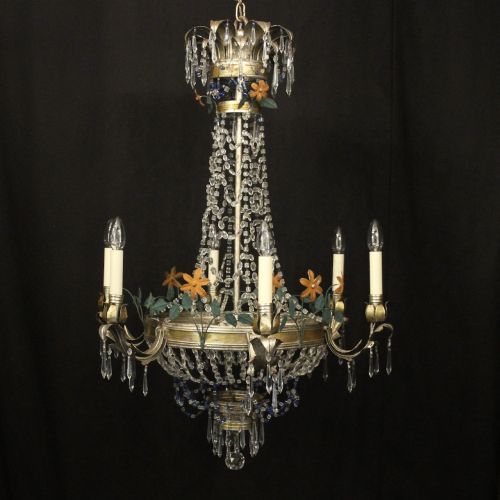
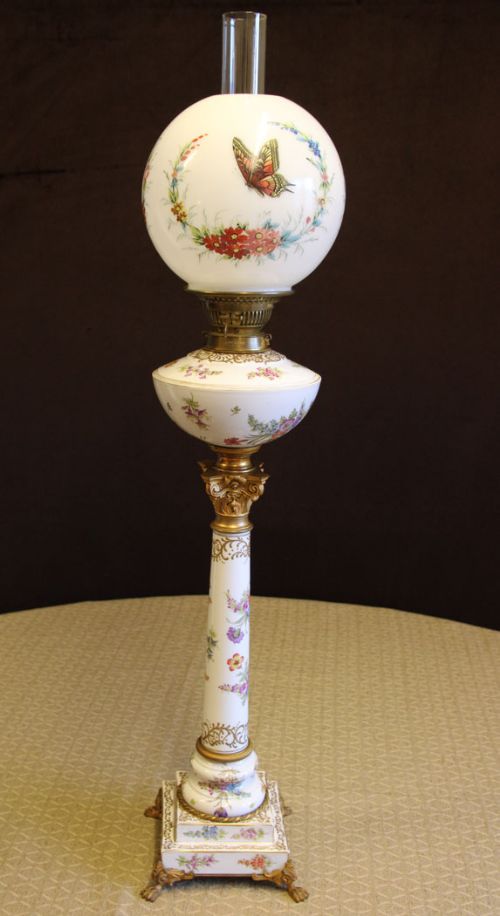
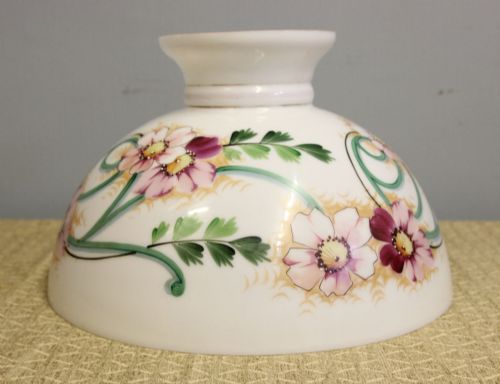
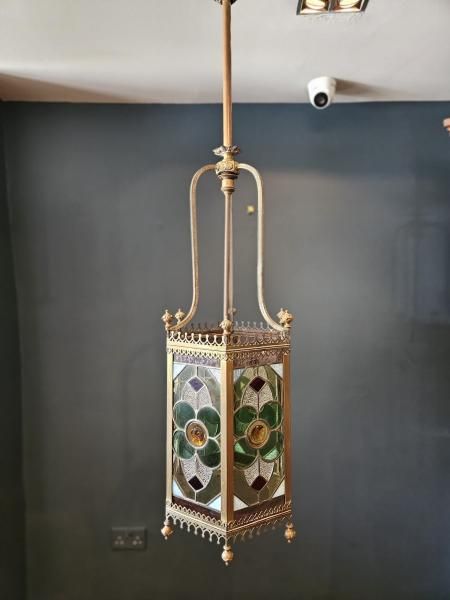



Vintage Floral Glass Lamp
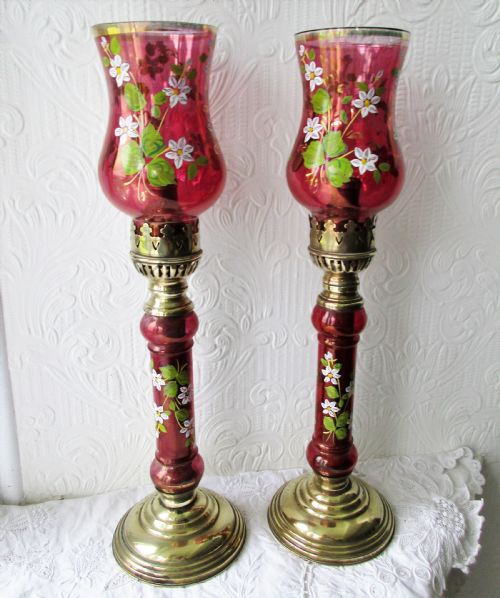
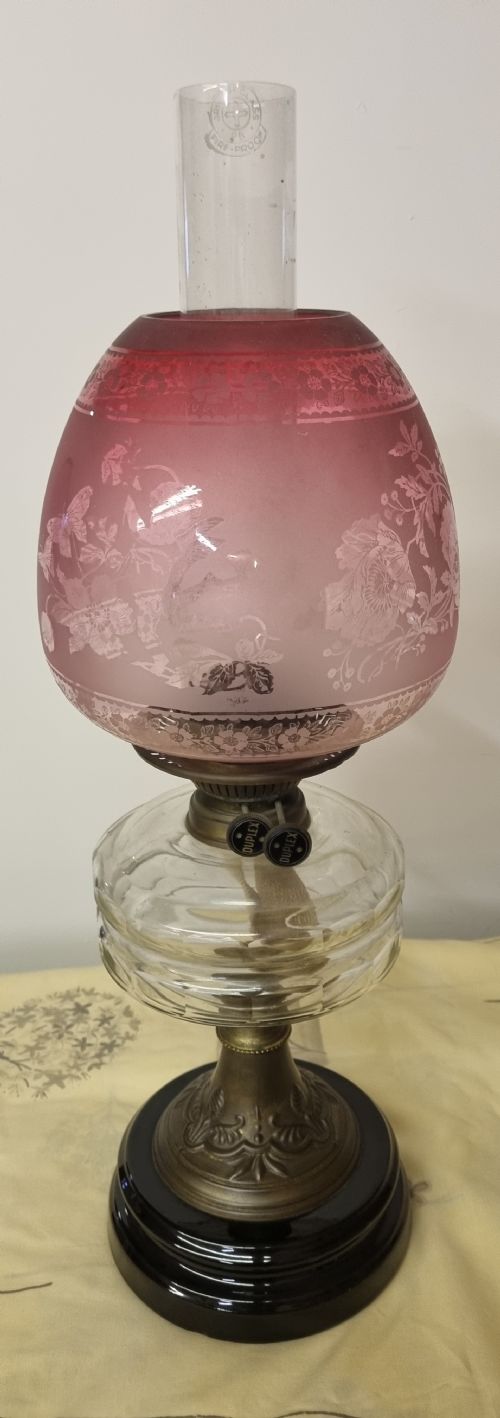
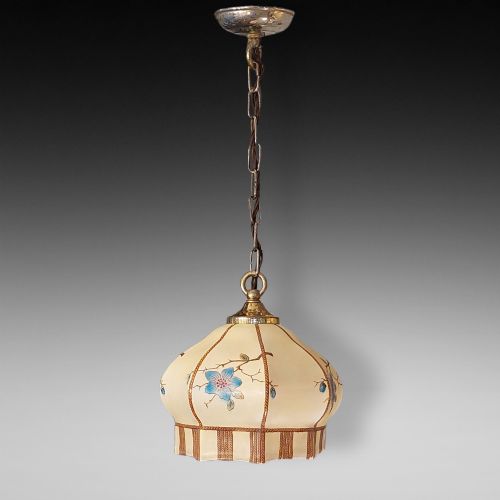
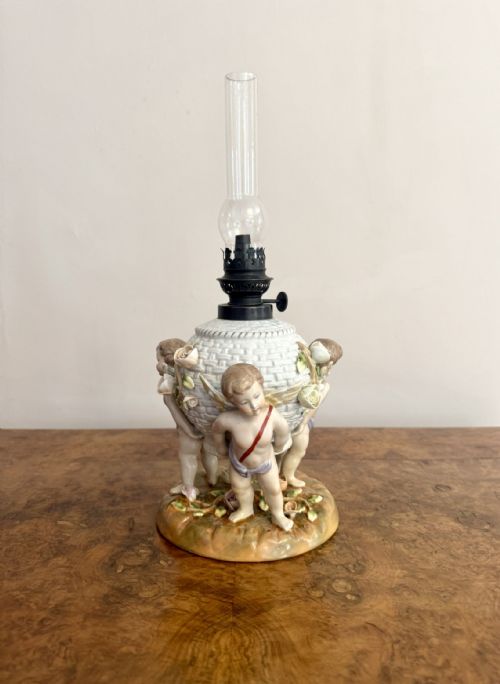
These vintage floral glass lamps combine brass and ceramic bases with hand-painted shades, offering period illumination for traditional rooms.
Vintage Floral Glass Lamp
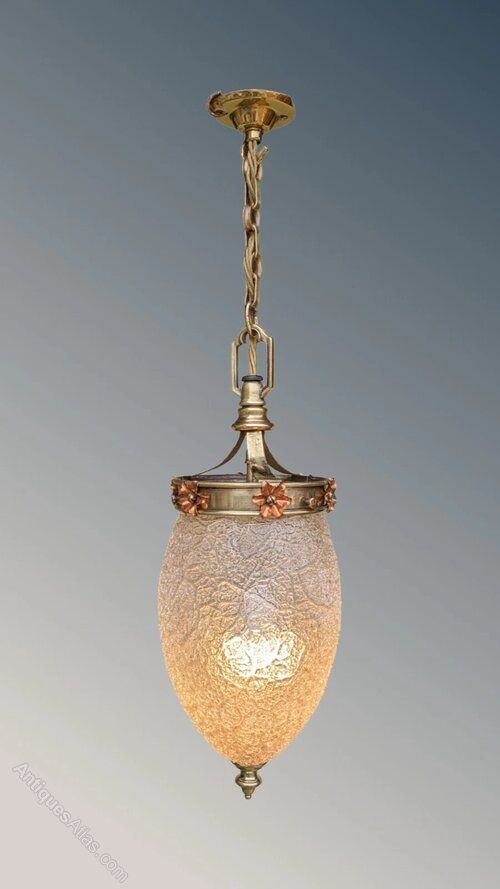
When you search for a vintage floral glass lamp, you encounter a selection spanning the Victorian, Edwardian, and Art Deco periods, predominantly comprising oil lamps, table lamps, and decorative shades. These pieces range from 19th-century oil lamps to 1930s chandeliers and pendant lights.
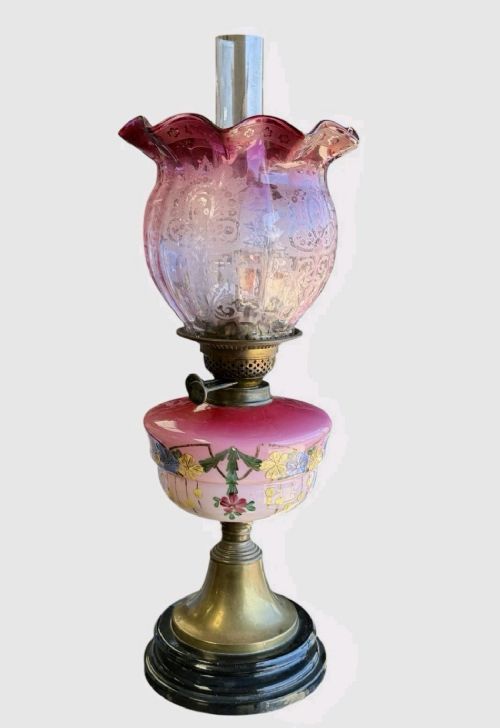
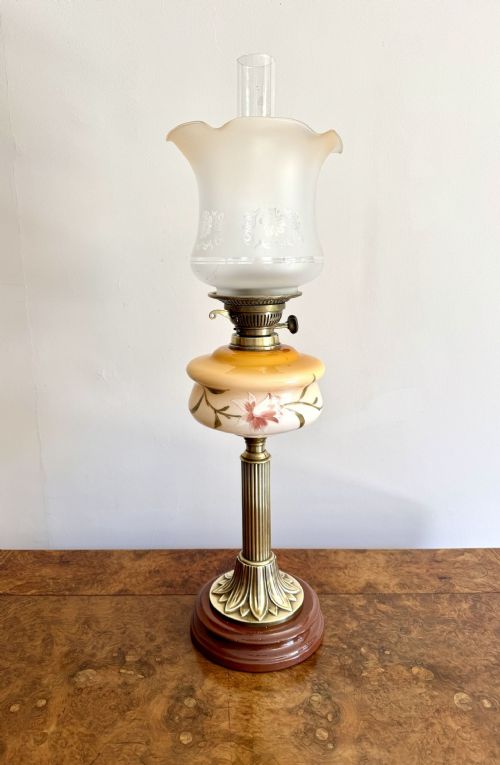
The objects commonly met on this page include Victorian oil lamps with painted font shades, opaline or cranberry glass shades, and Edwardian or Art Nouveau fixtures incorporating floral glass elements. Materials such as brass, porcelain, and wrought iron frequently support the glass components across these listings.
Materials and construction
Makers utilised brass, porcelain, and iron to form the structural bodies, pairing these durable metals with blown, frosted, opaline, or cranberry glass for the shades and fonts. Many components feature hand-painted floral motifs and enamel decoration applied directly to the glass or porcelain surfaces.
Techniques varied from leaded glass assembly in lanterns to delicate etching and hand-painting on oil lamp globes. Brass castings provided solid foundations for heavier crystal and glass reservoirs, while wrought iron supported enamelled glass in later Art Deco designs.
Vintage Floral Glass Lamp Retail Price Guide 2026
Typical asking prices for vintage floral glass lamp among the pieces listed under this phrase on Sellingantiques today, from the lower quarter to the upper quarter. They describe what is for sale here now, not the wider market.
Listings feature Victorian, Edwardian, and Art Deco styles constructed from brass, frosted glass, porcelain, and cranberry glass.
Assessing quality and execution
The distinction between standard items and the top of the range rests on the fineness of the hand-painting upon the glass and porcelain, alongside the weight and detail of the brass or bronze mountings. Superior examples display intricate brushwork on floral motifs and substantial cast metal components.
Quality also shows in the depth and colour of the glass, such as rich cranberry or layered opaline, paired with harmonious proportions between the shade and the base. Simpler pressed glass and standard brass fittings occupy the other end of the spectrum.
Sitzendorf·Daum·Baccarat
The Vintage Floral Glass Lamp Glossary
- Font
- The oil reservoir of a lamp, typically made of glass, porcelain, or brass, positioned above the base and below the burner.
- Opaline glass
- An opaque or translucent pale glass, often white or pastel tinted, popular for Victorian and Edwardian lamp shades.
- Cranberry glass
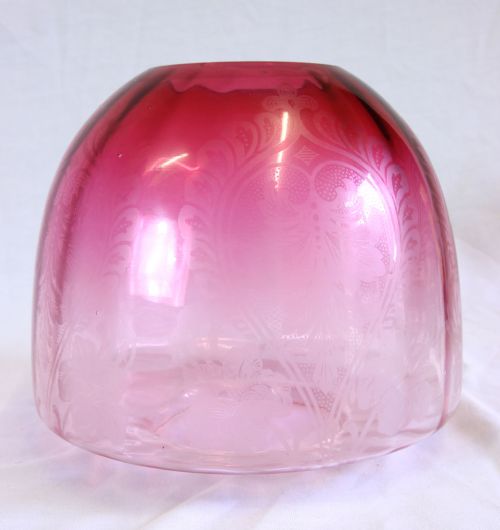
- A rich red transparent glass created by adding gold chloride to the molten batch, frequently seen in Victorian lamp shades.
- Faience
- Tin-glazed earthenware used for ceramic lamp bases and decorative bodies, particularly in Continental Art Nouveau pieces.
Vintage Floral Glass Lamp: Frequently Asked Questions
What periods do these lamps come from?
The pieces span from the late 19th century through the Victorian and Edwardian eras into the 1920s and 1930s Art Deco periods.
Victorian and Edwardian examples lean towards oil lamps and ornate painted glass shades, while 1930s pieces often include chandeliers and wrought iron table lamps.
How were these lamps originally used?
They served primarily for interior illumination in homes before and during the early adoption of electric lighting, utilising oil or paraffin.
Many surviving oil lamps and candle-lamps have since been adapted for electricity while retaining their original glass shades and decorative brass or porcelain bodies.
How do I identify a cranberry glass shade?
Cranberry glass exhibits a distinct deep pink or reddish translucent tone derived from gold content in the glass mixture during production.
These shades appear frequently on Victorian oil lamps, often paired with hand-painted floral decoration or fluted rims.
What is an opaline glass shade?
Opaline glass is a translucent pale material that diffuses light softly, commonly found on hanging and table oil lamps from the early 20th century.
It provides a milky background that highlights painted floral designs and pastel colour applications.