



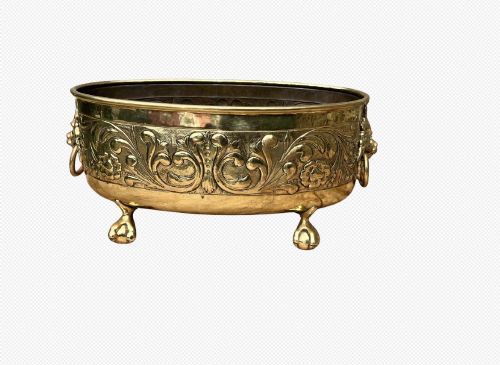


Vintage Floral Container
A vintage floral container brings botanical ornament into the room, holding everything from dry biscuits to small dressing table trinkets.
Vintage Floral Container
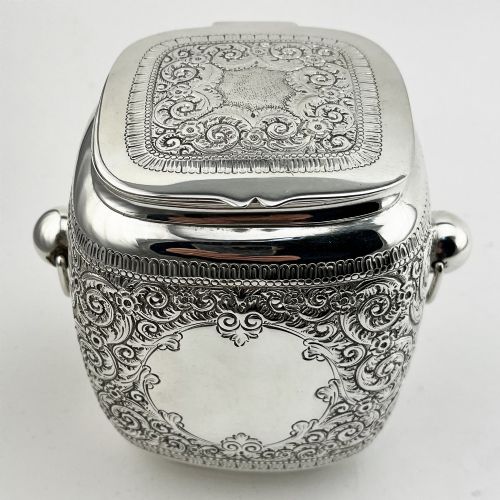
When you search for a vintage floral container, you encounter a diverse group of receptacles adorned with botanical motifs, spanning biscuit barrels, vanity jars, and decorative boxes. These pieces emerge from the Victorian and Edwardian eras through to the early twentieth century, drawing on English, continental, and Asian export traditions.
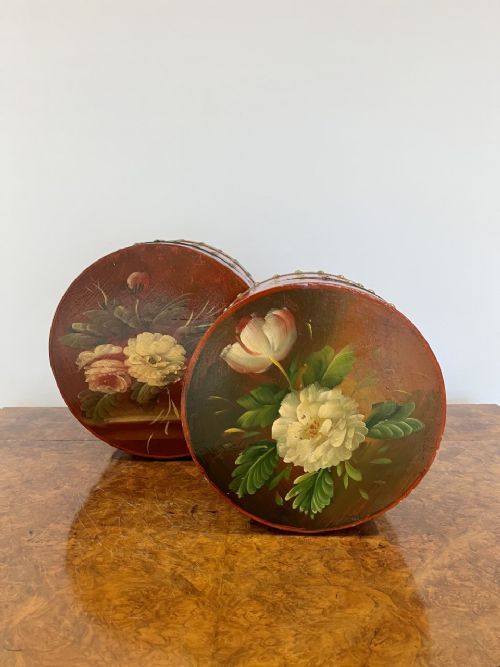
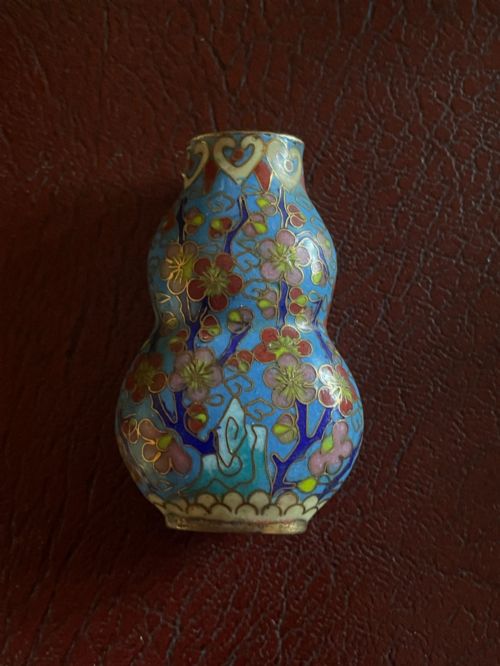
The most frequent examples on this page take the form of ceramic biscuit barrels with flow blue decoration, silver-lidded glass jars, and painted wooden or metal storage boxes. Stylistic influences range from traditional Rococo scrolls to Japanese cloisonne enamel and Kashmiri hand-painted patterns.
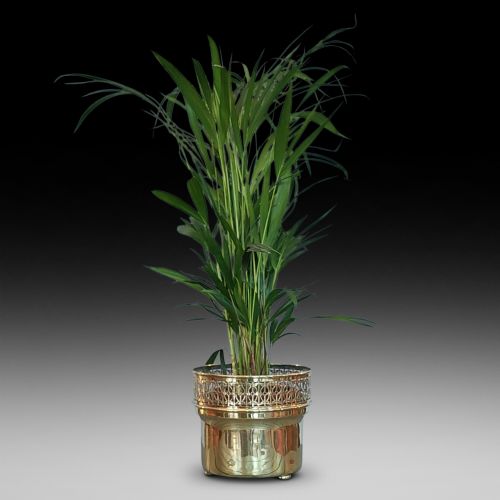
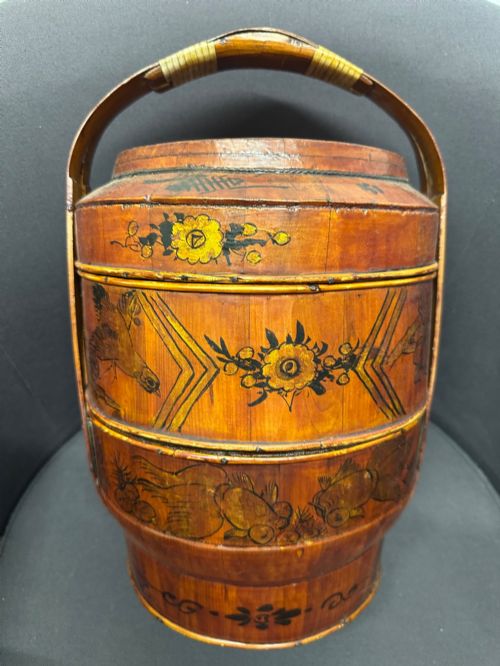
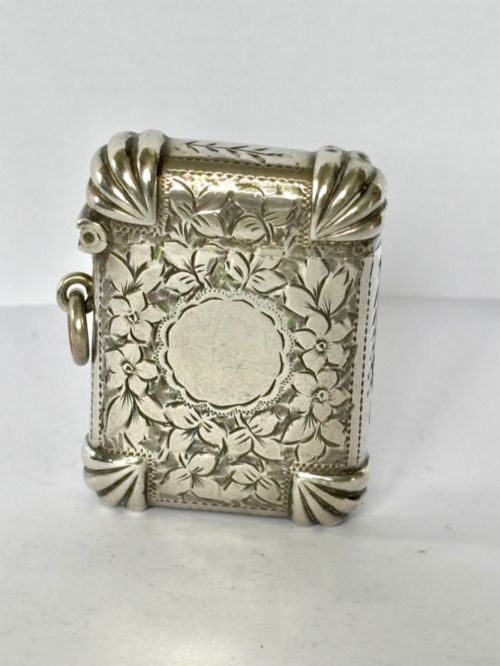
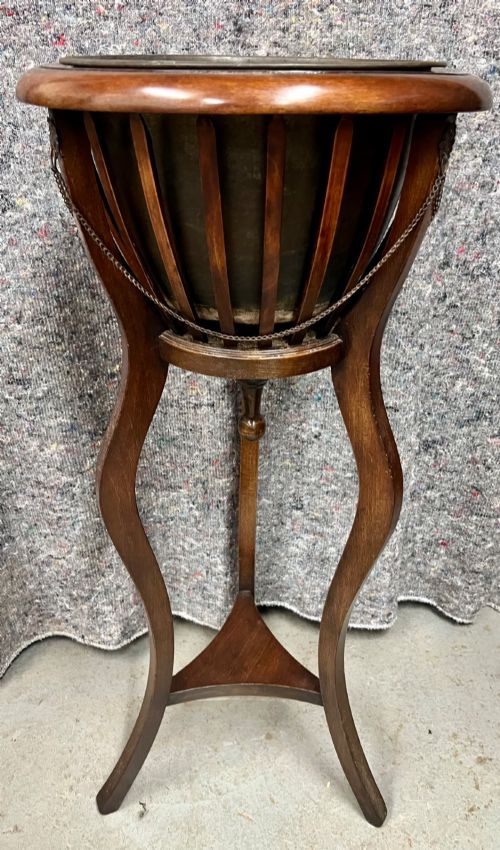
Object types vary widely in utility and scale, encompassing small sterling silver vesta cases, mahogany jardiniere plant stands, and larger rice carriers or coal boxes. Each item serves a domestic function while displaying floral themes through paint, metalwork, or ceramic glaze.
Materials and construction methods
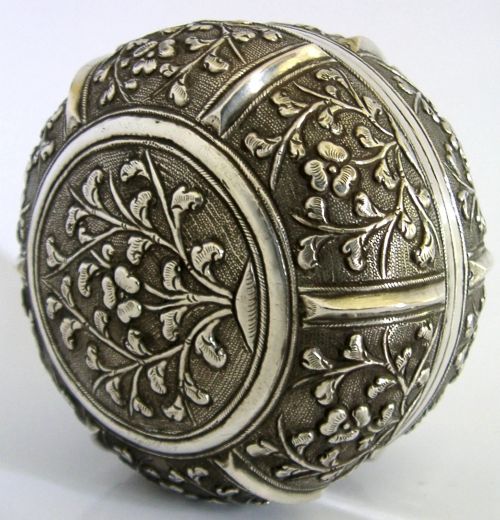
Metals such as sterling silver, silver plate, brass, and copper form the structure of many pieces, often enhanced with enamel work, piercing, or gilt-metal mounts. Artisans shape these materials into boxes, caddies, and miniature vases.
Ceramics and glass provide smooth surfaces for painted floral decoration, seen in flow blue biscuit barrels and enamelled green glass dressing table jars. Wood and bamboo feature in turned boxes, Tunbridge ware, and rice carriers, sometimes paired with hand-painted finishes.
Techniques combine smithing, ceramic firing, glass blowing, and intricate surface decoration including cloisonne wirework and detailed brushwork.
Vintage Floral Container Retail Price Guide 2026
Typical asking prices for vintage floral container among the pieces listed under this phrase on Sellingantiques today, from the lower quarter to the upper quarter. They describe what is for sale here now, not the wider market.
Listings combine ceramic, glass, and metal forms with floral themes across the Victorian, Edwardian, and Meiji periods.
Assessing quality in floral containers
Quality depends on the precision of the handwork, whether in the crispness of pierced silver floral scrollwork, the control of enamel cells in cloisonne, or the execution of hand-painted botanical motifs. Superior pieces display deliberate handling of materials by skilled hands.
The integration of mounts, hinges, and lids dictates the structural integrity of boxes and jars, where well-fitted metalwork aligns properly with glass, wood, or ceramic bodies. Finer examples maintain original mounts and retain the intended balance between container and ornament.
EV Pledge & Son·Martin Hall & Co·Meissen
The Vintage Floral Container Glossary
- Biscuit Barrel
- A covered ceramic, glass, or metal jar utilised for storing dry biscuits at the table. These vessels frequently feature silver-plated mounts and floral decoration.
- Cloisonne
- An ancient technique where thin metal wires are soldered to a metal base to create compartments, which are then filled with enamel paste and fired. This method produces intricate mosaic patterns of birds and flowers.
- Flow Blue
- A cobalt blue transfer printing style utilised on white earthenware, where the colour slightly blurs during firing to create a soft, hazy effect. This technique appears commonly on nineteenth-century tableware and storage jars.
- Jardiniere
- An ornamental pot or stand intended for holding plants or flowers. These items appear in ceramic, metal, and wood across various periods.
Vintage Floral Container: Frequently Asked Questions
What were biscuit barrels used for?
Biscuit barrels served as decorative containers on Victorian and Edwardian dining tables to keep dry biscuits fresh during tea service.
Their hinged lids and sturdy ceramic or glass bodies protected the contents while adding a decorative element to the room.
How do I identify a Victorian piece?
Victorian pieces often display characteristic weight, traditional motifs such as floral scrollwork, and specific hallmarks on silver components.
Materials like heavy ceramic, silver plate, and dark woods commonly point to this nineteenth-century period of manufacture.
Are these containers waterproof?
Most antique containers made of wood, painted metal, or unglazed ceramics are not designed to hold standing water safely.
Liners are typically required if utilising wooden or card boxes for living plants or cut flowers.
How should I clean silver-mounted glass?
Silver mounts require gentle cleaning with a specialist cloth to avoid tarnishing while protecting the adjacent glass or enamel.
Immersion in liquid polish should be avoided to prevent damage to delicate surface decoration and joints.