



Vintage Flatware Box
When you search for a vintage flatware box, you are looking at fitted cases and canteens designed to hold silver, cutlery, and serving implements securely.
Vintage Flatware Box
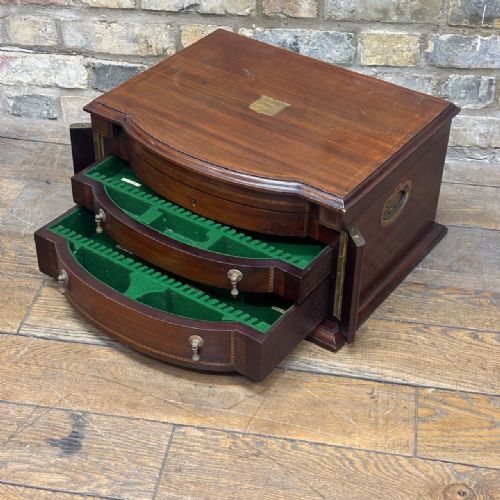
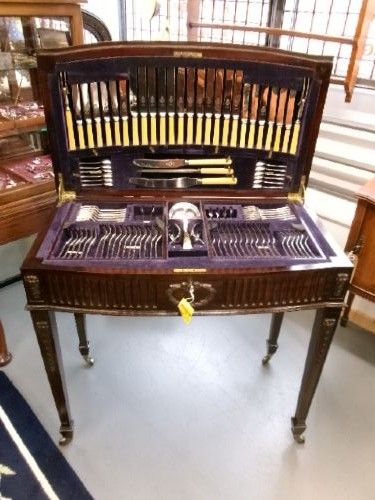
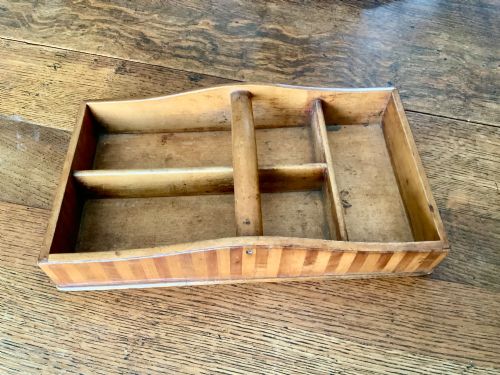
A vintage flatware box encompasses several distinct storage forms, ranging from serpentine mahogany knife boxes and rustic pine trays to large oak canteens on stands. These pieces originate from various eras, including the Georgian, Victorian, Edwardian, and Art Deco periods, reflecting the shifting domestic habits of each time.
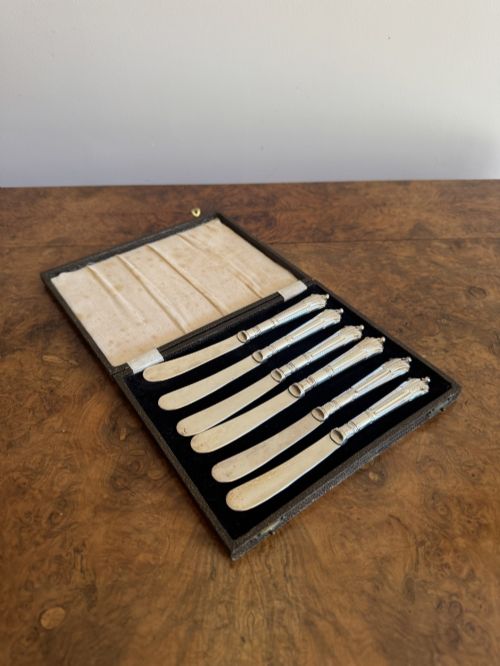
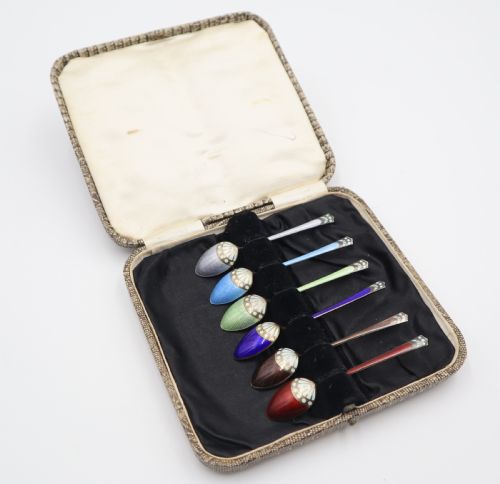
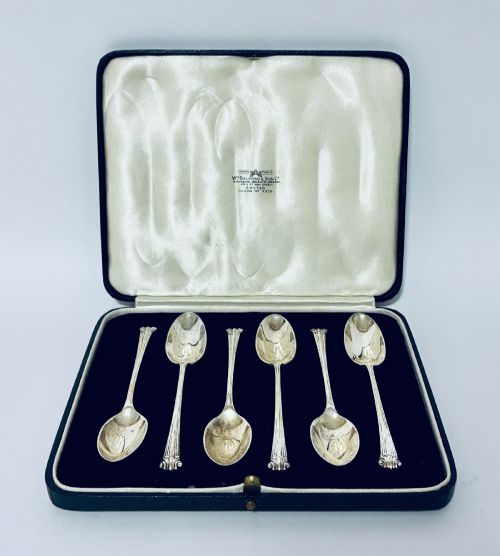
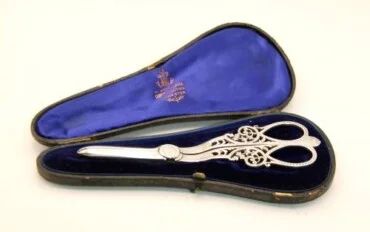
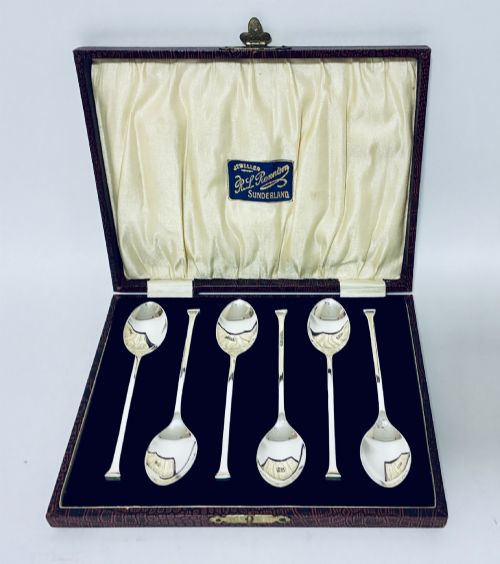
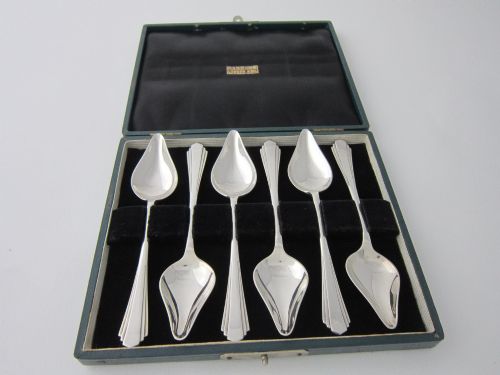
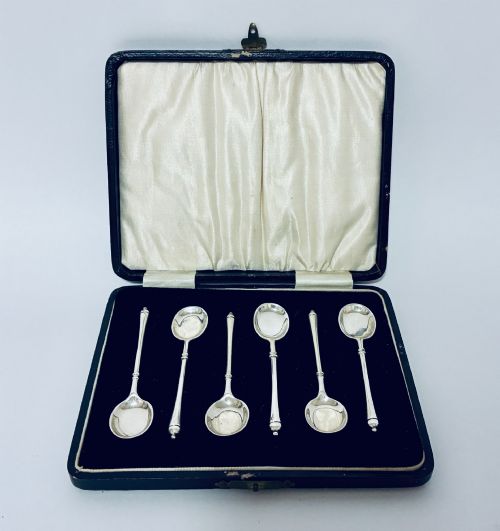
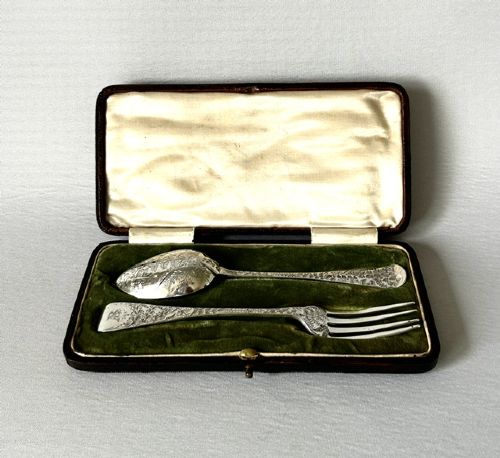
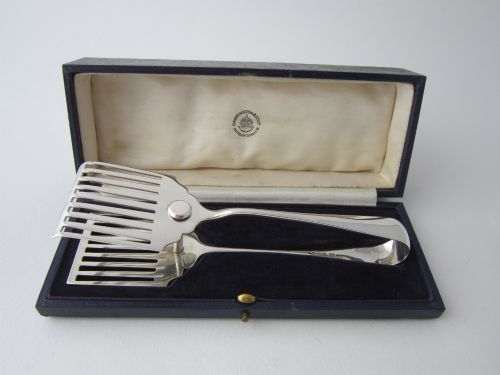
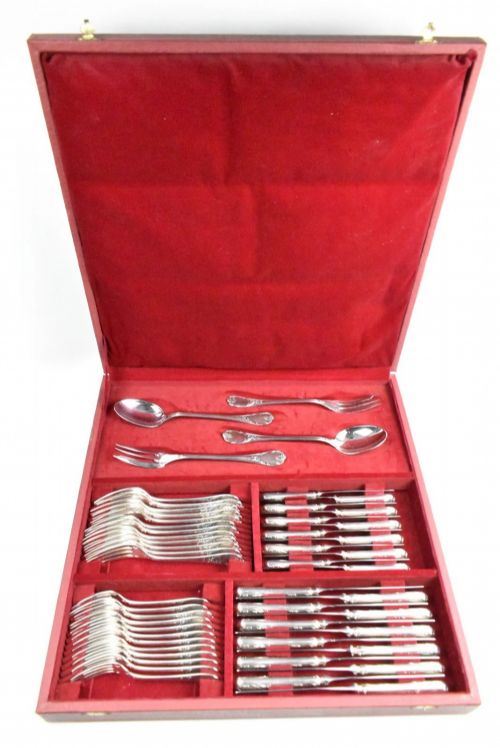
The interiors are typically fitted to hold specific utensils such as teaspoons, apostle spoons, butter knives, fish servers, and large canteens of cutlery. Buyers frequently encounter cases lined with velvet, silk, or satin, designed to protect sterling silver, silver plate, and steel implements from tarnishing and damage.
Materials and Construction
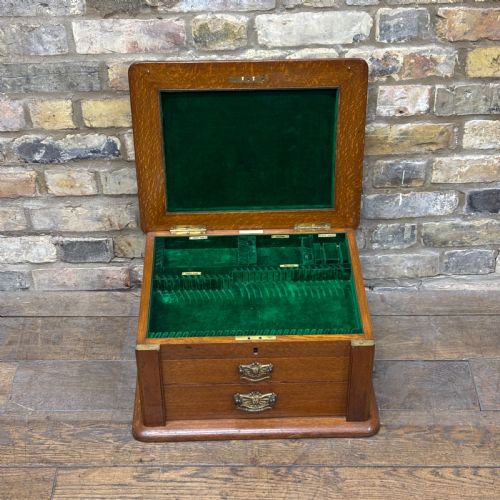
Cabinet makers utilised dense timbers such as mahogany, oak, and walnut to construct sturdy outer shells, occasionally incorporating intricate inlay work or serpentine fronts. Brass fittings, including hinges, handles, and escutcheons, provide both structural reinforcement and decorative contrast.
Internal compartments rely on soft textile linings made from velvet, silk, satin, or leatherette to cushion metal cutlery sets and specialised serving pieces. These materials work together to create a secure, compartmentalised environment that keeps individual forks, spoons, and knives separated.
Vintage Flatware Box Retail Price Guide 2026
Typical asking prices for vintage flatware box among the pieces listed under this phrase on Sellingantiques today, from the lower quarter to the upper quarter. They describe what is for sale here now, not the wider market.
Keep an eye out for dedicated compartments that once kept Victorian asparagus eaters safe from butter accidents.
Design and Execution
The quality of a flatware box depends heavily on the precision of its internal carpentry and the selection of cabinet timbers. Superior examples feature well-fitted partitions tailored to specific service sets, smooth-working brass hardware, and tightly joined wood construction.
Interior presentation also separates standard containers from finer pieces, with well-preserved velvet, silk, or satin linings indicating careful curation and better original manufacture. The integration of functional elements like lockable lids and stable trays demonstrates the maker's attention to daily utility.
Christofle·Walker & Hall·Mappin & Webb·Georg Jensen
The Vintage Flatware Box Glossary
- Canteen
- A fitted box or chest designed specifically to hold a complete set of cutlery or flatware. These containers organise spoons, forks, and knives into dedicated layers or slots.
- Serpentine
- A curved shape featuring a convex centre flanked by concave ends, frequently seen on the fronts of Georgian mahogany knife boxes. This undulating profile adds visual movement to cabinet furniture.
- Escutcheon
- A flat plate surrounding a keyhole, usually made of brass on these wooden boxes. It protects the surrounding wood from wear caused by the insertion of a key.
- Silver plate
- A base metal coated with a thin layer of silver through electroplating or older techniques. This material allowed makers to produce large canteens without the high cost of solid silver.
Vintage Flatware Box: Frequently Asked Questions
What fits inside a vintage flatware box?
These boxes accommodate a wide variety of cutlery and serving utensils, including teaspoons, coffee spoons, fish servers, butter knives, and large canteens of flatware. The internal partitions are arranged to hold specific service sets securely.
Many containers are designed for specialised items such as apostle spoons, fruit knives, grapefruit spoons, or lobster picks, each resting in a custom slot.
How do I clean the interior lining?
Velvet, silk, and satin linings require gentle care to preserve the fabric without damaging the surrounding wooden structure. Light dusting with a soft brush usually removes surface debris safely.
Moisture can stain or weaken antique textiles and rust the metal components stored inside, so liquid cleaners are generally avoided.
How are different wood types identified?
Mahogany typically displays a rich, reddish-brown grain that deepens with age, frequently used in Georgian serpentine knife boxes. Oak presents a pronounced, open grain pattern that suits Edwardian canteens and heavy chests.
Walnut offers a darker appearance with complex figuring, appearing in various early twentieth-century storage pieces alongside simpler pine trays.