






Vintage Fishing Scene Painting
A vintage fishing scene painting captures the labour, weather, and quiet harbours of past coastal and river life.
Vintage Fishing Scene Painting
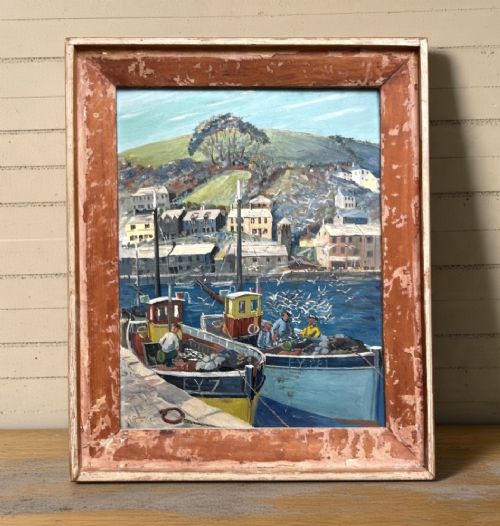
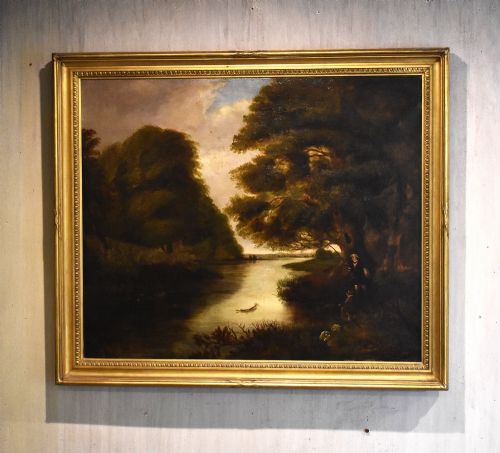
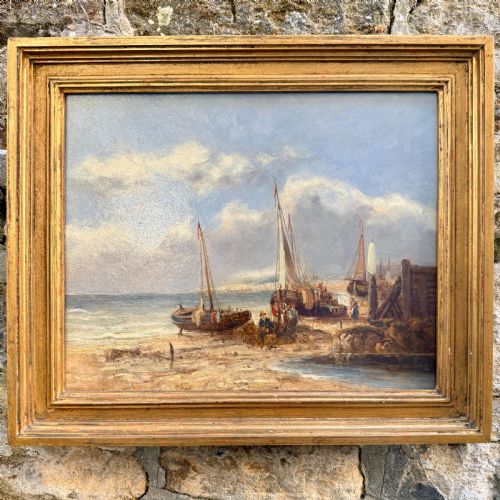
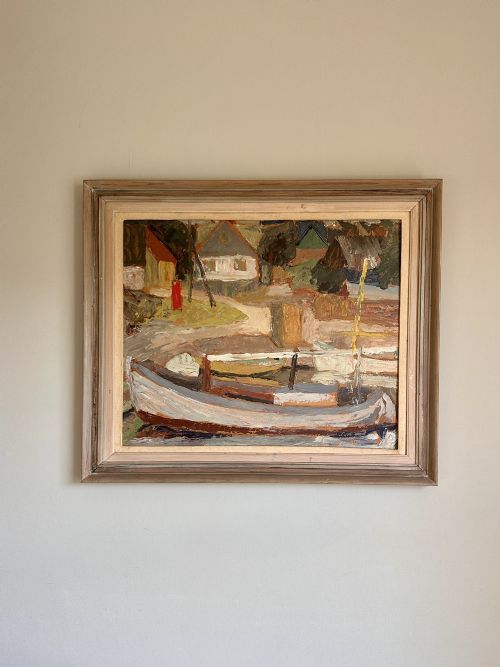
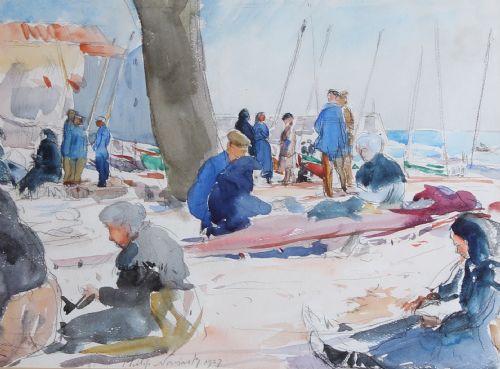
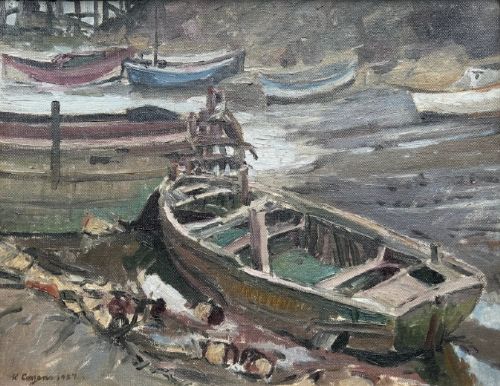
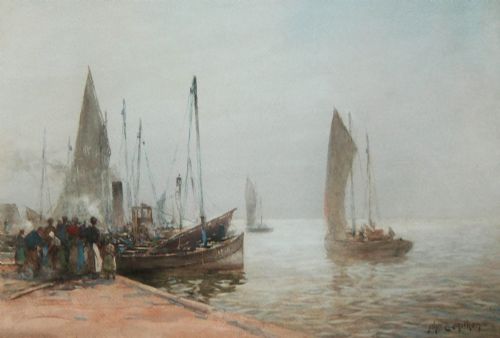
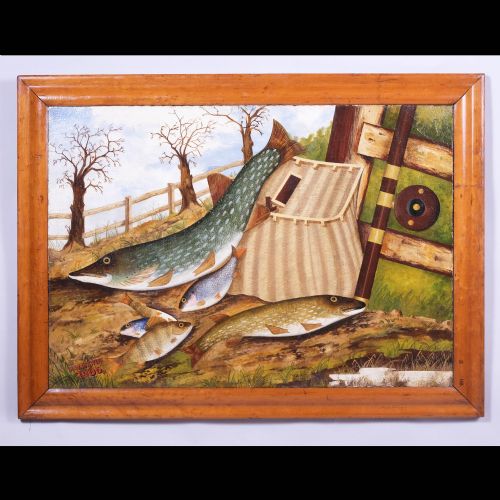
A vintage fishing scene painting depicts maritime harbours, coastal docks, riverbanks, and boats rendered in oils or watercolours. These works record commercial fishing fleets, figures mending nets, and rural angling moments across Britain and Europe.
The selections span the nineteenth century through the mid-twentieth century, encompassing Victorian marine works, Edwardian watercolours, and mid-century British landscapes. Buyers encounter framed canvas works, panel paintings, and paper watercolours.
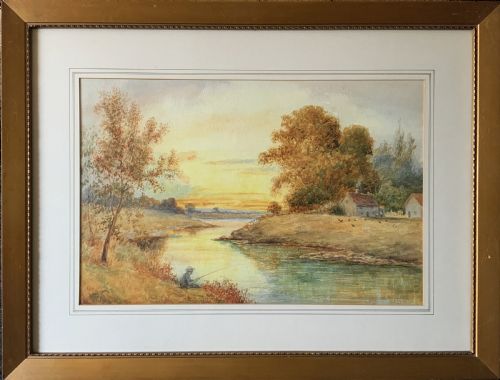
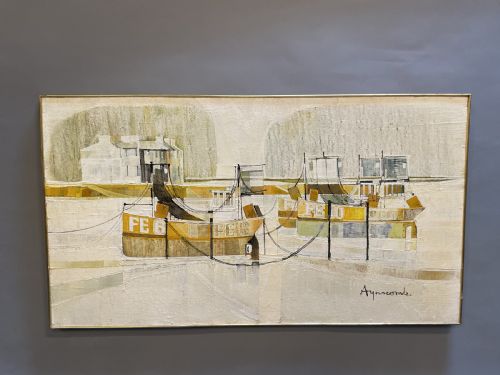
Harbour views of Cornish ports such as Polperro and Mousehole recur frequently alongside river scenes featuring figures fishing from grassy banks. The visual styles range from traditional academic recording to British Impressionism and Post-Impressionism.
How They Were Made
Artists painted these scenes using oil paint or watercolour pigment applied to wood panels, stretched canvas, or heavy paper. Oil formulations allowed for textured impasto on board and canvas, capturing choppy seas and cloud formations.
Watercolour works relied on fluid washes and ink line details on paper, often framed behind glass to protect the delicate pigment layers. Many canvases and panels sat within period wood frames that matched the aesthetic of the composition.
Vintage Fishing Scene Painting Retail Price Guide 2026
Typical asking prices for vintage fishing scene painting among the pieces listed under this phrase on Sellingantiques today, from the lower quarter to the upper quarter. They describe what is for sale here now, not the wider market.
Cornish fishing ports including Polperro, Mousehole, and Mevagissey appear frequently across the regional landscapes.
What Varies in Quality
Quality rests upon the artist's command of light, atmosphere, and maritime architecture, separating routine topographical records from dynamic coastal compositions. Works by established regional painters demonstrate confident brushwork and accurate vessel structures.
Condition plays a central part in the assessment, noting the stability of the paint layer, freedom from canvas punctures, and the presence of original framing. Unrestored surfaces with clear provenance and legible signatures retain greater integrity.
Philip Naviasky·Kenneth Cozens·George Graham·James E Aitken·Florence Adelina Hess·John Holland·Alfred George Morgan·Gyrth Russell·William Lee Hankey·George Gregory·Ernest F Hill·Harry Davis·Percy Brooke·William Lambert Bell·Owen Bowen·Antonio Godoy·Walter Sweet·Hendrik Yan Wolter·Frank Rousse·Henry John Sylvester Stannard·WE Barrington Browne·James Ward
The Vintage Fishing Scene Painting Glossary
- Impasto
- Paint applied thickly to a canvas or panel, standing out in relief from the surface. This technique creates texture in water and sky elements.
- Provenance
- The documented history of ownership of a painting. It establishes the authenticity and lineage of the artwork.
- Panel
- A flat piece of wood used as a rigid support for oil painting instead of stretched canvas. Panels provide a smooth ground for detailed harbour views.
- Wash
- A thin, transparent layer of diluted watercolour pigment spread across paper. It creates luminous skies and soft coastal water effects.
Vintage Fishing Scene Painting: Frequently Asked Questions
What periods do these paintings cover?
The works originate from the nineteenth century through the mid-twentieth century, including Victorian, Edwardian, and mid-century eras.
Individual pieces reflect the shifting artistic movements of these decades, ranging from traditional maritime recording to impressionist approaches.
Are these works signed by the artists?
Many examples feature artist signatures, studio inscriptions, or attribution notes written on the front or reverse.
Signed pieces often link to recorded British and European painters, while unsigned works rely on stylistic evidence and period framing.
What subjects appear most often?
Harbour views dominate the selections, particularly Cornish fishing ports, boats in choppy seas, and daily dockyard labour.
Other compositions show quiet river landscapes with figures angling from banks or rural streams under willow trees.
What mediums were used for these scenes?
Artists worked primarily in oil paint on canvas or wood panel, alongside watercolours and pastels on paper.
Oils offered durability for coastal depictions, while watercolours captured the atmospheric light of estuaries and coastal villages.