


Vintage Fire Iron Companion Set
A vintage fire iron companion set brings hearth and mantel together, offering both practical utility and the honest weight of nineteenth-century metalwork.
Vintage Fire Iron Companion Set
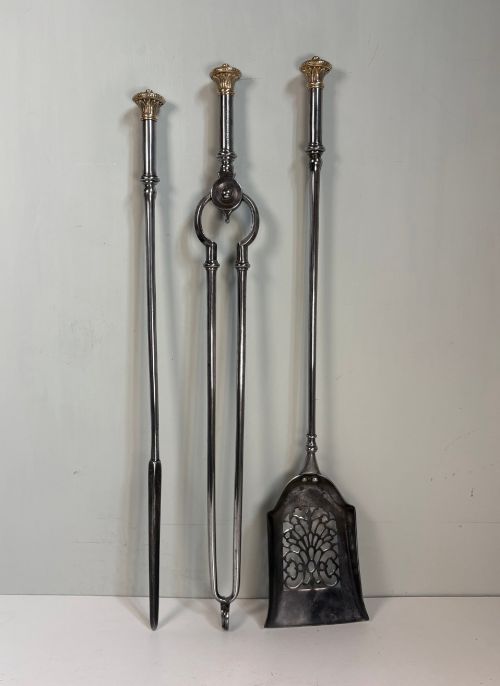
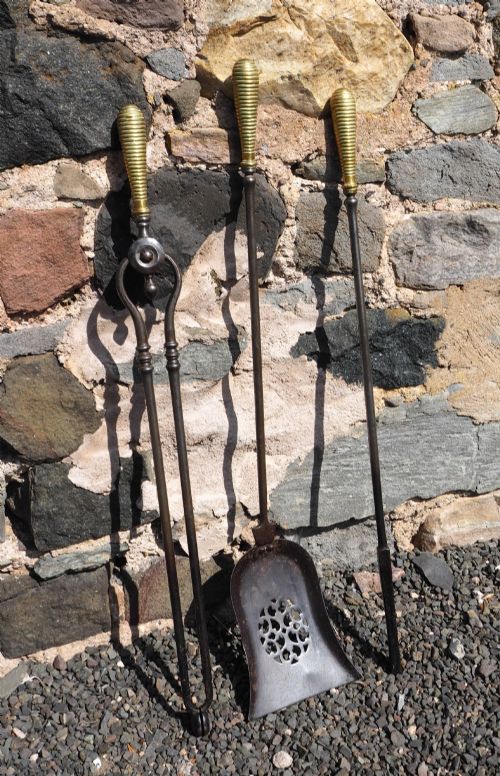
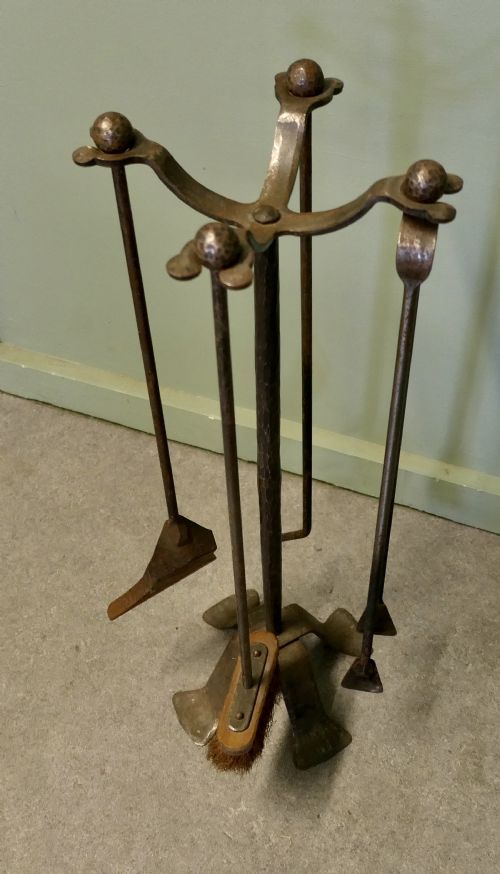
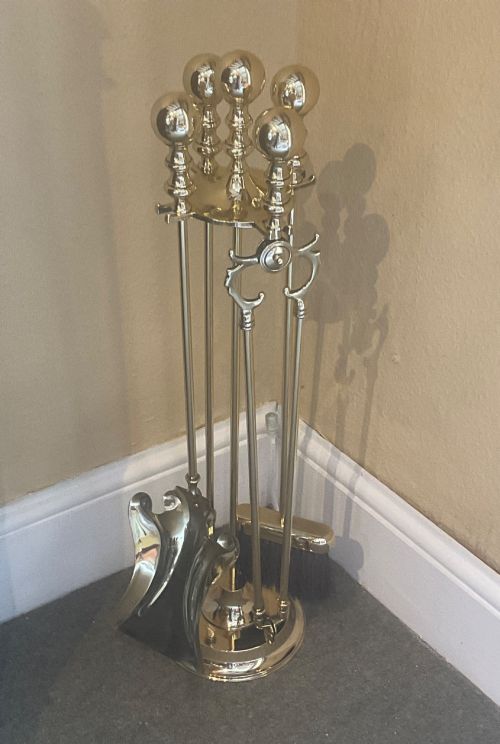
A vintage fire iron companion set gathers the essential tools needed to tend an open hearth, typically combining a poker, shovel, and tongs alongside a stand or hanging rack. These assemblies range from utilitarian country house pieces in heavy iron to decorative drawing-room arrangements in polished brass.
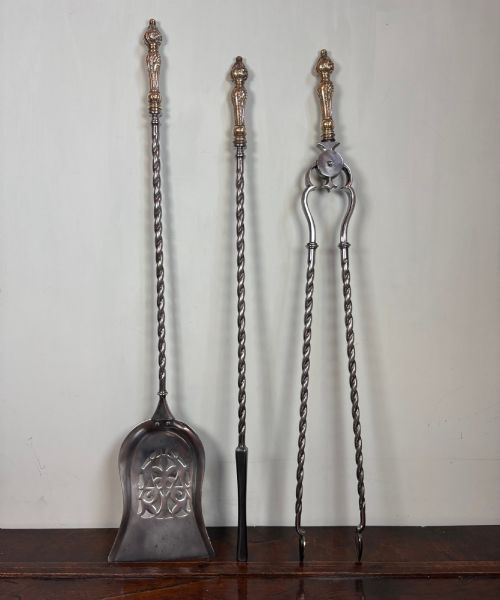
The selections available here lean heavily toward Victorian and Edwardian examples, alongside earlier Georgian and eighteenth-century ironwork. Pieces from the later nineteenth century often incorporate cast or spun brass handles with steel shafts, while earlier sets rely on forged iron and hand-finished steel.
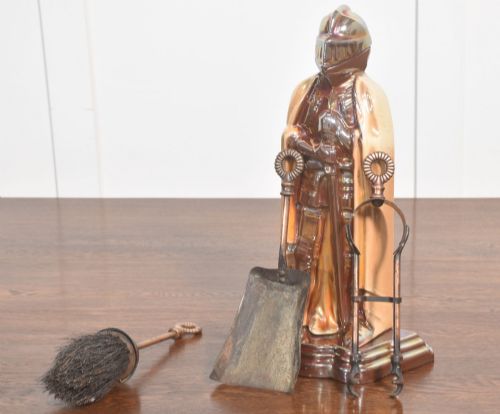
Beyond standard sets of three, many arrangements include associated items such as fire dogs, fenders, or bronze decorative figures. The form of the handle often dictates the character of the group, running from plain rope-twist brass to gothic revival motifs and whimsical figural designs.
Materials and construction methods
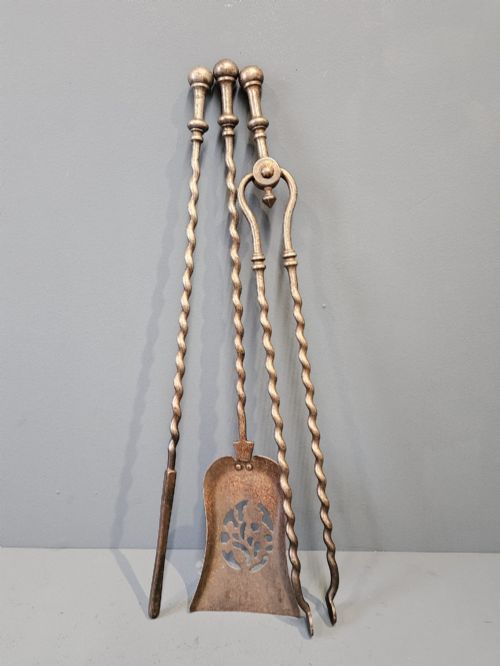
Iron and steel provided the strong, heat-resistant core for pokers and tongs, forged by hand or shaped under a hammer to withstand intense hearth temperatures. Wrought iron exhibits a fibrous grain from manual hammering, whilst cast iron and gunmetal allowed workshops to form rigid stands and decorative bases with crisp relief detail.
Brass served as the primary material for decorative display, utilised for bright handles, stands, and entire sets intended for formal reception rooms. Makers frequently combined steel shafts with brass terminals, joining the metals securely to balance heat resistance with visual warmth.
Listings feature materials spanning polished steel, wrought iron, brass, and gunmetal across periods from the eighteenth century to the Edwardian era.
Markers of distinction and build
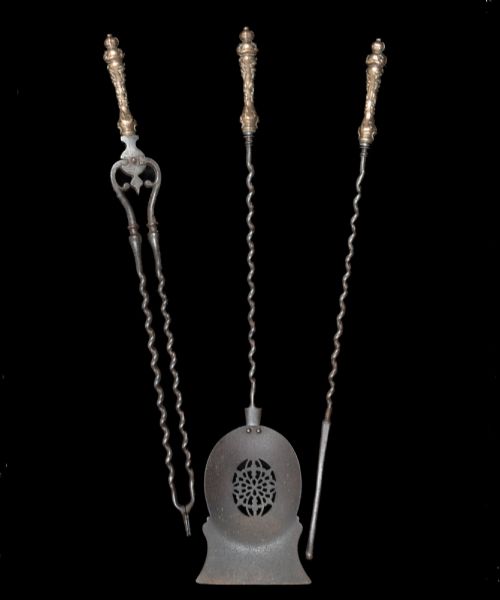
Substance and balance define the upper tier of hearth equipment, where substantial weight in the steel shafts and solid casting in the brass mounts prevent bending during daily use. Finer sets display crisp detailing in rope-twist handles or cast rococo ornament, rather than the softer edges found in mass-produced later castings.
The integrity of the joints between handle and shaft indicates workshop skill, as inferior pieces loosen with thermal expansion and regular handling. Matched sets that retain their original companion stand or fire dogs demonstrate greater survival and coherence than assembled groupings.
The Vintage Fire Iron Companion Set Glossary
- Companion set
- A matched group of fireplace tools, usually comprising a poker, shovel, and tongs, accompanied by a stand or hanging rack. These assemblies keep the hearth tidy and tools readily to hand.
- Fire dogs
- Andirons placed on the hearth to support logs for burning, often found accompanying period tool sets. They elevate the fuel to improve airflow beneath the fire.
- Rope twist
- A decorative spiral pattern resembling twisted cord, frequently found cast or turned into brass handles on nineteenth-century tool sets. This detail adds texture and grip to the metal.
- Gothic Revival
- A nineteenth-century design style drawing on medieval architectural motifs, appearing on hearth furniture through pointed arches and heavy geometric ironwork.
- Gunmetal
- A type of bronze alloy containing copper, tin, and zinc, valued for its dark patination and durability in nineteenth-century tool handles.
Vintage Fire Iron Companion Set: Frequently Asked Questions
What tools belong in a set?
A standard set comprises a poker for moving logs, a shovel for clearing ash, and tongs for handling fuel safely. Many groups also include a brush or hang from a dedicated stand.
Historically, larger hearths accommodated extra implements, while simpler rooms relied on the essential three pieces kept near the fender.
How do I date a brass set?
Georgian and early nineteenth-century sets lean toward forged steel with minimal brass enrichment, while Victorian examples introduce heavier cast brass components and rope-twist handles. Edwardian pieces often display lighter construction and sometimes adventurous figural motifs.
Examining the manufacturing marks, assembly pins, and the wear pattern on the shovel blade helps clarify the era of production.
Can I use antique irons daily?
Wrought iron and steel tools from the nineteenth century remain entirely robust for tending modern fires, provided the metal shows no deep structural corrosion. Solid brass components handle normal room use well, though polished surfaces require periodic maintenance.
Heavier companion sets endure regular handling easily, while delicate decorative pieces suit display better than heavy work.
Why are some sets mixed metal?
Makers combined steel and brass to utilise the distinct properties of each metal for different parts of the tool. Steel provided the strength and heat resistance needed for the business end of a poker, while brass offered a bright, decorative finish for handles and stands.
This duality allowed hearth equipment to serve as both functional hardware and polished parlour ornament.