


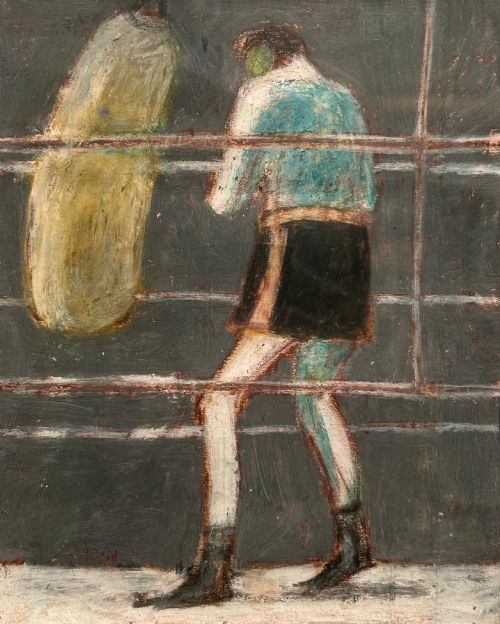
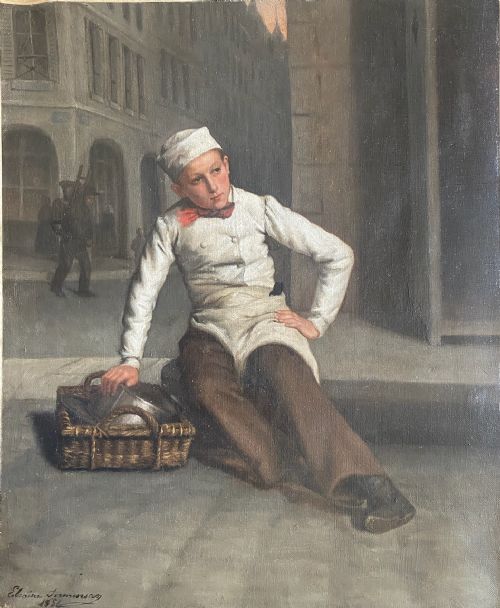
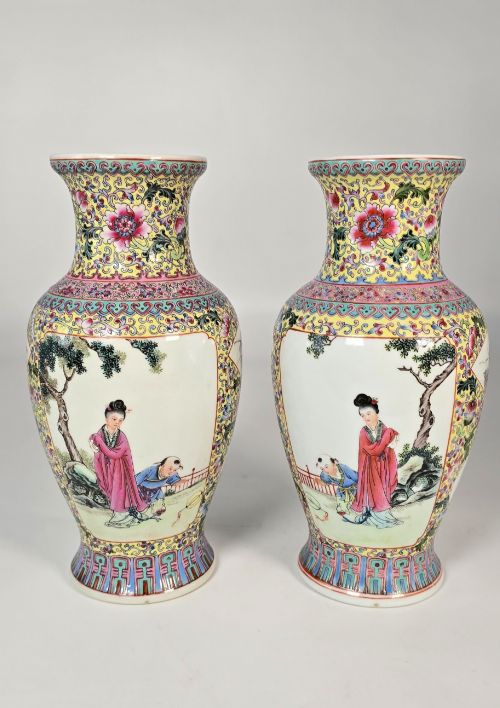
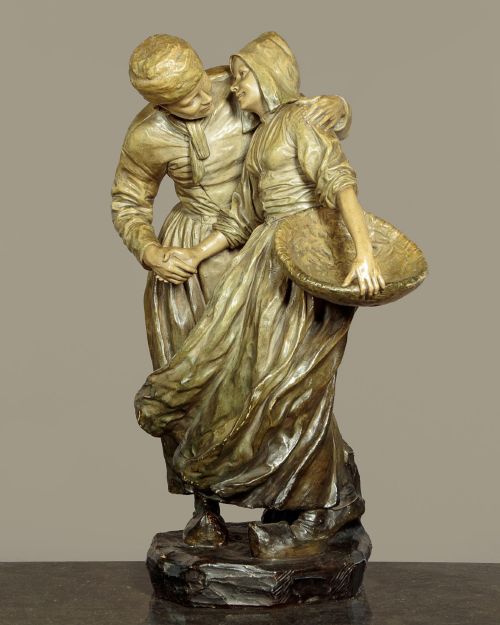



Vintage Figural Painting
Vintage figural painting brings human presence into a room, capturing character and narrative through the brush.
Vintage Figural Painting
A vintage figural painting focuses on the human form, ranging from detailed oil portraits to expressive scenes on canvas and paper. These works capture subjects from solitary sitters to lively group compositions originating across the nineteenth and twentieth centuries.
Buyers encounter oil paintings on canvas alongside watercolours, pith paintings and reverse paintings on glass. The selection spans distinct schools including British works, continental European pieces and East Asian decorative arts.
Pieces reflect varied movements such as Art Deco, the Meiji period, Qing dynasty productions, and Rococo Revival. Each item brings a specific cultural and historical context into a domestic interior.
Materials and methods of execution
Paintings rely on pigment applied to traditional supports like prepared canvas, paper or specialised plant material such as pith. Artists utilised oil and watercolour mediums to build depth, tone and texture within the composition.
Framing and mounting often incorporate carved wood, gesso or brass elements that complement the primary painted surface. Miniature works integrate enamel and silver panels, demonstrating fine craftsmanship on a small scale.
Vintage Figural Painting Retail Price Guide 2026
Typical asking prices for vintage figural painting among the pieces listed under this phrase on Sellingantiques today, from the lower quarter to the upper quarter. They describe what is for sale here now, not the wider market.
An anonymous nineteenth-century artist recorded an apprentice cook resting alongside elegant portrait subjects and bustling seaside visitors.
Factors influencing quality
Quality rests upon the precision of brushwork and the artist's ability to render expression and anatomical proportion convincingly. Superior examples display confident handling of light, shadow and spatial depth.
Samuel Rabin·Goldscheider·Georges Goursat Sem·James Hardy Junior·Bernard Bloch·Phyllis Morgans·Noel Quintavalle·Sitzendorf
The Vintage Figural Painting Glossary
- Canvas
- A heavy woven fabric stretched across a wooden frame to serve as a durable support for oil or acrylic paint. It provides a textured surface that holds layered pigments securely over decades.
- Pith painting
- Artwork created on a delicate paper-like material sliced from the spongy pith of the Tetrapanax papyrifer plant. These pieces are notable for their vibrant water-based colours.
- Oil painting
- A work created using pigments suspended in a drying oil, typically linseed. This medium allows for smooth blending, rich colour saturation and visible brush texture.
- Gouache
- An opaque water-based paint mixed with a binding agent and white pigment to create solid, matte areas of colour. It offers greater coverage than standard watercolour.
- Watercolour
- A painting method where natural pigments are suspended in a water-soluble vehicle. Artists apply washes onto paper to achieve translucent layers and luminous effects.
Vintage Figural Painting: Frequently Asked Questions
How should I hang a vintage figural painting?
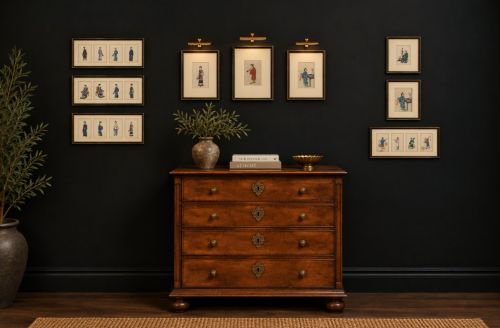
Position the centre of the canvas at eye level, typically around eye height from the floor, to ensure comfortable viewing. Keep the work away from direct sunlight and damp walls to protect the paint and support.
Ensure the hanging wire and wall fixings match the weight of the frame securely. Allow sufficient space around the piece so it functions as a distinct focal point in the room.
What is the difference between oil and watercolour paintings?
Oil paintings utilise slow-drying oil mediums on canvas or wood, offering rich textures and deep colour blending. They present a robust surface that often benefits from framing without glass.
Watercolours use water-soluble pigments on paper and require protection behind glass to prevent moisture damage. They offer a lighter, more luminous quality compared to heavier oils.
How do I care for an antique canvas?
Dust the surface gently with a soft, dry brush or microfibre cloth to prevent particulate buildup. Avoid using water, chemical cleaners or commercial sprays directly on the painted area.
Maintain stable room temperatures and humidity levels to prevent the canvas from slackening or the wooden stretcher from warping. Professional conservation should be sought for any tears or flaking pigment.