



Vintage Figural Desk Lamp
A vintage figural desk lamp brings character to a workspace, combining functional light with sculptural human, animal or symbolic forms.
Vintage Figural Desk Lamp
A vintage figural desk lamp incorporates sculptural human figures, animals or classical motifs into its design. These pieces often serve as both utilitarian desk lighting and distinct decorative art objects.
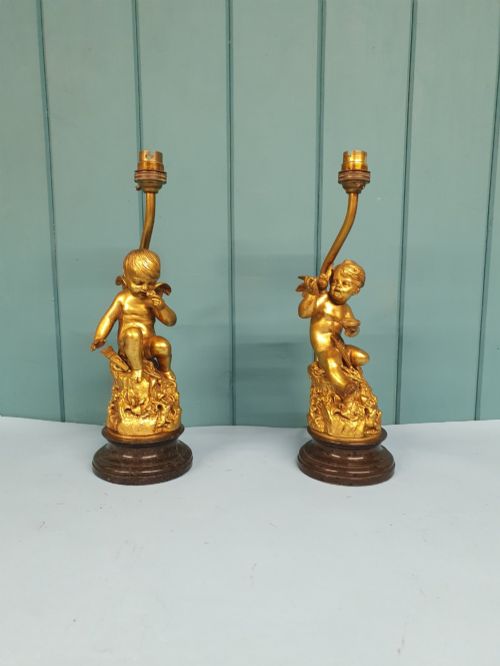
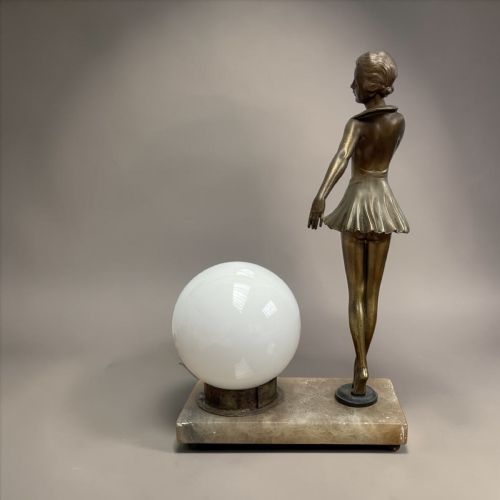
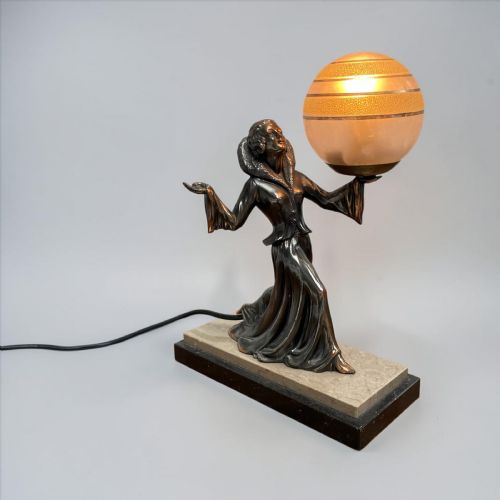
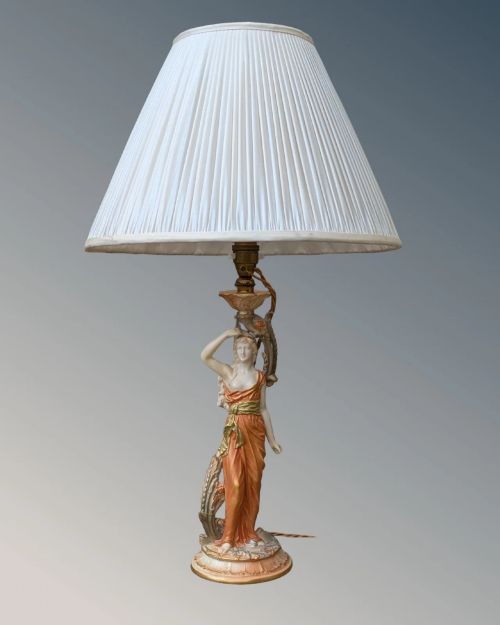
The versions most frequently met on this page span the Art Deco and Art Nouveau periods, alongside earlier nineteenth-century examples and Edwardian pieces. Forms range from solitary female figures and cherubs to carved root wood and porcelain animals.
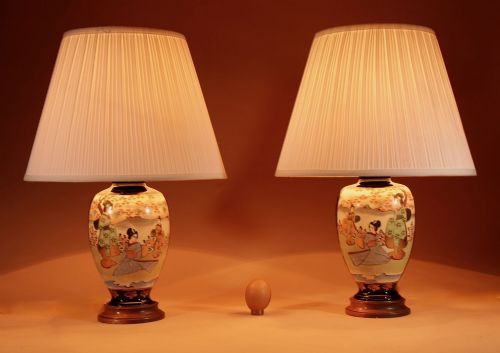
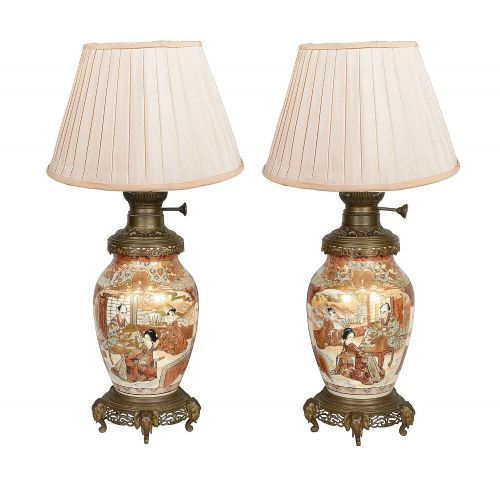
Makers utilised diverse cultural traditions, incorporating Japanese Satsuma ware, Chinese porcelain and European bronze casting. Table lamps and mood lamps dominate the selection, bringing period design directly onto a desktop or side table.
Materials and construction
Makers shaped these lamps using cast metals such as bronze, brass, spelter, chrome and silver plate. Spelter served as an accessible alternative to bronze, while brass and chrome provided durable structures for twentieth-century designs.
Porcelain and glass form the bodies of many figural designs, incorporating materials like frosted glass, peach glass, alabaster and blue and white porcelain. Selected pieces combine marble bases with metal figures for added weight and stability.
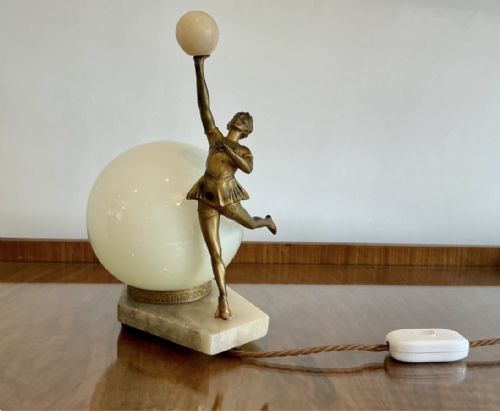
Tennis players, pierrots, cats and classical deities all hold up lamp holders across these sculptural desks.
Distinctions in quality
Material selection dictates the overall presence of the object, with dense natural stone bases, heavy bronzes and fine porcelain representing high-tier production. Integrated design where the electrical components complement rather than interrupt the figural composition elevates the piece.
Karl Ens·Anton Buschelberger·Ivan Zaiec·Walther and Sohne·P.Sega
The Vintage Figural Desk Lamp Glossary
- Spelter
- A zinc alloy commonly utilised as a cost-effective substitute for bronze in decorative figures. It accepts metallic finishes well to simulate heavier bronzes.
- Alabaster
- A fine-grained mineral carved into translucent bowls and bases. It diffuses light softly when illuminated from within.
- Satsuma
- A type of Japanese earthenware decorated with intricate enamels and gilding. These vessels were frequently converted into decorative lamps.
- Baccarat
- A French crystal manufacturer known for high-clarity glass and moulded figurines. Pieces often display frosted textures to catch light.
Vintage Figural Desk Lamp: Frequently Asked Questions
Are these lamps wired for modern desks?
Many vintage lamps arrive with older wiring systems that may require updating for modern safety standards. Buyers often arrange for a qualified electrician to inspect and rewire the fixtures before daily use.
Rewiring preserves the original decorative components while ensuring the lamp meets current electrical requirements for a desktop workspace.
How do I identify an Art Deco figural lamp?
Art Deco pieces typically display streamlined geometries, stylized human figures, and materials such as chrome, frosted peach glass, and polished metals. Look for dancers, athletes, and theatrical figures rendered in distinct 1930s stylistic shorthand.
The bases often incorporate stepped marble or metal slabs, distancing the aesthetic from the flowing organic curves of earlier Art Nouveau designs.
What is spelter and how do I care for it?
Spelter is a softer metal alloy composed largely of zinc, frequently used for sculptural lamp bases during the early twentieth century. It requires gentle dusting with a dry cloth and protection from moisture to preserve its finish.
Avoid using harsh chemical polishes that can strip away the original bronze or patinated surface coatings applied to the metal.
How do I distinguish bronze from spelter?
Bronze is heavier, harder, and possesses a warmer resonance when tapped lightly compared to spelter. Examination of the underside often reveals the darker, denser grain of true bronze versus the lighter grey metal visible beneath chips in spelter plating.
Sculptural sharpness also differs, as bronze allows for finer chased details during the casting process than the softer zinc alloy.