


Bronze Lady Lamp
A bronze lady lamp brings sculptural form into domestic lighting, combining metal figures with glowing shades.
Bronze Lady Lamp
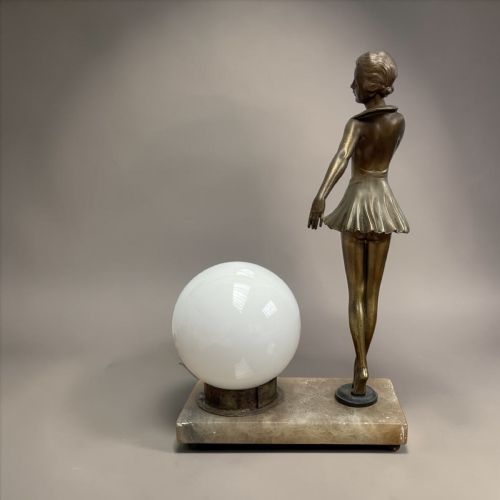
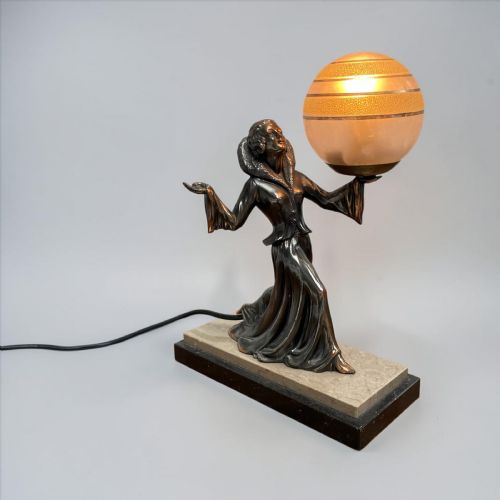
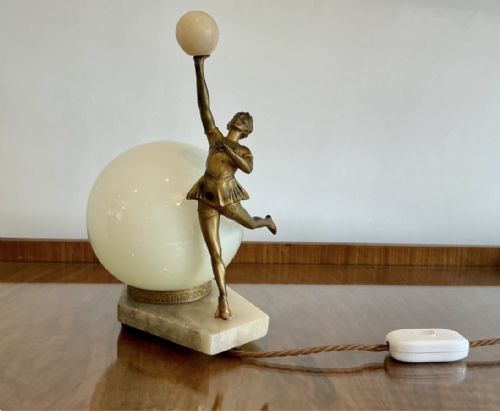
A bronze lady lamp is a figural table or desk light depicting a female form, most commonly encountered from the Art Deco period of 1930 and the Art Nouveau period around 1900. These pieces function as both illumination and sculpture, often incorporating glass globes or shades held by the figure.
The selections found here span from 19th-century works to 1930s designs, including occasional tables fitted for lighting and twin lady lamp configurations. Buyers encounter figures cast in bronze, spelter, and patinated or gilded metal, frequently mounted on marble bases.
How they were made
Figures were cast in bronze or alternative metals such as spelter, then finished with patination or gilding to create tonal depth. Metalwork was combined with glass elements, utilising frosted or opaline glass for shades and globes that diffused the light.
Mounting required stable integration with heavy bases of marble, while more complex forms incorporated marquetry inlaid woodwork seen in period lamp tables. Signatures from makers like Henri Honore Ple were sometimes applied directly to the metal surface during casting.
Some ladies hold doves aloft instead of lamps, proving even decorative lighting sometimes prefers birds over bulbs.
What varies in quality
The choice of accompanying materials dictates the overall calibre of the object, with genuine marble bases and high-grade opaline or frosted glass shades elevating the piece above standard metal castings.
Henri Honore Ple
The Bronze Lady Lamp Glossary
- Spelter
- A zinc alloy commonly used as a less expensive alternative to bronze for figural castings. It takes patination well but is softer than bronze.
- Patinated Metal
- Metal treated with chemicals or heat to produce a coloured surface finish. This technique enhances the contours of figural sculptures.
- Opaline Glass
- A pale, semi-translucent glass that diffuses light softly. It appears frequently in period lamp globes and shades.
- Art Deco
- A design style prominent around 1930 characterised by streamlined geometry and stylised figures. It follows the flowing organic lines of earlier Art Nouveau.
Bronze Lady Lamp: Frequently Asked Questions
What periods do these lamps come from?
The pieces span the late 19th century, the Art Nouveau period around 1900, and the 1930 Art Deco era. Each era brings distinct stylistic traits to the sculptural figures.
Art Deco examples tend to feature stylised, geometric forms, while 1900 pieces lean towards organic Art Nouveau curves.
What materials were used for the shades?
Shades and globes were typically formed from glass, including frosted and opaline varieties designed to soften the bulb's glare. These glass elements work in tandem with the metal figural bases.
Marbled glass globes also appear on certain Art Deco table lamps, adding texture to the lit piece.
How do I place one in a room?
These figural lamps function well as striking table or desk lights where their sculptural qualities remain visible. Some historical formats combine the lamp with an occasional table for dual utility.
Position them on sturdy surfaces where the weight of the metal and marble base is fully supported.
How do I tell bronze from spelter?
Bronze is heavier, harder, and develops a deep, stable patina over time compared to zinc-based spelter alloys. Spelter is softer and may show lighter weight or different wear beneath the surface finish.
Both materials were common for figural lamp bases depending on the production period.