




Vintage Feline Wall Art
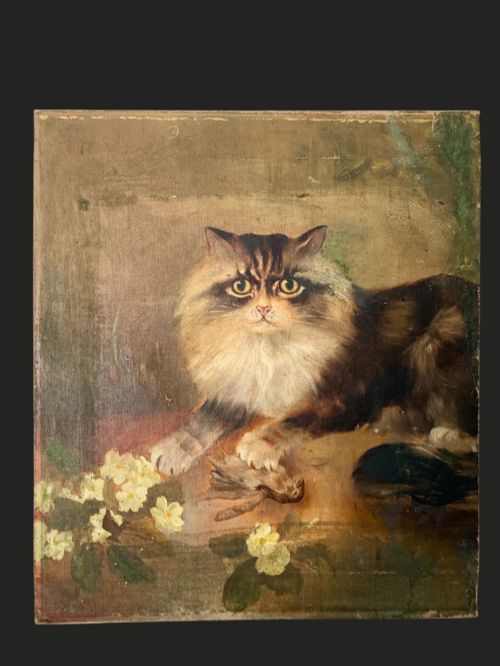
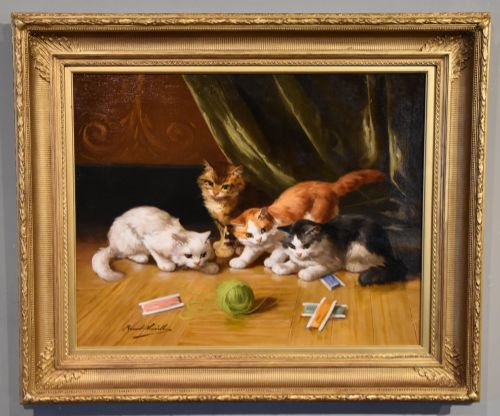
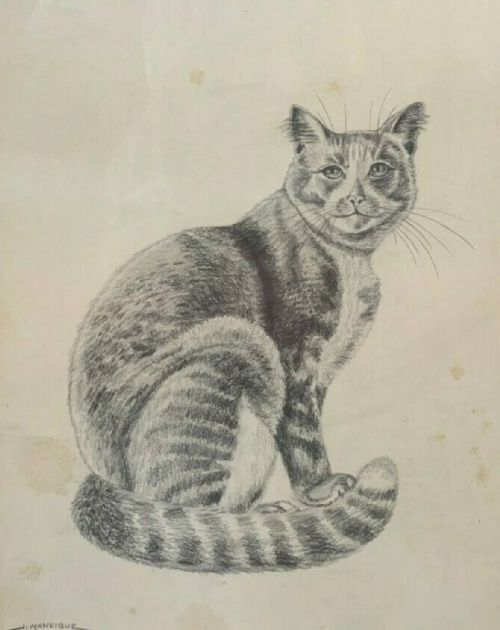
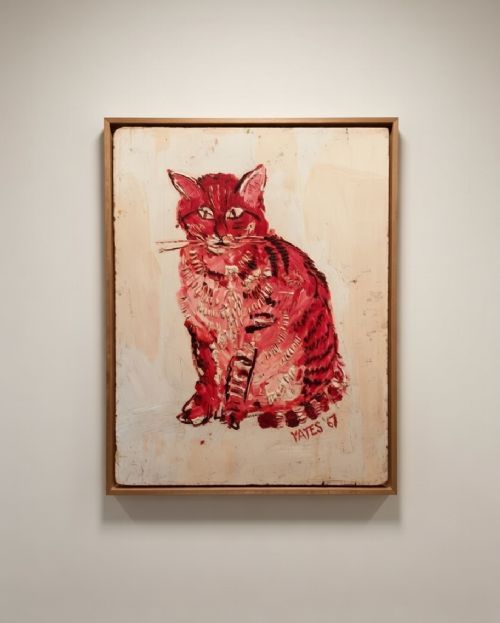
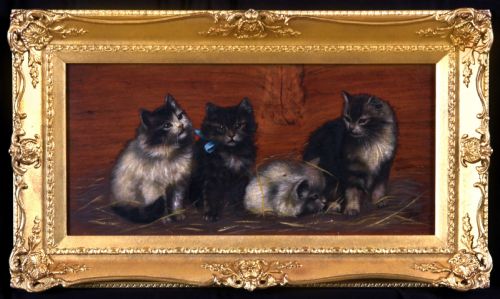
Vintage feline wall art brings character and charm into a room through depictions of cats captured in oil paint, pastels, pencil drawings, and framed prints.
Vintage Feline Wall Art
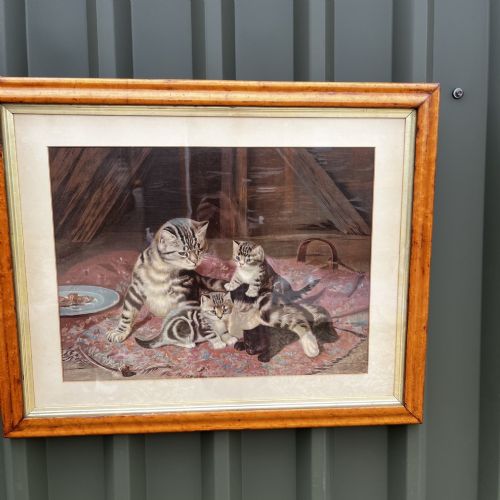
Buyers frequently encounter nineteenth-century oil paintings and board works depicting playful kittens alongside twentieth-century pastel drawings and chromolithographs. These works showcase feline subjects rendered in traditional realism, naive styles, and mid-century modern interpretations.
The objects range from large pencil drawings on paper to detailed oil paintings on panel, gilt wood, and canvas. Each piece captures the distinct personality and likeness of cats through the specific artistic lens of its era.
How they were made
Artists utilised traditional mediums such as oil paint, pastel, and pencil, applying them to surfaces including canvas, wood panel, board, and paper. Oil paint allowed nineteenth-century painters to build rich textures in fur and fabric.
Works on paper, including pencil drawings and chromolithographs, relied on precise draftsmanship and early colour printing techniques. Frames often incorporated gilt wood to complement the visual weight of the paintings.
Listings feature works spanning the nineteenth century through to the nineteen-sixties, utilising oil, pastel, pencil, and print mediums.
What varies in quality
The standard of execution in draftsmanship and paint handling dictates the success of each piece, distinguishing spirited animal portraiture from rigid representation. Works by established named artists display superior handling of light, expression, and feline anatomy.
Materials and framing also contribute to overall quality, with original gilt wood frames and stable panels holding greater historical integrity. The preservation of the underlying paper, board, or canvas directly impacts the visual clarity of the artwork.
Alfred Arthur Brunel de Neuville·Horatio Henry Couldrey·Louis Wain·Fred Yates·Agnes Augusta Tallboys·Francisco Jose Domingo y Marques·Bessie Bamber
The Vintage Feline Wall Art Glossary
- Chromolithograph
- A multicoloured print produced through a specialised lithographic process using stone or zinc plates. This technique allowed Victorian publishers to replicate the rich tones of oil paintings.
- Naive school
- An artistic style characterised by a childlike simplicity in perspective and proportion, often created by self-taught painters. These works offer an unpretentious and direct charm.
- Oil on board
- A painting executed on a rigid wooden or cardboard substrate rather than stretched canvas. This medium was frequently utilised by nineteenth and twentieth-century painters for smaller studies.
- Oil pastel
- A drawing medium combining pigment with a binder of wax and non-drying oil, resulting in a buttery consistency. Artists apply these to paper for vibrant colour and textured marks.
Vintage Feline Wall Art: Frequently Asked Questions
How do I date a cat painting?
Examine the materials, framing style, and artistic conventions used in the work, comparing them against known periods like the nineteenth century or mid-century era.
Signatures, inscriptions on the reverse, and the type of canvas or board can also provide definitive clues to the date of creation.
Are these works original or prints?
The selection includes both unique hand-painted works, such as oil paintings and pastel drawings, alongside vintage printed reproductions like chromolithographs.
Inspect the surface closely under magnification to check for brushstrokes or print dot patterns.
How should I hang vintage art?
Hang your artwork away from direct sunlight and excessive moisture to protect delicate paper, pastels, and oil pigments from fading or deterioration.
Ensure pieces are secured with appropriate fixings suited to the weight of the frame and the wall type.
What subjects are most common?
Kittens at play, mother cats with their litters, and individual stylized portraits dominate the artistic output across the centuries.
Artists continually returned to feline subjects for their expressive poses and domestic appeal.