





Framed Cat Portrait
A framed cat portrait brings domestic charm to a room through traditional realism and mid-century naive art.
Framed Cat Portrait
A framed cat portrait captures felines in oil on canvas, oil on board, oil pastels, and glass paintings. These artworks span from the Victorian period through to the mid-twentieth century.
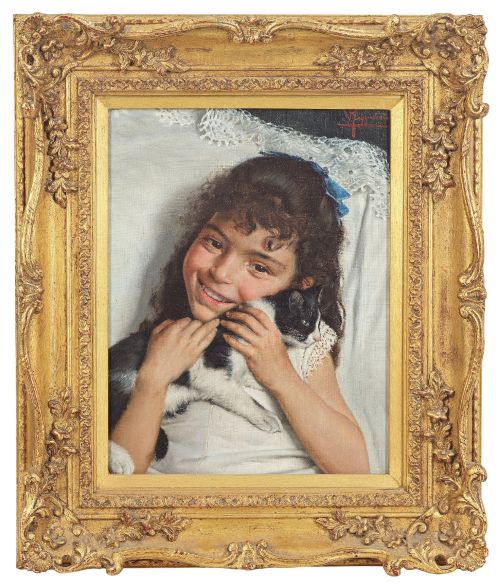
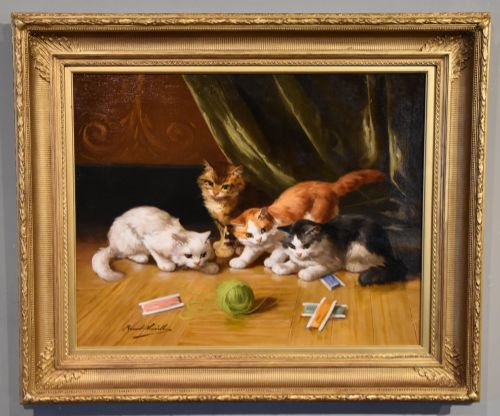
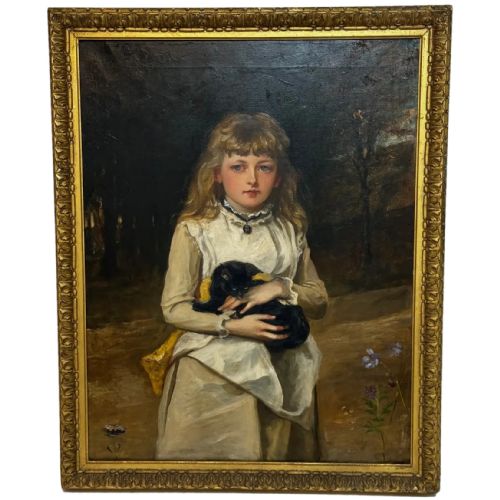
Buyers meet works ranging from nineteenth-century animalier studies of kittens at play to Chinese export reverse paintings on glass. Victorian examples often depict Persian kittens or domestic scenes alongside human figures.
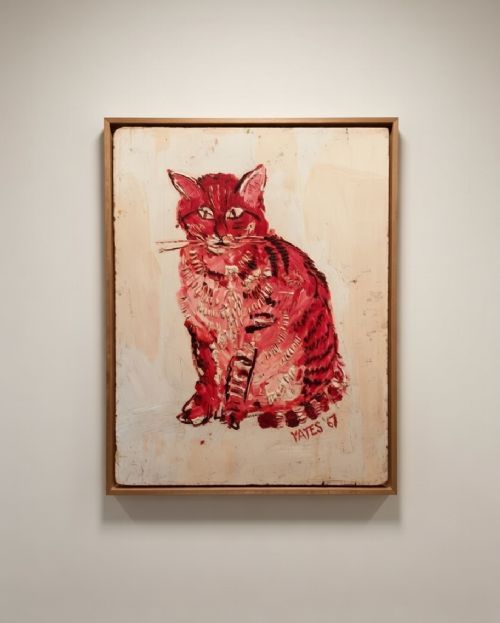
Mid-century pieces introduce naive art styles and pastel drawings, while Japanese Taisho Roman works offer distinct cultural perspectives on human and feline subjects.
Materials and construction
Artists painted oil on canvas, wood panels, and board, often sealing the finished works behind glass within wood frames. Giltwood and gesso frames provide the traditional border for these nineteenth-century and twentieth-century paintings.
Pastel drawings and oil pastels on paper offer softer textures, while reverse painting on glass requires meticulous pigment application directly onto the reverse side of the pane.
Several artists clearly found it difficult to paint just one kitten, resulting in chaotic tea parties and piles of tumbling felines.
Assessing quality in feline art
Quality rests upon the handling of light, fur texture, and the expressive character given to the animal. Accomplished painters capture the softness of a Persian kitten or the alert posture of a cat with distinct anatomical precision.
The integrity of the original wood and giltwood frame contributes significantly to the piece. Frames with original gesso ornamentation that complement the period of the canvas elevate the work.
Vittorio Reggianini·Alfred Arthur Brunel de Neuville·Charles Burton Barber·Takabatake Kasho·Agnes Augusta Talboys·Fred Yates·Henry Weigall·Horatio Henry Couldery·Francisco Jose Domingo y Marques·Raymond Arthur Roadnight·Geza Vastagh·Cuthbert Edmund Swan·Jules Le Roy·Bessie Bamber
The Framed Cat Portrait Glossary
- Animalier
- A nineteenth-century artistic genre specialising in the realistic portrayal of animals. Painters in this tradition focused closely on animal anatomy and behaviour.
- Reverse painting on glass
- A technique where the artist paints directly onto the back of a glass panel so the image is viewed through the front. This method creates a glossy, preserved surface.
- Gesso
- A plaster-like mixture applied to wood frames as a base for moulding and gilding. Skilled artisans carved and shaped this material to create ornate Victorian frame designs.
- Naive art
- Artwork created with a childlike simplicity in perspective and proportion. Mid-century examples in this style offer a charming, unacademic charm.
Framed Cat Portrait: Frequently Asked Questions
What periods do these paintings come from?
The available artworks predominantly date from the nineteenth century through to the mid-twentieth century. Victorian examples sit alongside 1920s glass paintings and 1950s naive works.
This broad timeline allows collectors to choose between formal Victorian animalier canvases and more relaxed mid-century pastel drawings.
How should I hang a framed cat portrait?
Display these artworks away from direct sunlight to protect oil pigments and delicate pastels on paper. Ensure the wall fixings safely support the weight of the wood and giltwood frames.
Pairing a small nineteenth-century oil painting with larger wall art creates a balanced arrangement in a study or living room.
Are these works painted on canvas or wood?
Artists used multiple supports including oil on canvas, oil on panel, board, and glass. Victorian animalier painters often favoured canvas or wooden panels for durability.
Mid-century pieces frequently utilise board or paper, particularly for pastel drawings and naive compositions.
How do I identify a Victorian cat painting?
Victorian pieces often display traditional realism with detailed attention to the fur and domestic setting. Look for heavy gilt wood or gesso frames typical of the nineteenth century.
Subject matter often includes groups of kittens at play or cats alongside human figures in genre scenes.