


Vintage Farmyard Scene
A vintage farmyard scene captures rural life in oil or watercolour, bringing quiet rustic charm and livestock into your home.
Vintage Farmyard Scene
When you search for a vintage farmyard scene, you encounter depictions of rural life spanning the nineteenth century through the early decades of the twentieth century.
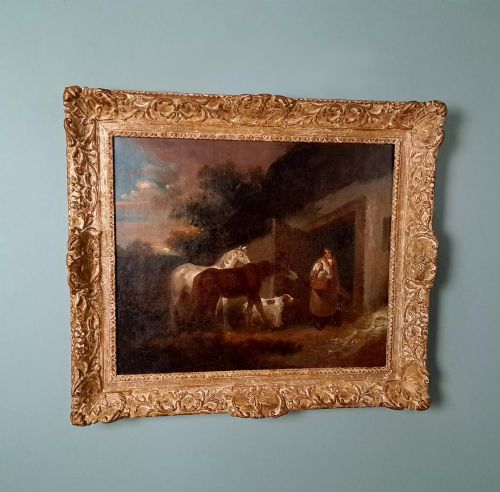
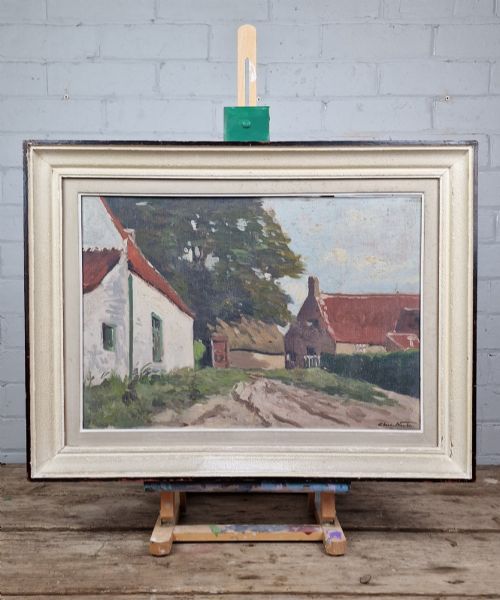
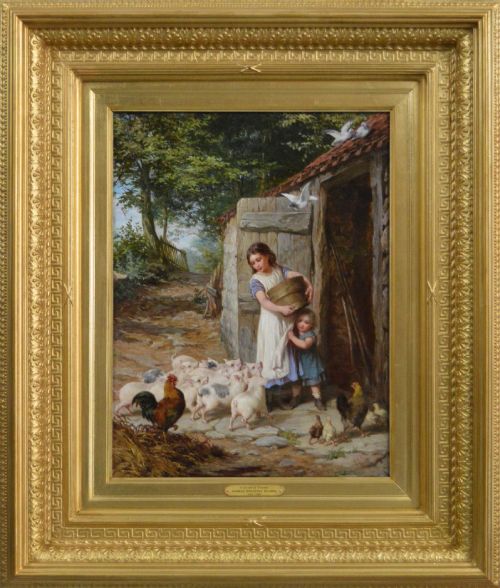
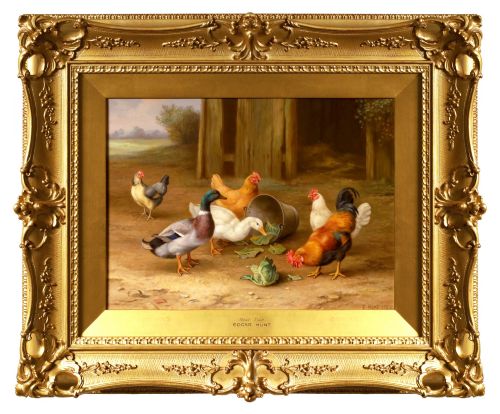
The versions you are most likely to meet on this page are oil paintings on canvas or board, alongside occasional watercolours on paper, focusing on horses, poultry, and figures around barns.
These works emerge from periods such as the Victorian and Edwardian eras, reflecting artistic movements like British pastoralism, realism, and post-impressionism.
How they were made
Artists painted primarily with oil paint on canvas, board, or framed paper, employing brushwork that builds texture in animal coats, feathers, and weathered timber.
Watercolour painters utilised pigment on paper to capture lighter, more translucent rural atmospheres.
Many works retain their original giltwood or wooden frames, which complement the traditional pastoral subject matter.
Listings feature oil on canvas, board, and watercolour on paper, spanning the Victorian and Edwardian periods up to the 1930s.
What varies in quality
The distinction between works rests on the artist's ability to render anatomical detail in livestock and horses with convincing weight and movement.
Compositional balance separates standard topographical views from compelling genre scenes where human figures, animals, and rustic architecture interact harmoniously.
The handling of light and atmospheric depth across the canvas or paper defines the visual success of the piece.
William Joseph Shayer Senior·Charles Houben·George Augustus Holmes·Edgar Hunt·Herbert Royle·John Frederick Herring Jnr·Percival Glenfern·Claude Cardon·Robert Russell MacNee·Owen Bowen·B. Kaufmann·John R. K. Duff·John Percy Cooke·Ernest Higgins Rigg·Thomas Blinks·Fred Lawson·James William Booth·Kershaw Schofield·Fred Cecil Jones
The Vintage Farmyard Scene Glossary
- British Impressionism
- A style focused on light and spontaneous brushwork applied to domestic landscapes. It appears in several British pastoral works of the period.
- Animalier
- A genre dedicated to the realistic portrayal of animals, particularly horses, cattle, and poultry. These paintings often place farm stock at the centre of the composition.
- Oil on Canvas
- A traditional medium where pigment suspended in oil is applied to stretched woven fabric. This combination allows for rich blending and textured impasto.
- Giltwood
- Wood carved and coated with gold leaf or a gold-coloured finish for framing. It provides a traditional decorative border for period paintings.
Vintage Farmyard Scene: Frequently Asked Questions
What is a farmyard scene painting?
A farmyard scene painting depicts rural agricultural life, typically featuring horses, cattle, poultry, and figures gathered around barns or farm buildings. These works document traditional country living across the nineteenth and early twentieth centuries.
Artists working in oil and watercolour recorded these agrarian subjects to capture the textures of rural architecture and livestock.
How do I date a farmyard painting?
Dating relies on stylistic clues, artist signatures, clothing worn by figures, and framing materials. Victorian and Edwardian works often display specific realism or pastoral techniques tied to known exhibition periods.
Examining the canvas preparation and stretcher construction also helps establish the age of an oil painting.
Where should I hang an oil painting?
Hang oil paintings away from direct sunlight and excessive moisture to protect the pigment and canvas. Stable indoor temperatures prevent the wood and canvas from warping over time.
Pairing these traditional works with appropriate lighting enhances the texture of the brushwork and the warmth of the giltwood frame.
What is the difference between oil and watercolour?
Oil paint utilises a slow-drying oil binder that allows for thick application, rich blending, and deep colour saturation on canvas or board. Watercolour involves water-soluble pigments applied to paper, producing a lighter, more transparent finish.
Oils generally require a sturdy stretcher and frame, whereas watercolours need protective glass and paper mounting.