
Vintage Farmhouse Seating
These vintage farmhouse seating pieces bring honest vernacular character to a room through time-worn timber and sturdy, practical design.
Vintage Farmhouse Seating
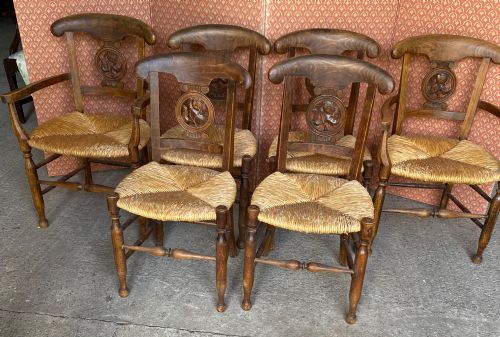
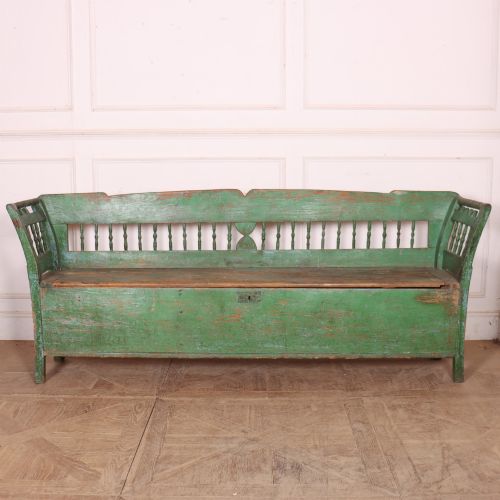
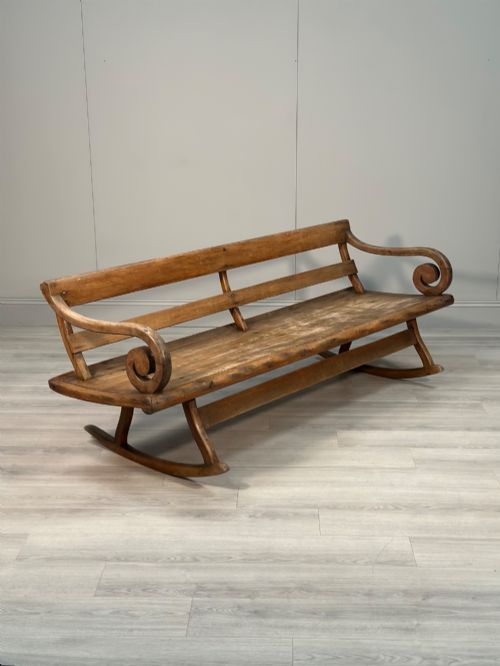
Vintage farmhouse seating covers practical wooden chairs, benches, settles and stools shaped by utilitarian domestic and rural needs across the nineteenth and early twentieth centuries. These pieces encompass matched sets of kitchen dining chairs alongside long refectory benches and individual spindle-backed armchairs.
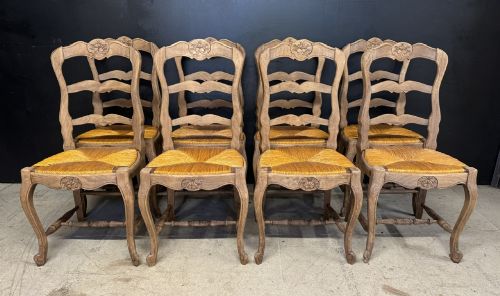
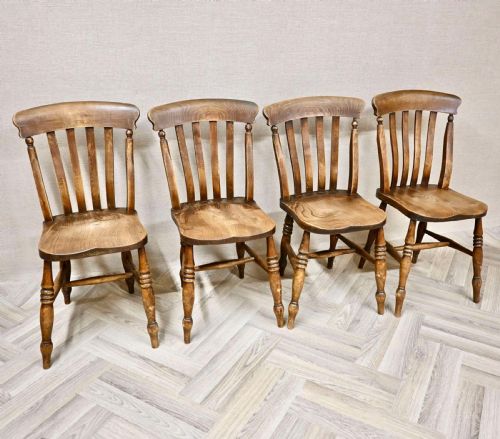
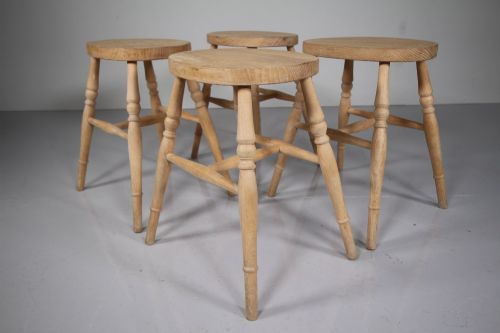
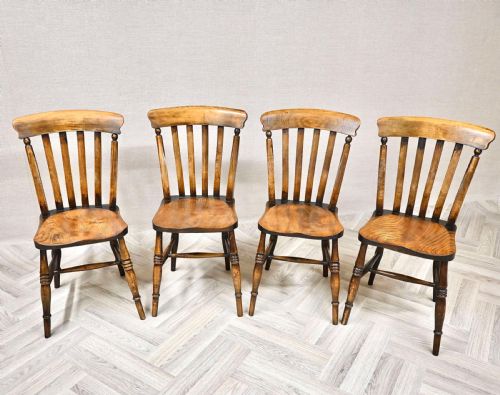
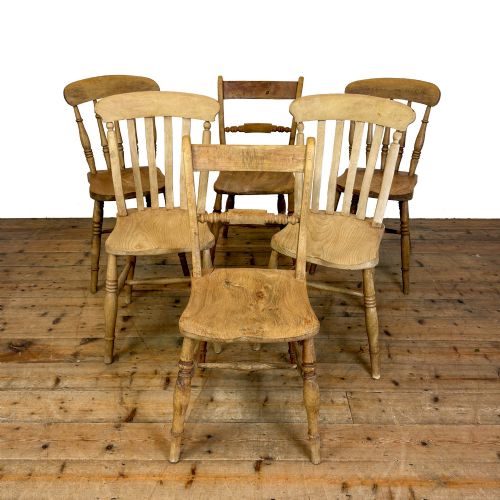
The most common examples encountered here are Windsor chairs and ladder-backed dining seats constructed in regional workshops for everyday kitchen use. Dining tables, bar stools and hall benches also appear, offering varied options for rustic interiors.
Origins span English country traditions alongside French provincial and Austrian vernacular styles, reflecting regional woodworking habits. Materials range from native elm and oak to pine, beech and fruitwood.
Materials and construction
Makers relied on native hardwoods like elm, ash and beech for Windsor chairs, often combining several timbers within a single frame to utilise the specific strength of each wood. Elm provided tough, splitting-resistant seats, whilst ash and beech formed flexible spindles and turned legs.
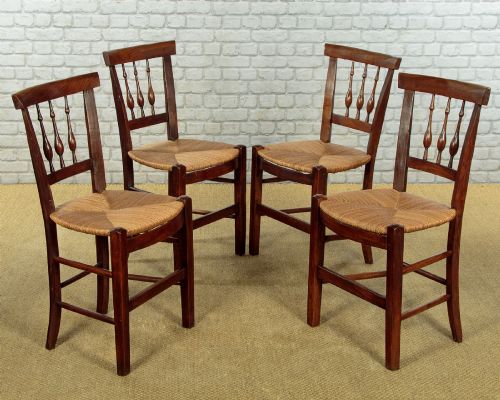
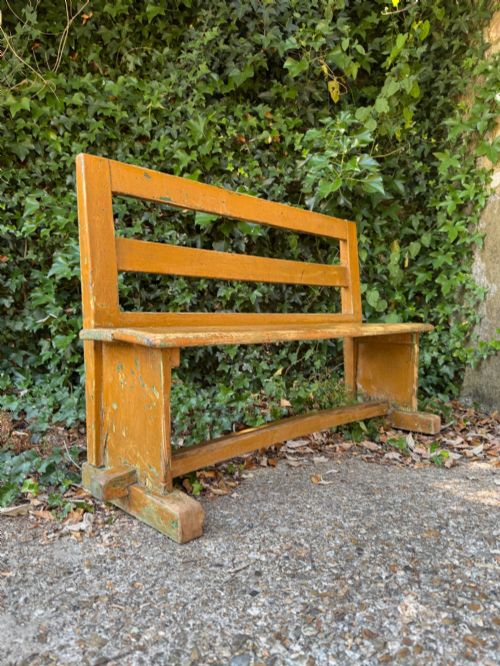
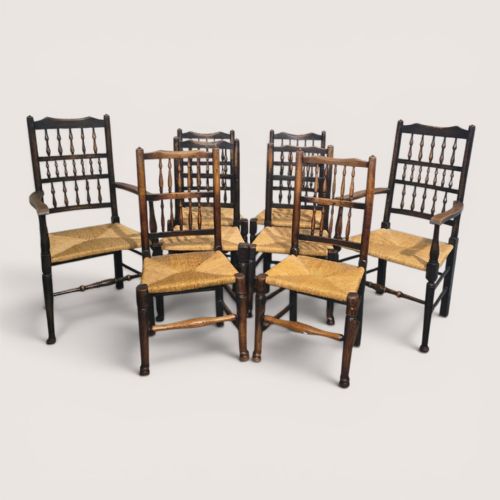
Pine, oak and fruitwood appear frequently in heavier benches and refectory tables, joined with pegged mortise and tenon construction designed to withstand daily strain. Rush seated chairs integrated woven plant fibres into solid wooden frames for lighter kitchen utility.
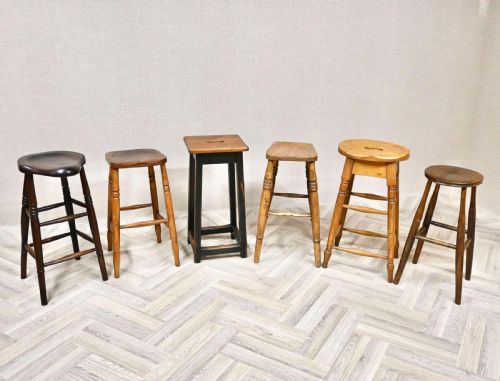
Several tall bar stools survive from nineteenth-century use, proving that elevated seating is far from a modern invention.
Assessing quality and authenticity
Quality rests upon structural integrity and the survival of original surface patination, such as aged paint or natural timber waxing from decades of use. Superior examples retain their original stretchers, wedged leg tenons and balanced proportions without excessive replacement timber.
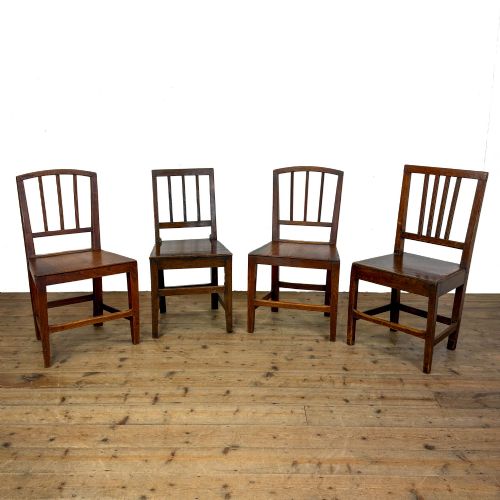
Harlequin sets demonstrate quality through the harmonious pairing of similarly aged vernacular chairs that share common vernacular traits. Uniformity in timber choice and the crispness of turnings on spindles and arm supports elevate individual pieces above standard utility grade.
The Vintage Farmhouse Seating Glossary
- Windsor chair
- A wooden chair built with a solid sculpted seat into which the legs and back spindles are wedged directly. This technique creates a remarkably robust frame typical of rural kitchens.
- Ladder back
- A chair back constructed from horizontal wooden slats positioned between two upright posts. These slats are often curved to support the sitter's spine.
- Refectory table
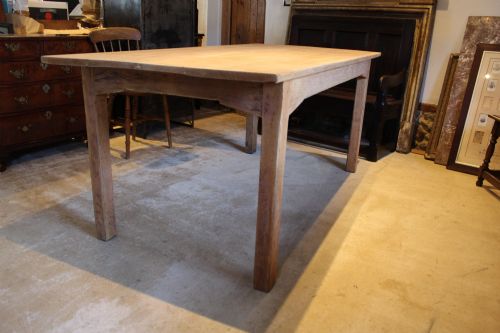
- A long, narrow dining table traditionally built for communal dining halls. Surviving examples often pair solidly constructed oak or pine tops with substantial trestle or four-legged bases.
- Settle
- A wooden bench featuring high backs and solid armrests designed to block draughts in older homes. Many incorporate enclosed storage compartments beneath the seat.
- Rush seat
- A seating surface woven from dried marsh rushes around a wooden frame. This technique produces a textured, yielding pad found on traditional dining chairs and stools.
Vintage Farmhouse Seating: Frequently Asked Questions
How do I clean wooden farmhouse chairs?
Dust regularly with a dry cloth and occasionally feed older timber with a traditional beeswax polish to nourish the grain. Avoid modern chemical sprays that can strip historic patination and soften aged wood.
Keep pieces away from direct heat sources and dramatic humidity shifts to prevent the timber from splitting or joints from loosening over time.
Are vintage benches suitable for dining?
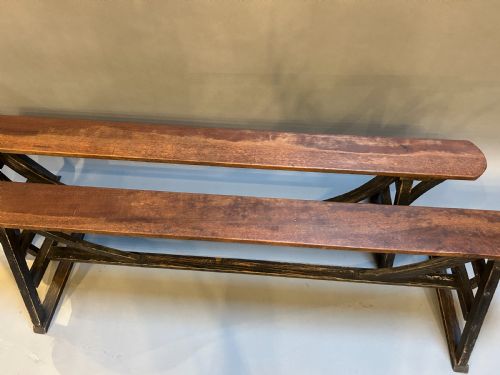
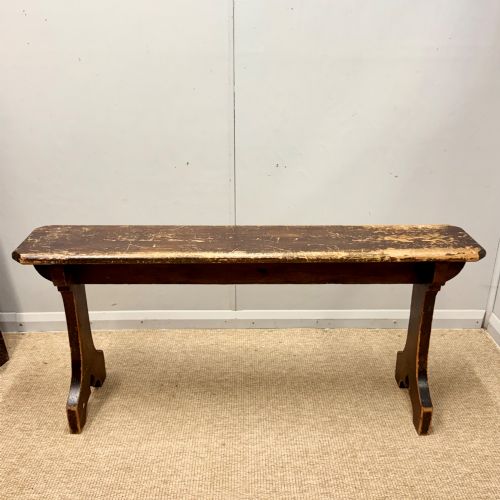
Long wooden benches work well alongside refectory tables by allowing flexible seating arrangements and tucking completely away when not in use. Measure the height clearance between the underside of the table apron and the bench surface to ensure comfortable legroom.
Consider pairing a bench on one side of a table with individual armchairs or side chairs on the opposite side for a balanced layout.
What is a harlequin dining set?
A harlequin set consists of grouped chairs that share similar periods, materials or vernacular styles rather than originating from a single workshop batch. These assembled sets offer a collected aesthetic common in traditional country interiors.
Look for consistent height dimensions and complementary back designs, such as mixed Windsor or ladder-back variations, to maintain visual harmony around a table.
How do I date a rush seat?
Original rush seating shows smooth, flattened wear patterns and dark oxidisation where sitters' legs rested over generations. Modern replacements feel greener, brighter in tone, and lack the subtle compression of antique fibre.
Examine the underside of the seat frame to see if the rush wraps around older hand-planed rails or modern machine-cut timber components.