




Vintage Exterior Lantern Light
A vintage exterior lantern light brings substantial architectural presence to an entrance, carrying the weight of nineteenth-century street furniture and twentieth-century civic engineering.
Vintage Exterior Lantern Light
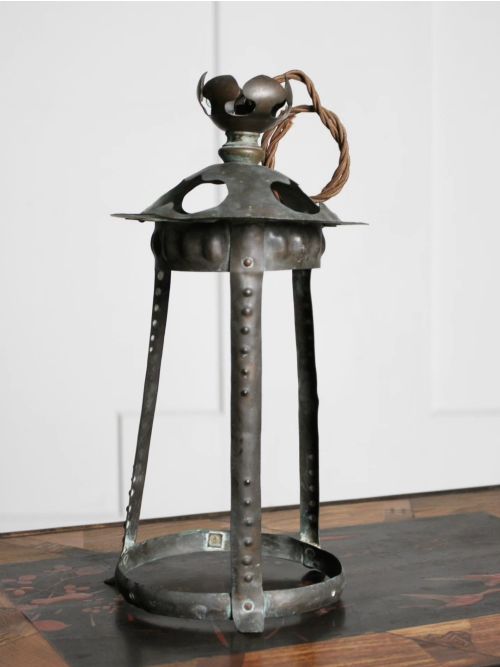
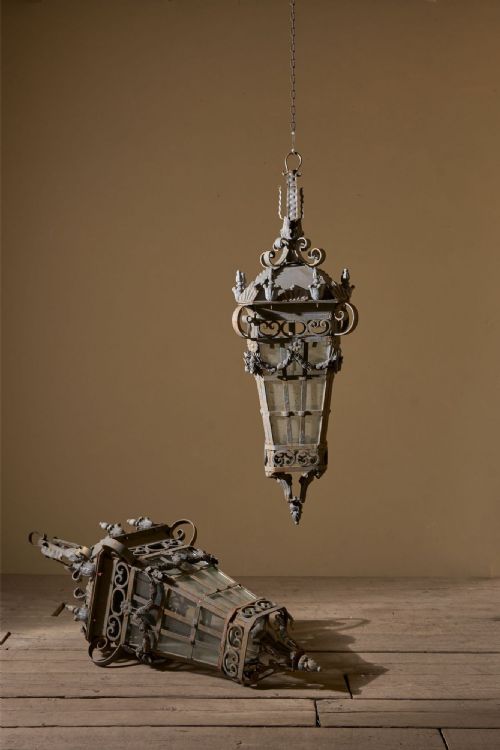
A vintage exterior lantern light encompasses wall brackets, post lanterns, carriage lamps, and hanging forms designed for outdoor illumination. The pieces visible span from the nineteenth century through the 1930s, originating from English and French workshops.
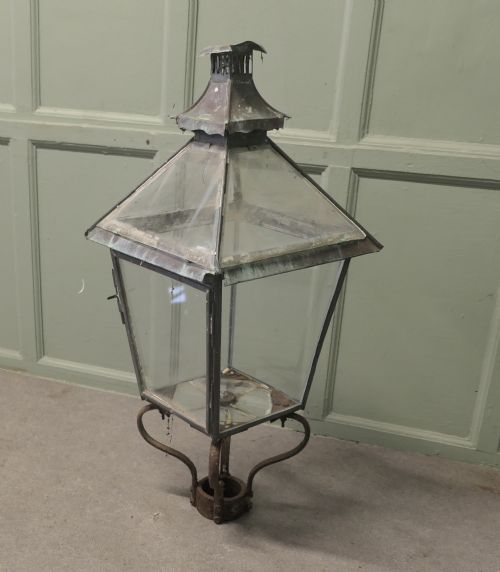
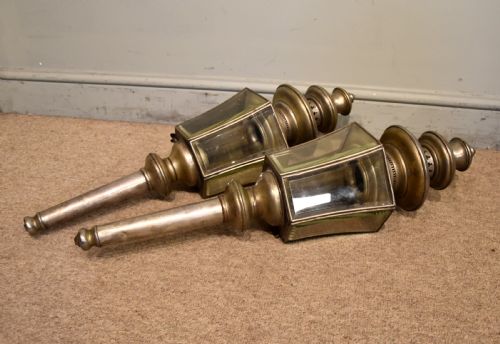
The most prevalent examples on this page are copper street lanterns and brass coach-house wall lights. Many retain evidence of their original function, including gas conversion fittings and heavy structural brackets.
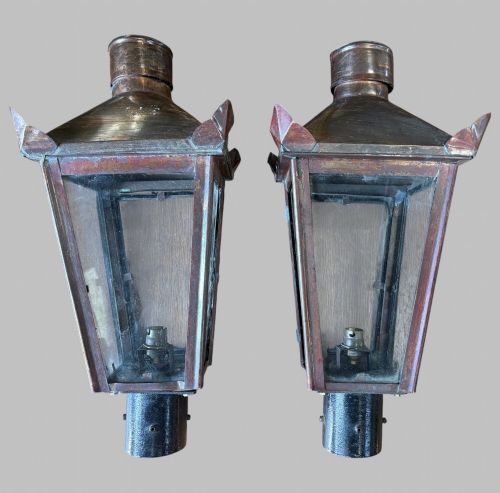
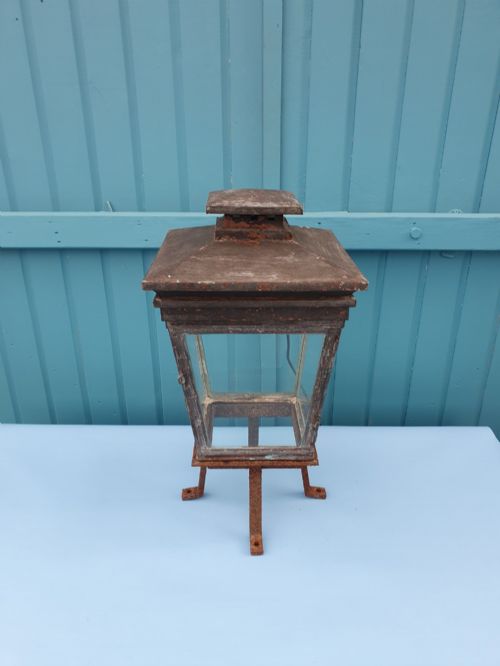
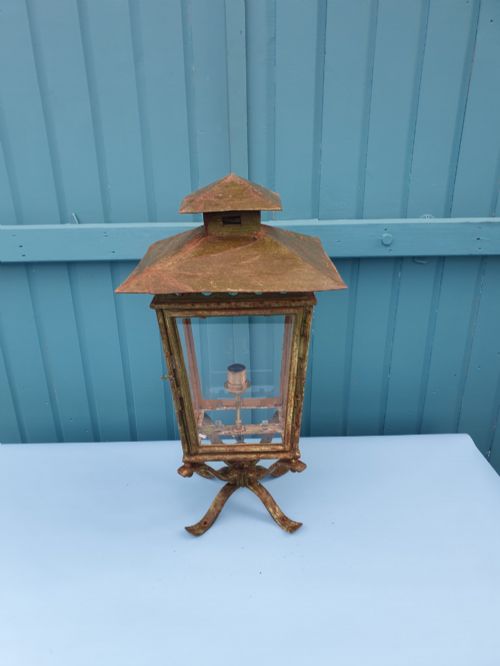
Forms range from simple octagonal wall fixtures to large copper street lights and twin post mountings. Styles lean toward Victorian, Edwardian, Industrial, and French Neo-Classical designs.
Materials and Construction Methods
These lighting fixtures rely primarily on sheet copper, brass, and cast iron, often combined with glazed panels of heavy glass. Metals were hand-beaten, soldered, and riveted to withstand exposure to the elements.
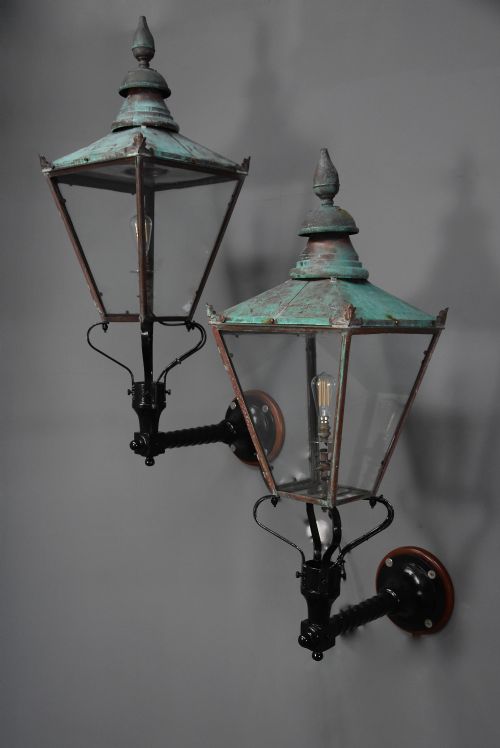
Iron and steel components provide structural rigidity for large wall brackets and swan neck lamp posts. Bronze and zinc appear in specific French and English configurations, developing a natural verdigris patina over decades of weathering.
Vintage Exterior Lantern Light Retail Price Guide 2026
Typical asking prices for vintage exterior lantern light among the pieces listed under this phrase on Sellingantiques today, from the lower quarter to the upper quarter. They describe what is for sale here now, not the wider market.
One porch light carries tiny cast shamrocks, adding a touch of botanical luck to a damp Victorian evening.
Distinctions in Quality and Make
Quality rests upon the heaviness of the gauge of copper or brass and the architectural complexity of the supporting brackets. Finer examples display meticulous hand-soldered joints, cast decorative elements, and substantial original mounting hardware rather than thin pressed metal.
The integrity of the surviving glass panes and the retention of maker markings or original gas conversion components distinguish standard utility pieces from substantial civic and architectural commissions.
REVO·Revo Tipton
The Vintage Exterior Lantern Light Glossary
- Coach-House Wall Lantern
- A glazed wall-mounted light fixture historically positioned beside the entrance of a carriage house or stable yard.
- Swan Neck Lamp Post
- An exterior light standard featuring a curved upper metal arm that suspends the lantern away from the vertical post.
- Verdigris Patina
- The green or bluish film formed naturally on copper, brass, or bronze surfaces through long-term atmospheric exposure.
- Post Lantern
- A heavy outdoor light designed to be mounted directly onto the top of a stone pillar, brick pier, or metal post.
- Half Lantern
- A light fixture split flat on one side so it sits flush against an exterior wall or porch pillar.
Vintage Exterior Lantern Light: Frequently Asked Questions
What is a vintage exterior lantern light?
These fixtures are surviving outdoor lamps originating from the nineteenth and early twentieth centuries, built for streets, coach houses, and grand porches.
They combine robust metal frames in copper, brass, or iron with glass panels designed to shelter naked flames or early electric bulbs from wind and rain.
Were these lights converted from gas?
Many nineteenth-century and early twentieth-century examples began their working lives as gas street lamps or coach lights before being adapted for modern electrical wiring.
Traces of this history often remain visible in the internal burner assemblies or supply pipes retained within the antique metal housings.
How do I mount a wall lantern?
Wall-mounted versions require secure fixing to exterior masonry or timber framing, taking into account the considerable weight of heavy copper and cast iron.
Larger pieces demand reinforced brackets, such as spiral twist iron arms, to support the outward leverage of the lantern body.
How do I tell Victorian from Edwardian styles?
Victorian models frequently feature heavy cast iron, ornate brackets, and utilitarian street or carriage proportions designed for gas illumination.
Edwardian and later 1930s examples often introduce cleaner octagonal geometries, lighter brass constructions, and refined French or Arts and Crafts decorative influences.