

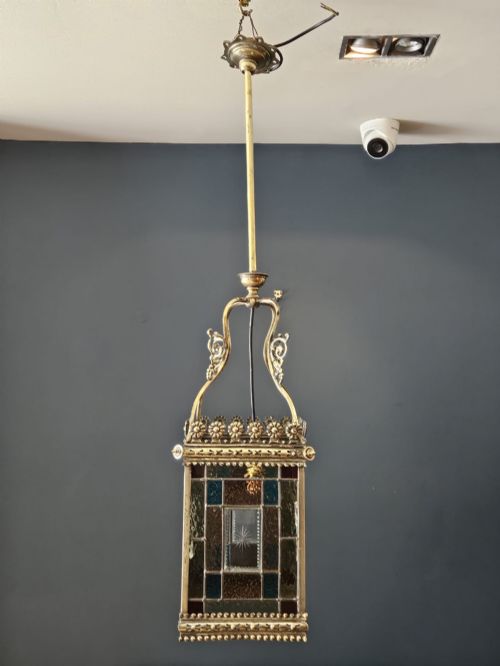
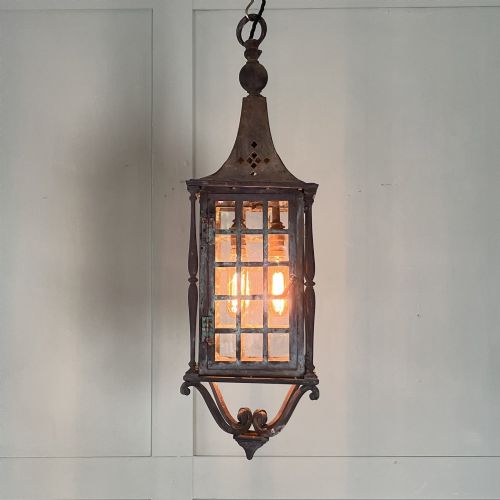
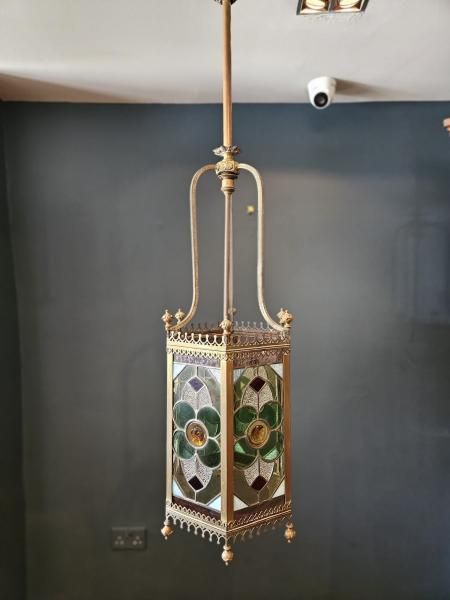

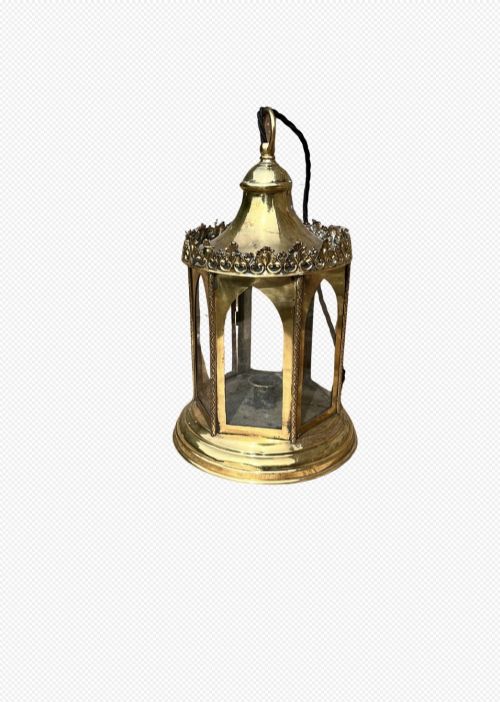


Gothic Revival Porch Light
A gothic revival porch light brings medieval ecclesiastical weight and structured glasswork to an entrance, offering robust illumination with architectural presence.
Gothic Revival Porch Light
A gothic revival porch light is a hanging lantern designed to illuminate an entryway through leaded or panelled glass panels set within a metal framework. These fixtures draw upon medieval architectural motifs, translating ecclesiastical forms into domestic entrance lighting.
The versions most commonly met on this page date from the Victorian and Edwardian eras, spanning the nineteenth and early twentieth centuries. They appear as hexagonal or square lanterns suspended by chains or mounted closely to the ceiling.
Makers drew inspiration from Gothic and Arts and Crafts design principles, resulting in lanterns that balance utilitarian weather resistance with decorative tracery. They function equally well as interior hall pendants or exterior porch lights.
How they were made
These lanterns were constructed using structural metals such as brass, bronze, copper, and cast iron to form the protective skeletal cage. Blacksmiths and metalworkers shaped these materials into rigid frames capable of housing glass panels securely against the weather.
Panels of glass, frequently leaded or coloured, were fitted into the metal armature to diffuse light outward while displaying geometric or naturalistic patterns. Craftsmen utilised soldering and lead cording to join individual glass segments within the metal channels.
Gothic Revival Porch Light Retail Price Guide 2026
Typical asking prices for gothic revival porch light among the pieces listed under this phrase on Sellingantiques today, from the lower quarter to the upper quarter. They describe what is for sale here now, not the wider market.
The listings on this page span the Victorian and Edwardian periods, utilising materials including brass, wrought iron, copper, and leaded glass.
What varies in quality
Quality rests in the weight of the metal chassis and the precision of the joinery holding the glass panels in place. Heavier gauges of brass, bronze, and iron provide structural integrity that lighter stamped metal components lack.
The refinement of the decorative detailing, from cast iron blacksmith work to detailed leaded glass configurations, distinguishes standard utility pieces from more ambitious architectural commissions.
The Gothic Revival Porch Light Glossary
- Gothic Revival
- An architectural and decorative style drawing inspiration from medieval forms, pointed arches, and heavy structural framing. This aesthetic defines the overarching design of these lanterns.
- Leaded Glass
- Glass panes held together within lead cording or came to form geometric or pictorial windows. This technique provides the translucent panels standard in hall lanterns.
- Hall Lantern
- A hanging ceiling light traditionally used to illuminate entrance corridors, vestibules, and stairwells. These fixtures share the form and function of porch lights.
- Arts and Crafts
- A design movement valuing handcraftsmanship, traditional materials, and simple utility over mass-produced ornamentation. Pieces from this tradition show visible blacksmith work and honest construction.
Gothic Revival Porch Light: Frequently Asked Questions
Can these lanterns be used outdoors?
Most of these lanterns were originally constructed for exterior porch placement or sheltered entryways, utilising durable metals and glass. However, modern exterior installation requires checking the current wiring and weatherproofing status of each individual piece.
Buyers should consult a qualified electrician to ensure the fixture meets contemporary safety standards for damp or exposed locations before mounting it outside.
How do I hang a heavy brass lantern?
Hanging a substantial metal and glass lantern requires secure ceiling joist attachment and appropriate weight-rated chains or brackets. The structural weight of bronze, iron, and leaded glass demands proper ceiling support.
Professional installation is recommended to bear the load safely and to handle the electrical connection correctly within the ceiling canopy.
How do I distinguish Victorian from Edwardian lanterns?
Victorian lanterns tend to feature heavier, more ornate Gothic Revival ornamentation, sometimes incorporating intricate brass casting or ecclesiastical tracery. Edwardian examples often lean toward cleaner lines influenced by the Arts and Crafts movement.
Examining the metal patina and construction methods helps determine whether a piece originates from the mid-nineteenth century or the early twentieth century.
Are these lights electrified?
Many surviving lanterns have been converted to electricity for modern domestic use, though older side lanterns and hanging fixtures retain various wiring states. Some preserve older fittings while others require complete rewiring.
Reviewing the internal lamp holder and cord setup upon acquisition ensures the fixture is ready for safe domestic operation.