





Vintage Equine Wall Portrait
A vintage equine wall portrait captures the physical power and specific lineage of individual horses through the precise eye of earlier artists.
Vintage Equine Wall Portrait
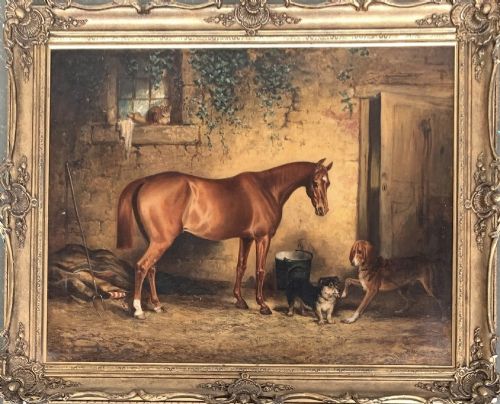
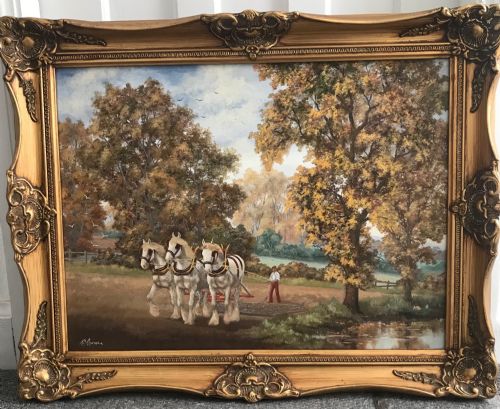
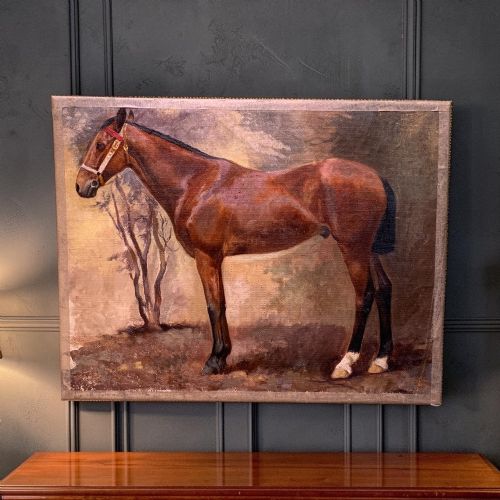
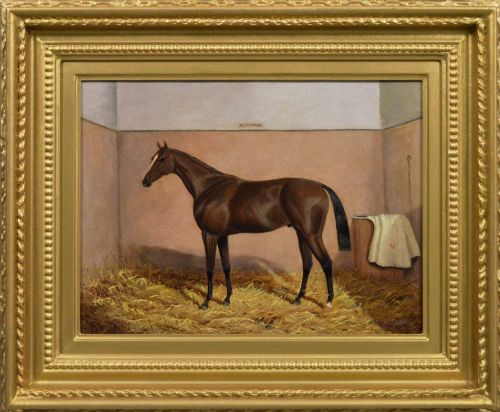
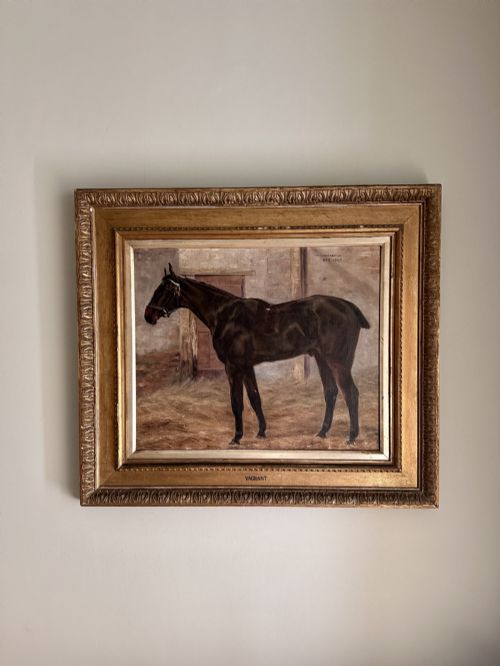
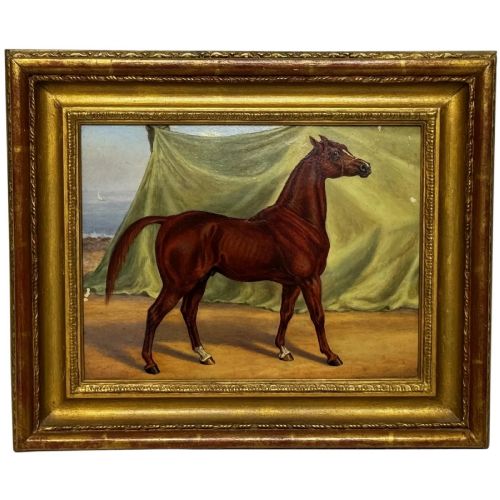
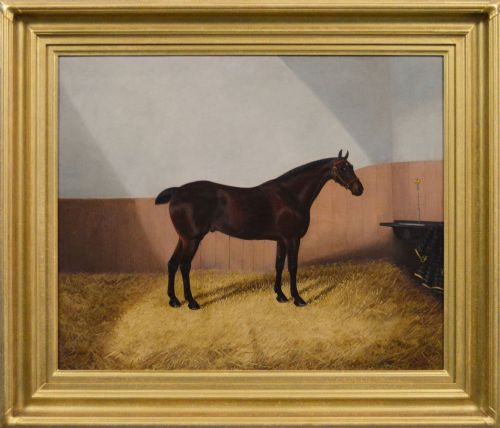
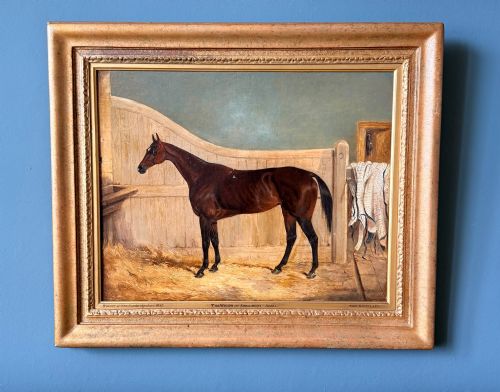
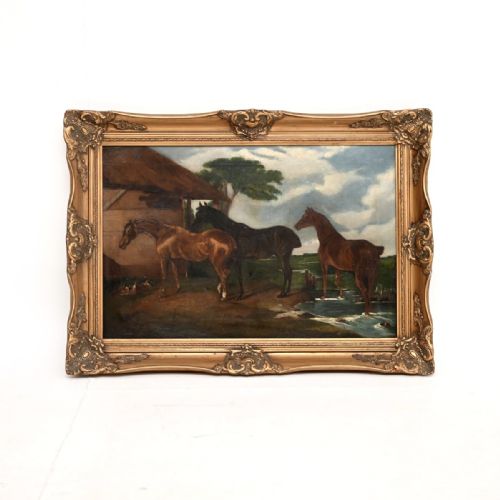
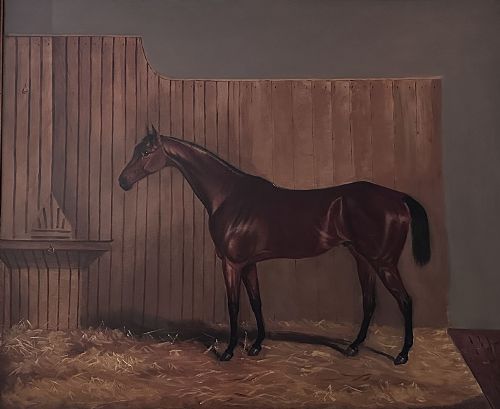
A vintage equine wall portrait focuses closely on individual horses, whether named racehorses in stables, working shire horses in fields, or prized hunters by regional artists. These works span the Georgian, Victorian, Edwardian, and mid-twentieth-century periods, capturing the changing fashions of animal husbandry and sporting art over two centuries.
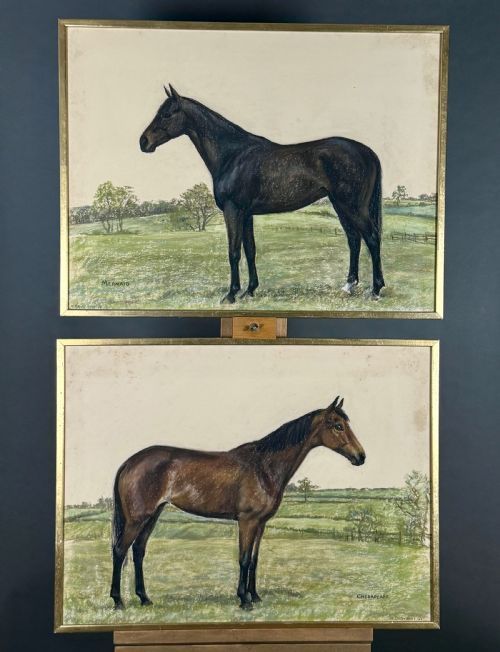
Buyers encounter oil paintings on canvas and pine panel most frequently on this page, accompanied by pastel studies on paper, watercolours, and framed photographic prints. Formats range from intimate single studies to large pairs of champion stallions and mares, usually housed in wooden or giltwood frames suitable for wall display.
Materials and methods
Artists built these portraits using oil paint applied to stretched canvas, paper, or sturdy pine panels, often layering rich pigments to render the muscular contours, glossy coats, and distinct markings of each animal. Draughtsmen also utilised pastel on paper for softer equestrian studies, capturing the texture of manes and coats with fine, dry strokes.
Many of these works remain protected beneath glass within traditional wooden or giltwood frames that complement the period of the painting. The interaction between oil pigments and canvas or panel substrate determines the longevity and surface preservation of each portrait.
Several portraits preserve the exact names of nineteenth-century racing winners and their jockeys for posterity.
Assessing quality in equine art
Quality rests primarily on the anatomical accuracy of the horse and the artist's ability to convey its individual character rather than a generic template. Superior pieces demonstrate a confident handling of light across the musculature, accurate perspective in the surrounding stable or landscape, and detailed rendering of tack and background elements.
Provenance and documentation elevate certain portraits significantly, particularly when the subject's racing history, owner, or stable location is clearly recorded on the canvas or in accompanying historical archives. The skill of the framing, especially period giltwood surrounds, also contributes to the overall integrity of the piece.
Henry Barraud·Albert Clark·Fred Fitzpatrick·Thomas Walker Bretland·George E Sharpe·Benjamin Cam Norton·Clifton Tomson·Alfred Moginie Bryant·Abraham Cooper RA·Charles Bilger Spalding RA·Walter Herbert Wheeler·William Shayer Snr
The Vintage Equine Wall Portrait Glossary
- Oil on Canvas
- A painting medium where pigments suspended in drying oils are applied to a woven fabric support. This combination allows for deep colour saturation and smooth blending.
- Giltwood
- Timber carved and coated with a thin layer of gold leaf or gilt paint. It is commonly found on traditional frames surrounding formal portraits.
- Pastel
- A dry art medium consisting of powdered pigment and a binder. It produces velvety textures and is typically executed on paper.
- Pine Panel
- A rigid wooden board used as a painting support instead of fabric. Panels provide a stable surface that resists the sagging associated with aged canvas.
- Sporting Art
- A genre of painting dedicated to horses, hounds, shooting, and rural sports. These works often record specific racing winners and prize livestock.
Vintage Equine Wall Portrait: Frequently Asked Questions
What is an equine portrait?
An equine portrait is a dedicated painting, drawing, or print depicting a specific horse rather than a generic animal in a landscape. These works frequently record named racehorses, hunters, or prize stallions alongside their jockeys, trainers, or stable yards.
Historically commissioned by owners and breeders to celebrate sporting victories or prized bloodlines, these portraits serve as both fine art and equine records.
How do I date an antique horse painting?
Dating relies on a combination of artist signatures, stylistic cues, framing methods, and the physical materials of the canvas or panel. Many nineteenth and early twentieth-century works include inscriptions on the reverse or stretcher bars naming the horse and date.
Clothing styles of any accompanying jockeys or handlers, as well as the cut of the horse's tack and mane, also provide reliable indicators of the specific decade.
Where should I hang a horse portrait?
These portraits suit traditional country house interiors, studies, dining rooms, and hallways where wooden furniture and neutral walls complement giltwood or dark wood frames. Proper placement avoids direct sunlight to protect oil pigments and works on paper from fading over time.
Because many pieces feature substantial horizontal or vertical dimensions, they anchor a room well when centered above a fireplace or sideboard.
Are these paintings original works?
The selection includes original hand-painted works in oil and pastel as well as period photographic prints from the early twentieth century. Each listing specifies the exact medium, distinguishing unique painted canvases from works on paper and photographic editions.
Signatures, attributions, and period characteristics are documented in individual descriptions to clarify the origin of each piece.