


Traditional Country Horse Art
Traditional country horse art captures the enduring spirit of rural life, offering buyers a direct connection to historic equestrian heritage through authentic period paintings and prints.
Traditional Country Horse Art
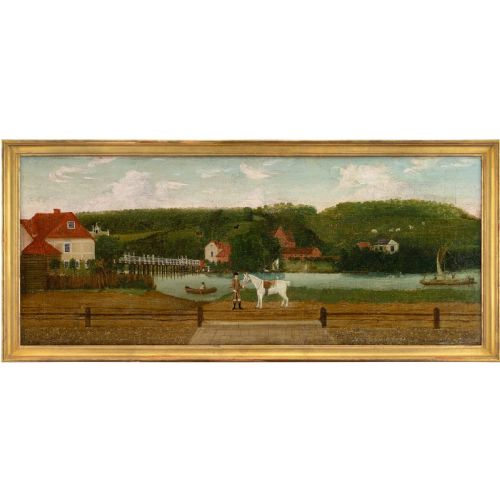
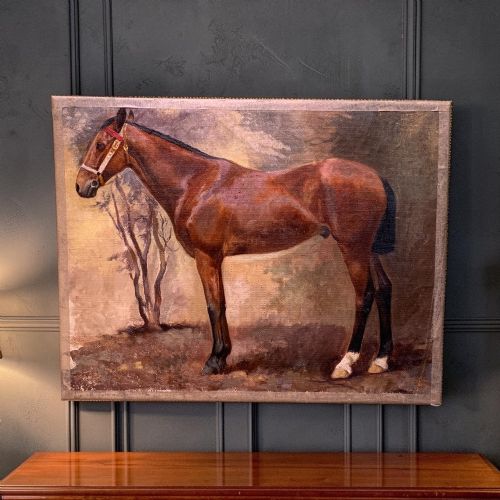
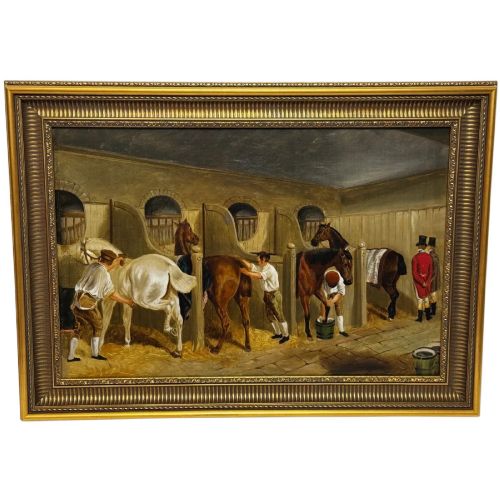
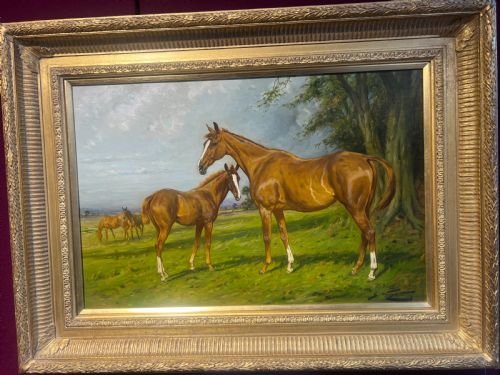
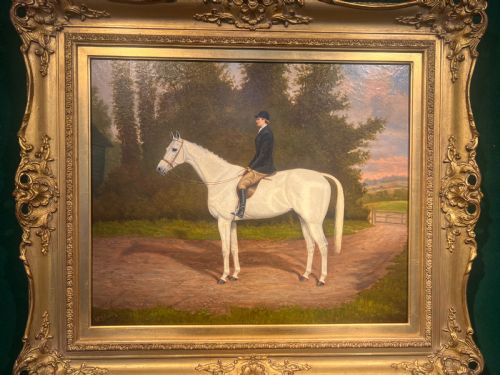
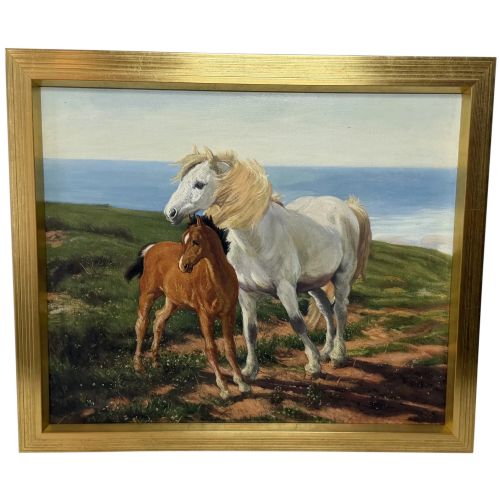
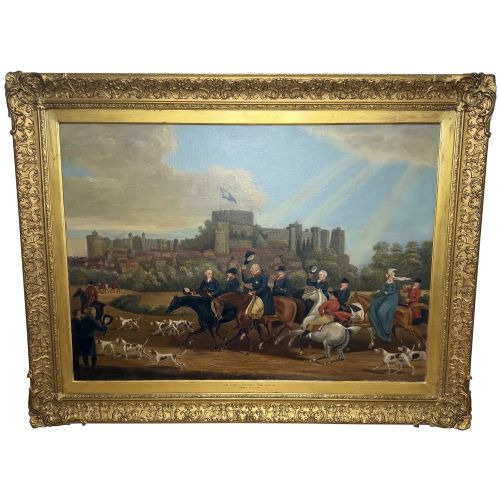
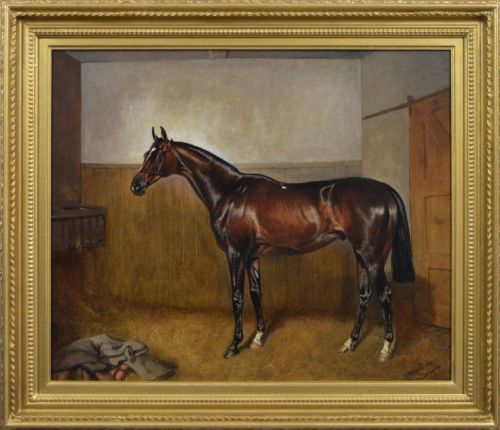
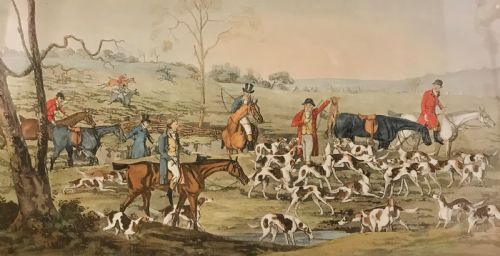
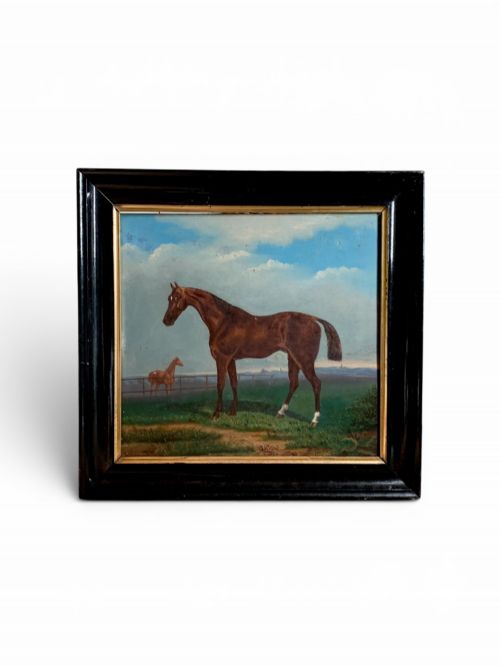
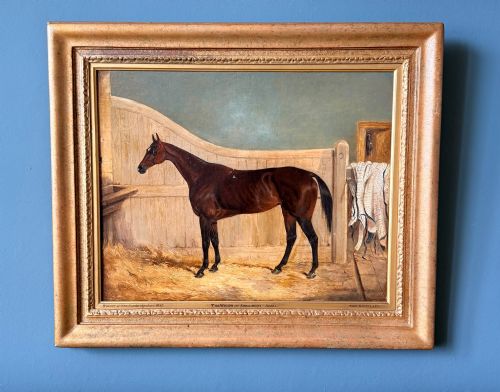
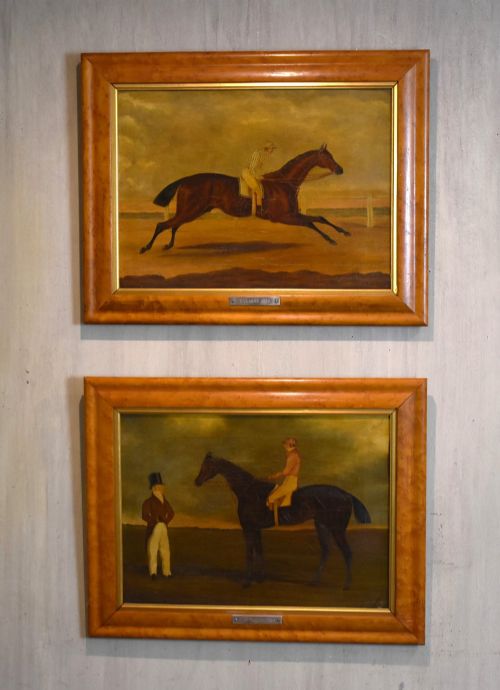
Traditional country horse art encompasses a rich variety of works depicting equine subjects within rural, agricultural, and sporting contexts across the nineteenth and twentieth centuries. Buyers searching for traditional country horse art encounter everything from detailed individual portraits of racehorses and hunters to bustling farmyard scenes and sweeping hunting landscapes.
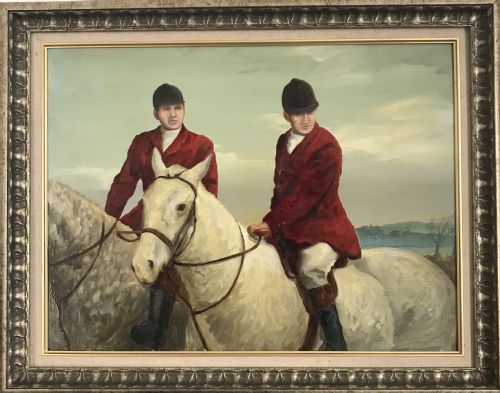
The pieces on this page originate from distinct eras including the Georgian, Victorian, and Edwardian periods, alongside mid-century interpretations of rural life. Oil paintings on canvas or board predominate, accompanied by watercolours, framed prints, and hand-coloured engravings that record the daily interactions between humans, horses, and the British countryside.
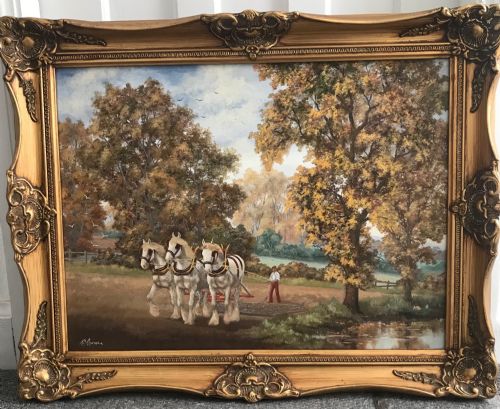
Subject matter ranges widely from tranquil pasture scenes with heavy shires to dramatic depictions of the hunt and blacksmith visits. These works reflect both the utility and prestige of the horse in historical society, captured by regional English and continental schools alike.
How they were made
Artists primarily employed oil paint on canvas, wood panel, or board to build rich textures and deep tones for equine coats and rural landscapes. Watercolours on paper offer a lighter, more fluid medium often utilised for rapid studies and detailed portraiture.
Several shires and hunters share wall space here with farmyard ducks, chickens, and the occasional inquisitive farm dog.
What varies in quality
Anatomical precision and the convincing rendering of movement distinguish superior equine portraits from more formulaic productions. The artist's ability to capture the specific conformation and temperament of a horse, rather than a generic silhouette, elevates a piece significantly.
The treatment of the surrounding landscape and atmospheric light plays a crucial role in overall quality. Masterful integration of the horse within a detailed rural setting, combined with confident brushwork and well-preserved pigments, marks the distinction between standard decorative works and fine art.
George Wright·William Albert Clarke·John Alfred Wheeler·Thomas Walker Bretland·John Frederick Herring Snr·George Morland·Charles Walter Simpson·John Frederick Herring Jnr·George E Sharpe·Michael Lyne·John Atkinson·Arthur Longley Vernon·Charles Faulkner·Benjamin Cam Norton
The Traditional Country Horse Art Glossary
- Equine art
- Artwork depicting horses, encompassing portraits, sporting scenes, and agricultural depictions. This genre has a long history in British painting.
- Giltwood
- Wood carved and covered with a thin layer of gold leaf, commonly used for traditional picture frames. These frames often show age-related patination.
- Lithography
- A planographic printing method using a stone or metal plate, enabling the reproduction of detailed artistic images. Many nineteenth-century sporting scenes utilised this technique.
- Aquatint
- A printmaking technique that produces tonal effects resembling watercolour washes. It was frequently employed alongside etching for illustrated sporting books and prints.
- Provenance
- The documented history of ownership for an artwork. Establishing provenance helps verify authenticity and attribution to specific artists.
Traditional Country Horse Art: Frequently Asked Questions
What periods do these paintings date from?
The works span from the late eighteenth century through the Victorian and Edwardian eras up to the mid-twentieth century. Georgian and nineteenth-century pieces offer the earliest representations available on this page.
Later works extend into the nineteen-sixties, reflecting a persistent artistic interest in rural and equine subjects across different generations.
How were these artworks created?
Artists primarily used oil paint on canvas, wood panels, or boards to achieve rich depth in animal coats and landscapes. Watercolours and hand-coloured engravings on paper also feature prominently among the available formats.
Traditional framing methods utilising wood and giltwood frequently accompany these pieces, preserving the physical integrity of the works.
Who are some of the artists represented?
The collection includes pieces attributed to notable sporting and landscape painters such as John Frederick Herring, George Wright, and Thomas Walker Bretland. Both prominent British masters and continental school artists contributed to this genre.
Signatures, attributions, and historical records help connect specific works to these recognised names and their respective workshops.
How do I care for antique horse art?
Keep paintings away from direct sunlight and excessive moisture to protect oil pigments and paper surfaces from fading or degradation. Stable indoor temperatures prevent warping in wooden panels and canvas stretchers.
Dust giltwood frames gently with a soft, dry brush and avoid chemical cleaners that might harm the historic finishes.