
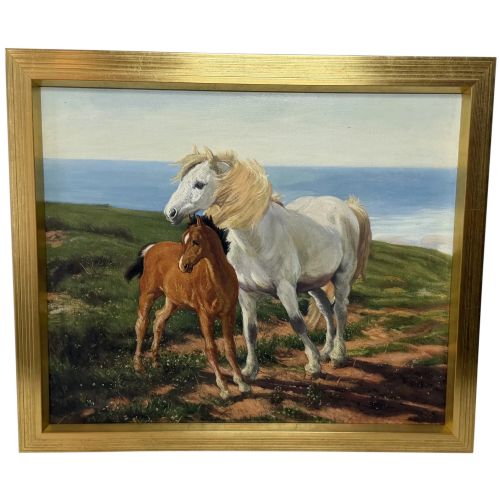
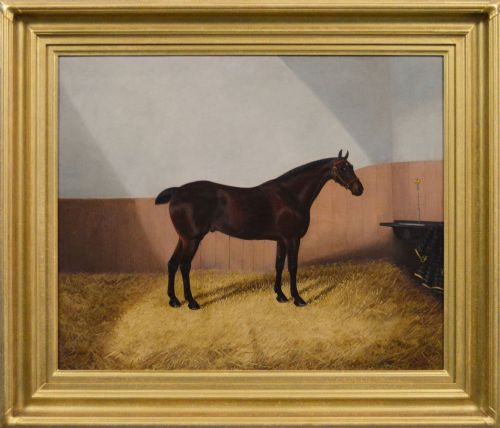
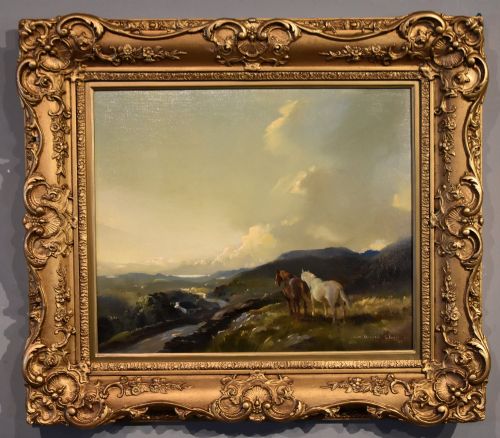
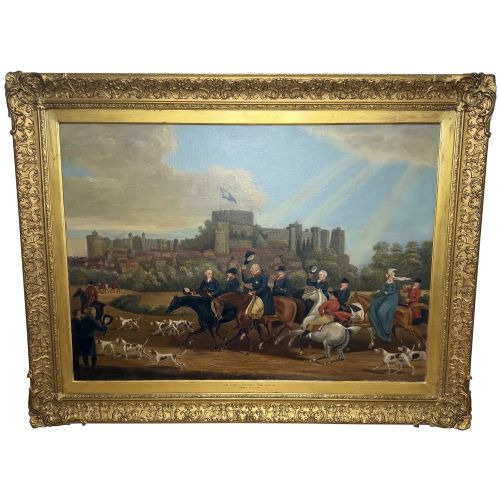
Vintage Equestrian Canvas
Vintage equestrian canvas spans centuries of equine portraiture and sporting art, capturing the musculature and spirit of horses through traditional oil painting.
Vintage Equestrian Canvas
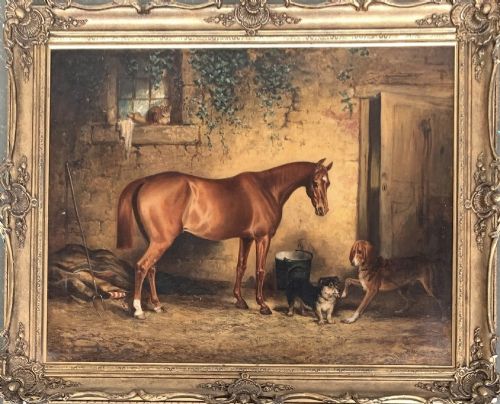
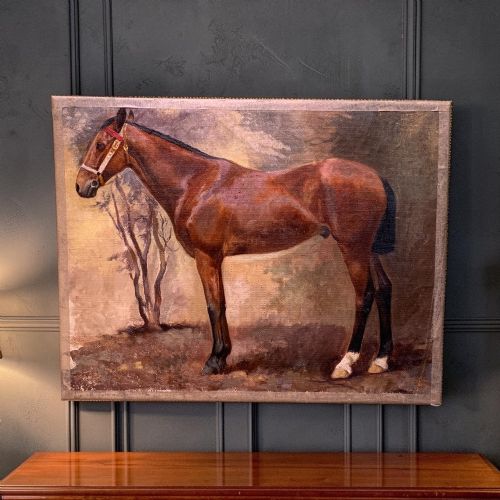
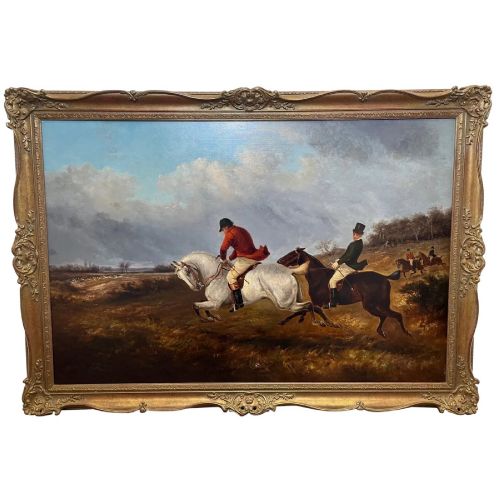
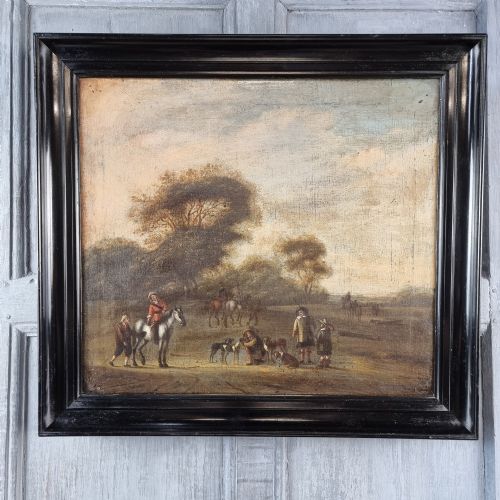
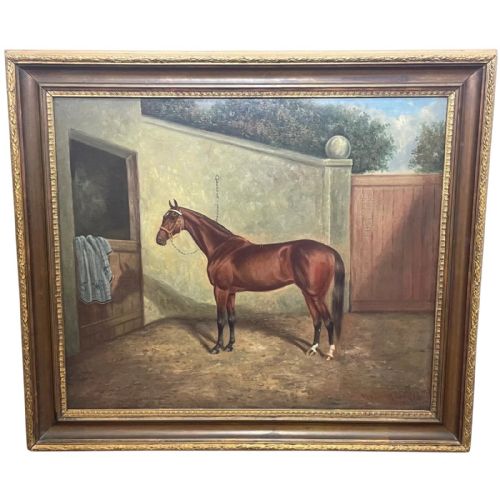
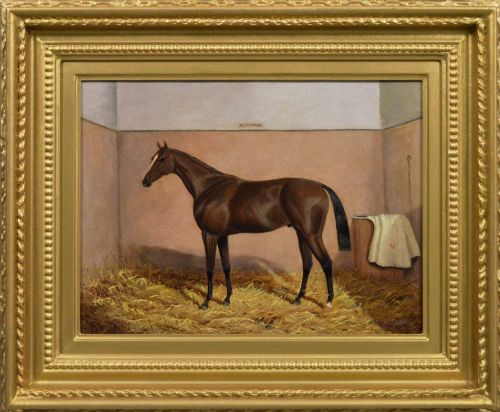
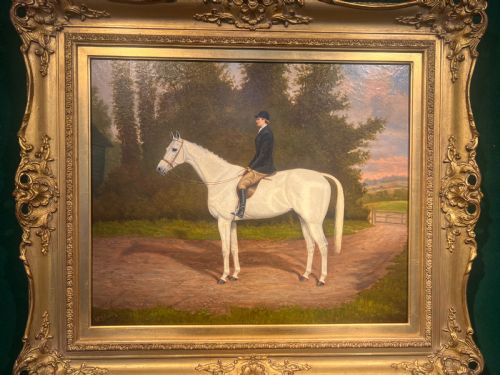
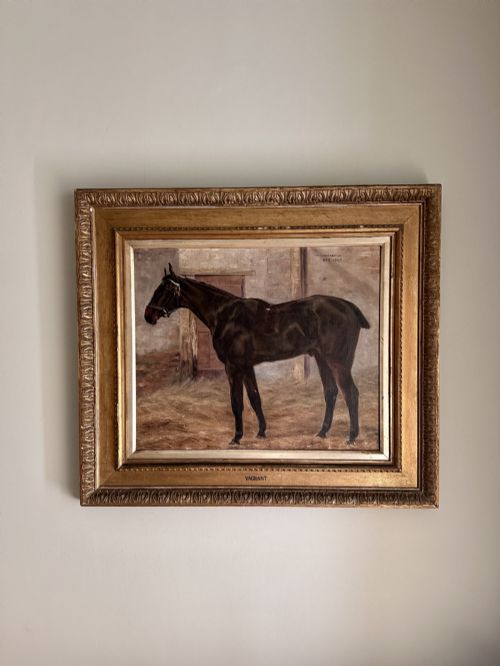
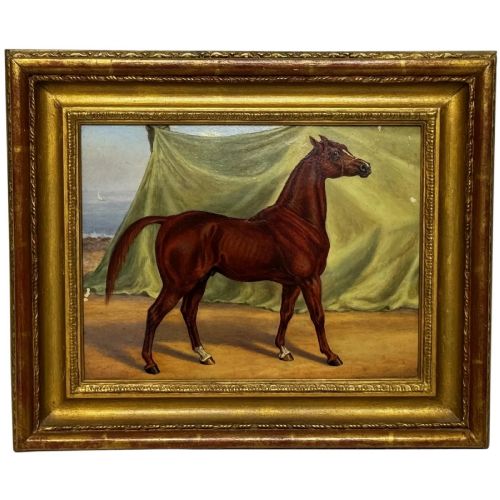
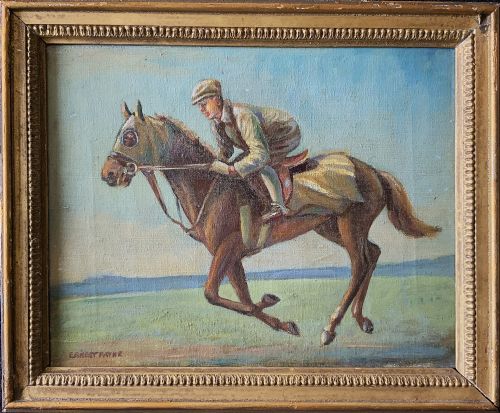
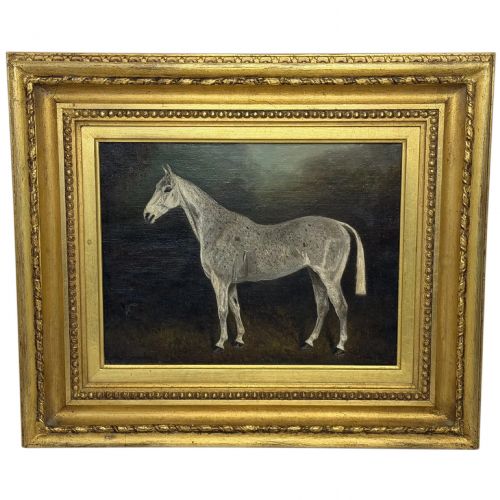
Vintage equestrian canvas encompasses oil paintings on canvas depicting horses, racing scenes, hunting parties, and stables. These works range from formal portraits of named thoroughbreds to broader depictions of rural coaching and racing life.
The pieces on this page lean heavily into 19th-century and mid-century British sporting art. Buyers will frequently encounter Victorian and Edwardian portrayals of hunters, racehorses, and stable yards rendered in oil paint.
Materials and Construction
These works are executed in oil paint applied to woven canvas supports. The physical foundation relies on stretched canvas secured to wooden stretcher frames, often housed within period giltwood or wood frames.
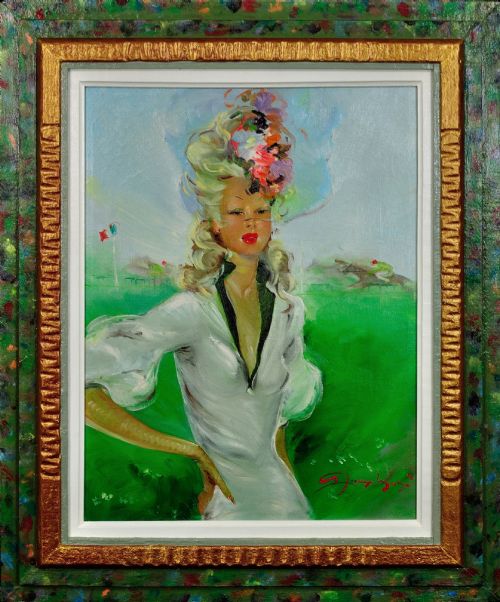
Artists utilised traditional oil techniques to build depth in the coats of bay, grey, and chestnut horses. Brushwork varies from the tight, detailed realism of Victorian portraiture to looser mid-century British Impressionism and Expressionism.
Framing materials recorded across the inventory include carved giltwood and plain wood.
Assessing Quality and Execution
Quality rests primarily on the anatomical accuracy of the horse and the handling of light across its coat. Master sporting artists capture bone structure, muscle tension, and individual character where lesser hands produce stiff or generic outlines.
The integration of the subject with its background also separates fine examples from standard works. Superior paintings place the horse convincingly within a specific landscape, stable interior, or racing environment rather than floating it against a flat backdrop.
Henry Barraud·Thomas Smythe·Albert Clark·George Wright·Thomas Walker Bretland
The Vintage Equestrian Canvas Glossary
- Oil on Canvas
- A traditional painting medium where pigments suspended in drying oils are applied to a woven fabric surface. This combination allows for rich blending and textured brushwork.
- Giltwood
- Wood carved and coated with gold leaf or gold paint. Frames of this material frequently accompany 19th-century sporting canvases.
- Sporting Art
- A genre of fine art dedicated to depicting rural sports, including horse racing, fox hunting, and equine portraits. It flourished in Britain across the Georgian, Victorian, and Edwardian eras.
- Equestrian
- Pertaining to horses, horse riding, and horsemanship. In painting, it denotes imagery centred entirely on the horse and its handlers.
Vintage Equestrian Canvas: Frequently Asked Questions
What subjects appear on vintage equestrian canvas?
The subjects include named racehorses, hunting dogs, stable yards, and racing scenes. Many works record specific derby winners or notable hunters commissioned by their owners.
Broader countryside scenes involving coaches and riders also populate this category. The focus remains squarely on the animal and its environment.
How do I date a canvas?
Dating relies on stylistic clues, framing, and the physical condition of the canvas and stretcher. Victorian and Edwardian pieces often display distinct costuming in any human figures alongside tighter brushwork.
Signatures, inscriptions on the reverse, and artist records provide firmer dates. Mid-century works introduce looser, more expressionistic handling.
Where were these paintings created?
The majority originate from British and European workshops, reflecting the deep cultural ties to hunting and horse racing. Artists travelled to country estates and racing stables to paint live subjects.
Regional British schools, such as West Country painters, also contributed local depictions of ponies and rural life. The techniques follow established European academic traditions.
How should I hang an oil painting?
Hang oil paintings away from direct sunlight and steady heat sources to protect the canvas and paint layers. Stable indoor humidity prevents the canvas from slackening on its wooden stretcher.
Ensure the wall fixings match the weight of the heavy giltwood frames often found on these pieces. Professional picture hooks suited to the frame size provide secure support.