





Vintage Epergne
These vintage epergne displays are striking table centrepieces that bring height and tiered elegance to any dining room.
Vintage Epergne
A vintage epergne serves as a dramatic table centrepiece, designed to hold fruit, flowers or candles across multiple tiers and branches. When you search for a vintage epergne, you encounter varied multi-trumpet forms originating from the nineteenth century through to the art deco period.
The selections recorded here encompass Victorian and Edwardian examples alongside later twentieth-century interpretations. Forms range from towering multi-trumpet glass centrepieces to silver plated stands paired with ceramic pots.
Victorian naturalism and neoclassical influences shape many of the designs, while simpler glass flutes and trumpet vases offer alternative expressions. Buyers frequently encounter pieces featuring three to five trumpets or branches radiating from a central base.
Materials and construction
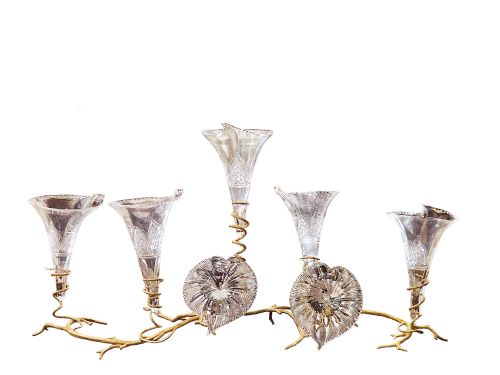
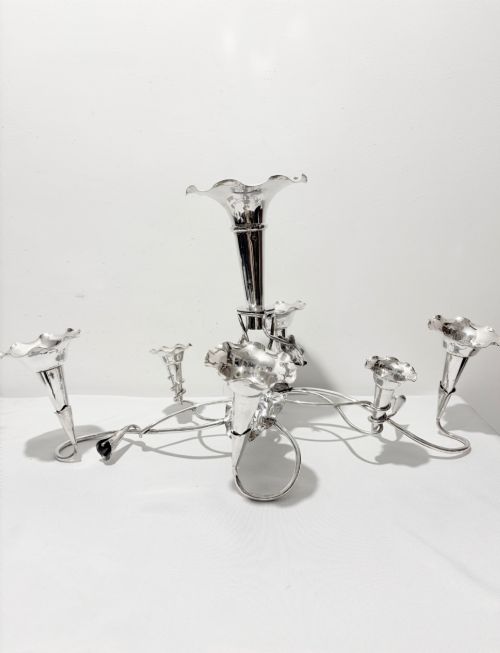
Makers utilised silver plate, EPNS, and gilt bronze for the structural framework and bases of these centrepieces. Silver plated metal provides the robust support necessary for multi-branch designs.
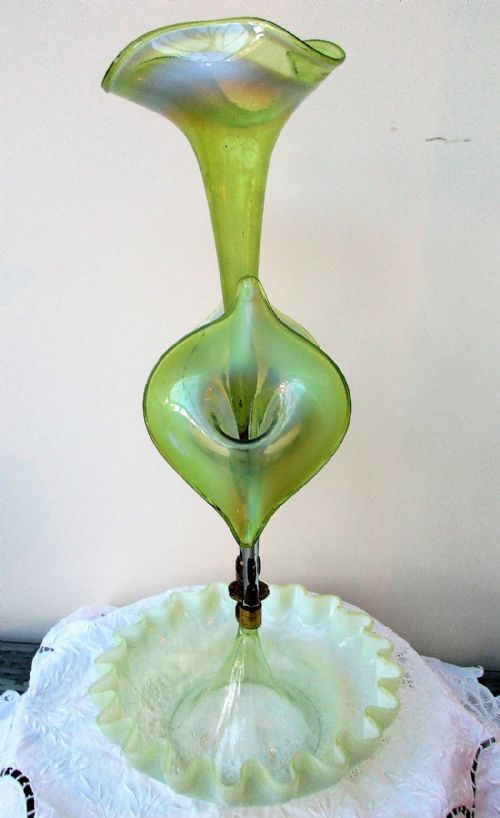
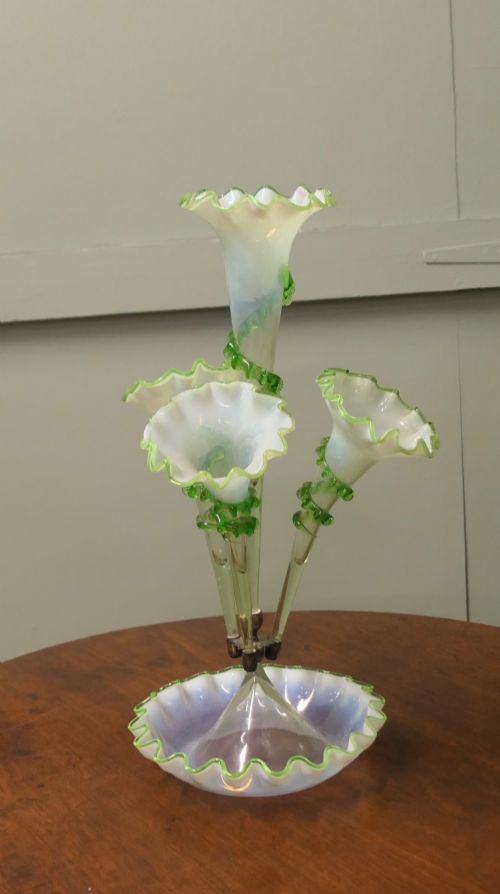
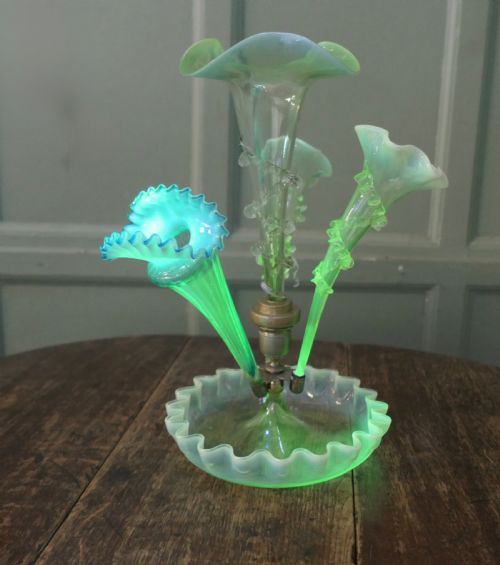
Glass elements are central to the construction, featuring hand-blown uranium glass, opalescent glass, pearlescent glass, and frosted glass. Artisans shaped these glass components into flutes and trumpets that screw or drop securely into the metal frames.
Vintage Epergne Retail Price Guide 2026
Typical asking prices for vintage epergne among the pieces listed under this phrase on Sellingantiques today, from the lower quarter to the upper quarter. They describe what is for sale here now, not the wider market.
Listings feature items spanning the 19th century, Victorian period, Edwardian era, 1900, 1910, 1920, 1930, and Art Deco styles.
Quality variations
The refinement of the glassblowing technique distinguishes standard production from superior examples, particularly visible in the depth of opalescence and the clarity of hand-blown uranium glass. Heavier gauges of silver plate and more intricate casting work on bronze bases indicate higher execution.
Proportion and scale dictate the visual success of a piece, where larger multi-trumpet arrangements demand careful balance to remain harmonious. The integration between metal mounts and detachable glass flutes reveals the original maker's standard of assembly.
Royal Worcester·Julien Glass
The Vintage Epergne Glossary
- Epergne
- A large table centrepiece featuring multiple branches or trumpets for holding fruit, flowers, or candles. This form dominates nineteenth-century dining tables.
- Trumpet
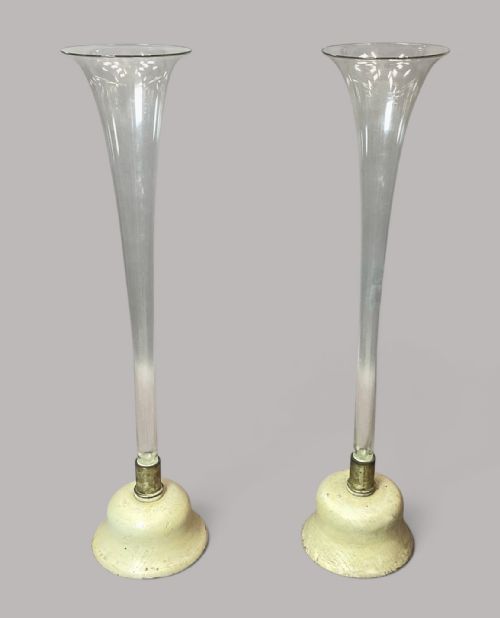
- A flared, funnel-shaped glass vase that inserts into the branches of a multi-tiered centrepiece. Several of these typically surround a larger central vessel.
- Uranium glass
- Glass infused with uranium oxide to produce a vibrant green hue that glows under ultraviolet light. It appears frequently in nineteenth-century decorative wares.
- Opalescent glass
- Glass exhibiting a milky, translucent quality with a blue or fire-like glow at the edges. This effect is achieved through specific heat treatments during blowing.
- EPNS
- Electroplated Nickel Silver, a common base metal composition for silver-plated items. It provides a durable core beneath a thin layer of silver.
Vintage Epergne: Frequently Asked Questions
How were epergnes used?
These pieces served as grand centrepieces on formal dining tables during the Victorian and Edwardian eras. They held displays of fresh fruit, cut flowers, or small candles to decorate meals.
The tiered arrangement allowed hosts to present multiple botanical elements within a single vertical footprint, elevating the visual interest of the table.
What materials are typical?
Metal frames are commonly constructed from silver plate, EPNS, gilt bronze, or brass to provide a sturdy foundation. These support detachable elements fashioned from various types of decorative glass.
Glass components frequently include hand-blown uranium glass, opalescent glass, frosted glass, and pearlescent finishes which catch the light from multiple angles.
How do I date a piece?
Stylistic indicators such as Victorian naturalism, neoclassical motifs, or art deco geometric lines help assign pieces to broad eras. Materials and manufacturing techniques, like silver plating methods, offer further chronological clues.
Certain items incorporate hallmarked silver bases or maker-marked ceramic pots that provide specific year markers within the nineteenth and twentieth centuries.
Where should I display one?
An epergne suits placement on a large dining table, sideboard, or entrance hall console where its vertical height can be appreciated. Because many versions feature delicate glass trumpets, a stable surface away from busy walkways is essential.
Natural daylight highlights the qualities of opalescent, frosted, or uranium glass, while evening lighting emphasises the metallic sheen of the silver plated or gilt bronze branches.