



Vintage Entryway Coat Hooks
These vintage entryway coat hooks bring practical utility and period character to a hall, combining brass, oak, iron, and glass.
Vintage Entryway Coat Hooks
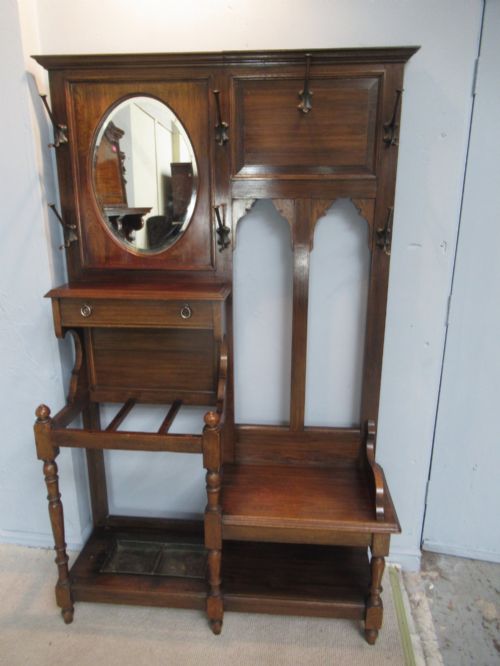
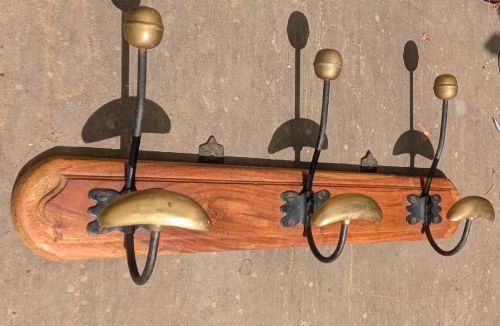
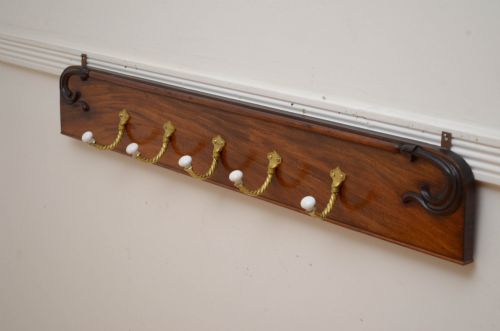
When searching for vintage entryway coat hooks, buyers encounter a practical mix of wall-mounted racks, hat trees, and standing furniture designed to organise hallways. The selection ranges from wall-mounted wooden boards set with brass or ceramic hooks to substantial freestanding hall stands incorporating mirrors and umbrella holders.
Most pieces on this page originate from the nineteenth and twentieth centuries, spanning Victorian, Edwardian, and Art Deco periods. Oak and walnut examples dominate the wooden formats, while French designs often utilise wrought iron and brass.
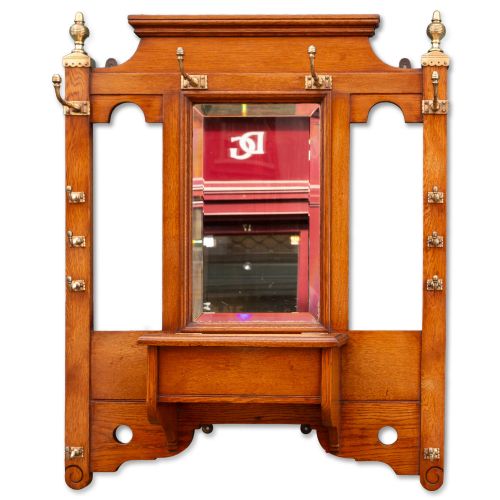
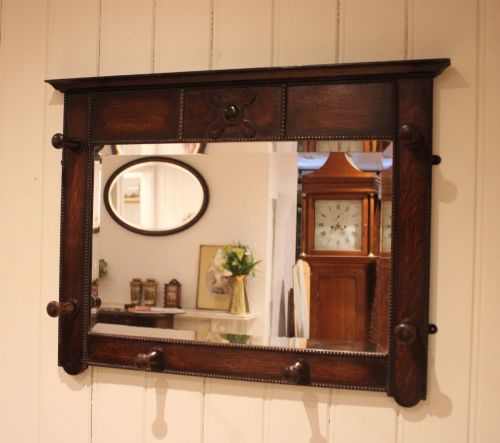
Many variants integrate useful dual functions, such as an upper shelf for hats paired with hanging pegs below, or an integrated mirror to check appearance before leaving the house.
Materials and construction
Construction relies heavily on durable timbers like oak, walnut, and mahogany, shaped into boards or standing frames designed to bear heavy winter garments. Solid brass, cast iron, and wrought iron provide the structural strength for the hooks themselves, often fixed securely to backplates.
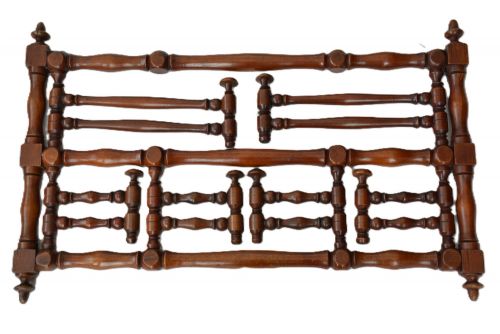
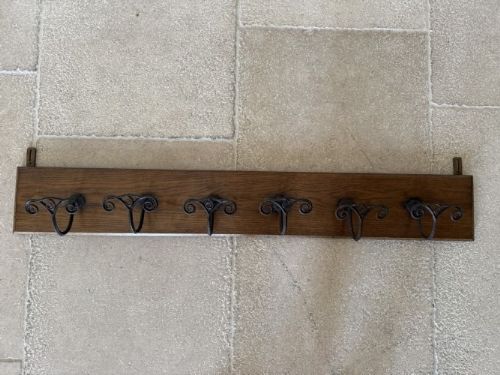
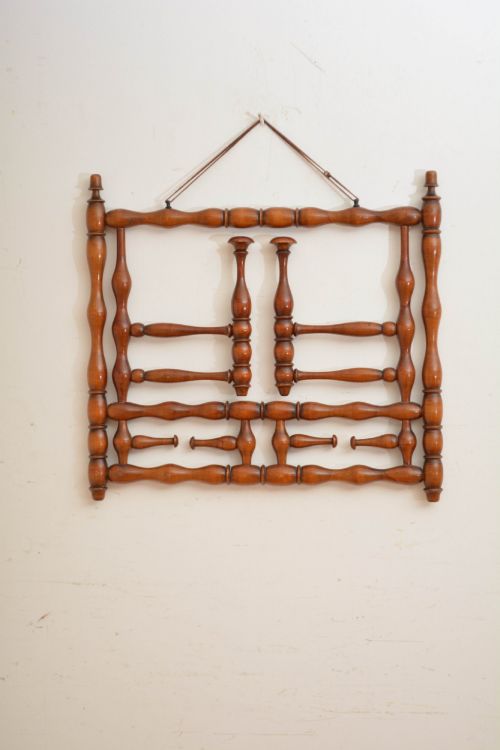
Decorative details emerge through craftsmanship such as twisted rope turnings on mahogany frames or forged iron curves on Art Deco and industrial pieces. Bevelled mirror glass and ceramic inserts add contrast and texture to the timber and metal backings.
Listings feature oak, walnut, and mahogany timbers alongside brass, wrought iron, and cast iron across Victorian and Art Deco periods.
Distinguishing quality
Quality rests in the substance of the materials and the integrity of the joinery or wall fixings. Heavy oak and walnut boards paired with substantial brass or cast iron hooks represent the higher tier of manufacture, offering genuine durability.
The Vintage Entryway Coat Hooks Glossary
- Hall stand
- A piece of hallway furniture combining coat hooks, a mirror, and often an umbrella stand or glove box. These substantial items anchor a traditional entryway.
- Hat tree
- A vertical freestanding pole or wall-mounted rack specifically designed with multiple tiers of projecting arms for hats and coats. They save wall space while offering high capacity.
- Wrought iron
- Iron that has been heated and hammered into shape by hand, resulting in fibrous textures and strong structural components. It appears frequently in French Art Deco designs.
- Bevelled mirror
- Glass featuring an edge cut at an angle to create a decorative framing effect. This technique indicates higher manufacturing standards in period mirrors.
- Turn of the century
- A transitional design period spanning the late Victorian and Edwardian eras around nineteen hundred. Pieces from this time blend ornate historic styles with cleaner forms.
Vintage Entryway Coat Hooks: Frequently Asked Questions
How do I mount a heavy wooden coat rack safely?
Heavy wooden racks require secure fixing directly into wall studs or solid masonry using appropriate screws and plugs.
The substantial weight of oak or walnut timber combined with winter coats demands strong structural support to prevent pulling away from the wall.
What is the difference between a hall stand and a coat rack?
A coat rack is typically a wall-mounted board with hooks, occasionally including a small shelf for hats.
A hall stand is a larger freestanding piece of furniture that often incorporates an umbrella stand, a mirror, and storage compartments alongside the hooks.
Are these hooks suitable for modern coats?
Most period hooks are robustly cast in brass or iron, making them entirely capable of holding modern winter coats and heavy garments.
However, the projection and spacing of older hooks can sometimes be narrower than modern equivalents, so checking dimensions helps ensure proper fit.
How do I care for antique wood and brass in a hallway?
Timber surfaces benefit from occasional application of quality beeswax to nourish the grain and protect against moisture from wet coats.
Brass hooks can be gently dusted or polished with a non-abrasive cloth, preserving the natural patina developed over decades of use.