


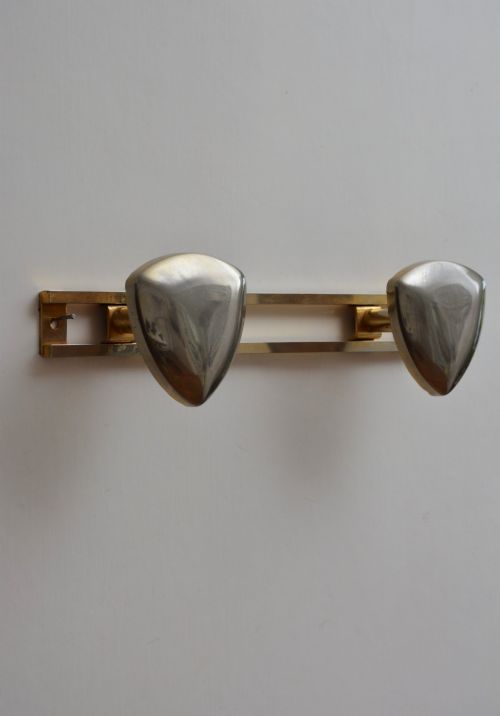


Art Deco Hall Rack
An art deco hall rack organises coats, hats and umbrellas with the sharp geometry of the 1920s and 1930s.
Art Deco Hall Rack
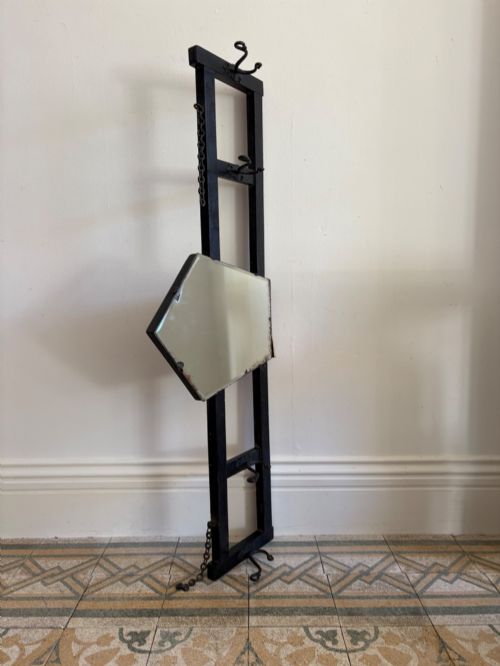
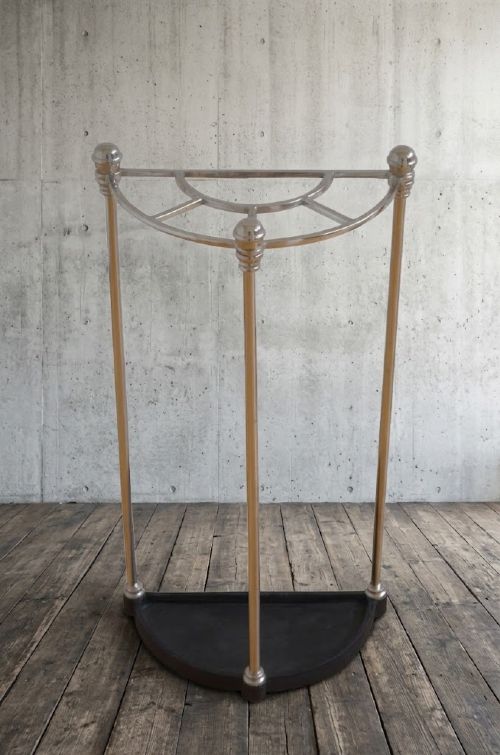
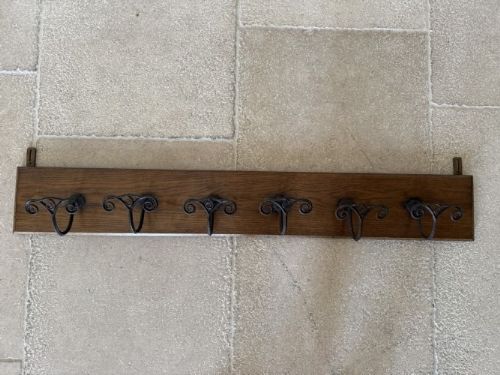
An art deco hall rack combines functional entryway storage with the distinct design language of the interwar period. These pieces appear as wall-mounted hat and coat combinations, freestanding umbrella stands and substantial hall furniture incorporating mirrors and stick holders.
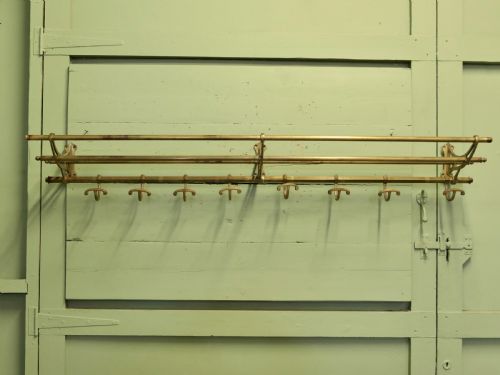
The versions most commonly met on this page date from the 1920s and 1930s, originating from both British workshops and French makers. They range from compact brass luggage racks with hook rails to robust oak hall stands and slender tubular metal umbrella holders.
Grouping coats, hats and walking sticks in a single unit, an art deco hall rack serves as a practical entryway centrepiece. The forms rely on clean lines, metallic finishes and geometric silhouettes characteristic of the era.
Materials and construction
Makers utilised a mixture of metals and timbers, pairing traditional oak with industrial materials like wrought iron, cast iron and tubular metal. Nickel plating and chrome applications provided the bright, reflective surfaces favoured in modern interiors of the period.
French examples frequently employ worked iron and polished brass, often integrating mirrored panels and slatted shelves into wall-mounted hat and coat racks. British interpretations lean towards solid oak frames fitted with metal hooks and ceramic or brass drip pans for umbrellas.
Art Deco Hall Rack Retail Price Guide 2026
Typical asking prices for art deco hall rack among the pieces listed under this phrase on Sellingantiques today, from the lower quarter to the upper quarter. They describe what is for sale here now, not the wider market.
Distinguishing quality
Quality rests in the integrity of the materials and the precision of the metalwork, distinguishing heavy cast or wrought elements from lighter stamped alternatives. Superior pieces demonstrate crisp lines in the frame and robust joining of hooks, shelves and umbrella divisions.
The finish on plated metal and the choice of timber set the better examples apart from standard production. Original plating depth and the retention of fitted drip trays or mirror plates indicate higher-tier manufacturing.
The Art Deco Hall Rack Glossary
- Demi-Lune
- A half-moon shape frequently seen in the design of umbrella stands and wall-mounted tables. This curved profile allows the piece to sit flush against an entryway wall.
- Nickel Plating
- A protective and decorative metallic coating applied to base metals to provide a bright, silver-coloured finish. It was widely utilised on hardware during the 1920s and 1930s.
- Tubular Metal
- Hollow metal piping bent into structural frames and support rails. This material became prominent in furniture design during the interwar modernist movement.
- Wrought Iron
- Iron that is heated and hammered into shape by hand or machine, resulting in durable scrollwork and structural frames. It often forms the rigid skeletons of French entryway pieces.
Art Deco Hall Rack: Frequently Asked Questions
What is an art deco hall rack?
It is an entryway furnishing designed to hold outdoor wear such as hats, coats, sticks and umbrellas. These pieces incorporate the geometric styling and metallic finishes characteristic of the interwar period.
They appear as wall-mounted racks with integrated shelves or as freestanding stands combining mirrors and umbrella divisions.
How do I install a wall-mounted rack?
Wall-mounted hat and coat racks require secure fixing into solid masonry or wall studs to support the weight of heavy winter garments. Most feature pre-drilled screw holes in the backplate or mounting brackets.
Ensure the fixings match the material of your wall to maintain stability under everyday use.
How do I clean nickel and chrome plating?
Maintenance requires only a soft, dry microfibre cloth to remove dust and fingerprints from the metallic surfaces. Avoid abrasive cleaners or harsh chemical polishes that can strip the plated layer from the base metal.
If grime accumulates, wipe gently with a damp cloth and dry immediately to prevent spotting.
How do I date a piece to the 1920s or 1930s?
Dating relies on stylistic markers such as stepped geometric motifs, sunburst patterns and the use of modern industrial materials like tubular metal and chrome. Pieces from the 1920s often feature French wrought iron work, while 1930s designs frequently incorporate streamlined nickel plating.
Construction methods and accompanying hardware also align with the manufacturing standards of the interwar decades.