


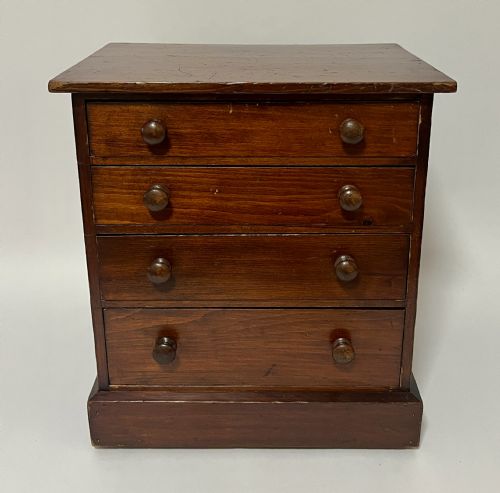


Vintage Entomology Cabinet
A vintage entomology cabinet is a multi-drawer chest built to house natural history specimens, prized for its precise joinery and orderly glass-fronted storage.
Vintage Entomology Cabinet
A vintage entomology cabinet is typically encountered as a mahogany, oak, deal or pine chest containing numerous shallow drawers designed for butterflies, insects and biological specimens. These pieces date across the Victorian, Edwardian and Georgian periods, alongside early twentieth-century examples.
The most common formats range from compact six-drawer chests to substantial multi-drawer cabinets boasting thirty or forty fitted compartments. Buyers also find smaller specimen cases and wall displays alongside major multi-drawer chests.
Origins span standard workshops and specialised makers, utilising dense hardwoods like mahogany alongside softer timbers such as deal and pitch pine. Each piece reflects the meticulous standards required by nineteenth and early twentieth-century naturalists.
Materials and construction
Cabinet makers utilised solid mahogany, oak, satin walnut and pitch pine for the primary frames, paired with deal or secondary softwoods for internal drawer carcases. Brass pulls, hinges and locking escutcheons provided robust functional hardware.
Drawers were constructed with tight dovetail joints to ensure structural stability over decades of frequent opening. Glass panel doors and glazed lids protected delicate contents from dust while allowing clear observation.
Vintage Entomology Cabinet Retail Price Guide 2026
Typical asking prices for vintage entomology cabinet among the pieces listed under this phrase on Sellingantiques today, from the lower quarter to the upper quarter. They describe what is for sale here now, not the wider market.
Current listings feature pieces spanning the Georgian, Victorian and Edwardian eras, constructed from mahogany, oak, deal and satin walnut.
Distinctions in quality
Quality rests upon the density and choice of timber, shifting from stained deal and pine up to heavily figured mahogany, satinwood and solid walnut. The scale of the piece also dictates standing, with monumental multi-drawer blocks representing the pinnacle of workshop output.
Execution of internal drawer construction defines the superior examples, particularly the precision of the joints and the smoothness of the drawer runs. Pieces bearing attribution to recognised specialists demonstrate finer finishing and superior hardware selection.
Brady of Edmonton·Charles William Schofield·J.T. Crockett
The Vintage Entomology Cabinet Glossary
- Deal
- A softwood timber, typically fir or pine, frequently used for secondary carcases and simpler cabinet bodies throughout the nineteenth century.
- Dovetail
- A traditional interlocking woodworking joint utilising wedge-shaped fingers that provides exceptional tensile strength for drawer corners.
- Escutcheon
- A small protective plate of brass or other metal surrounding the keyhole of a cabinet door or drawer front.
- Specimen cabinet
- A specialised storage chest fitted with multiple shallow drawers intended for organising and preserving natural history collections.
Vintage Entomology Cabinet: Frequently Asked Questions
What were entomology cabinets originally used for?
These cabinets served naturalists and collectors as secure, dust-free repositories for butterflies, moths, and other insect specimens. The shallow drawers kept delicate items flat and organised.
Over time, collectors expanded their use to house botanical samples, microscope slides, and various small curiosities.
How do I care for a vintage cabinet?
Keep the wood conditioned using appropriate traditional waxes and avoid placing the cabinet in direct sunlight or damp environments. Stable indoor humidity protects both the timber and internal joints.
Clean glass panels gently with standard glass cleaner applied to a cloth rather than sprayed directly near the wood.
How do I date a cabinet?
Dating relies on timber choices, construction techniques, and hardware styles observable across the piece. Mahogany and heavy oak often point to Georgian or Victorian periods, while pitch pine and deal frequently indicate later eras.
Examining drawer dovetailing and lock mechanisms helps narrow the decade of manufacture.
Are drawers interchangeable?
In many original cabinets, drawers were hand-fitted to specific slots and may not slide smoothly if swapped. Maintaining their original positions preserves the intended fit.
Minor wood movement over generations makes keeping each drawer in its designated bay best practice.