
Vintage English Earthenware
Vintage english earthenware gathers together centuries of glazed pottery, from early Delftware chargers and slipware jugs to Victorian Staffordshire figures and Art Deco vases.
Vintage English Earthenware
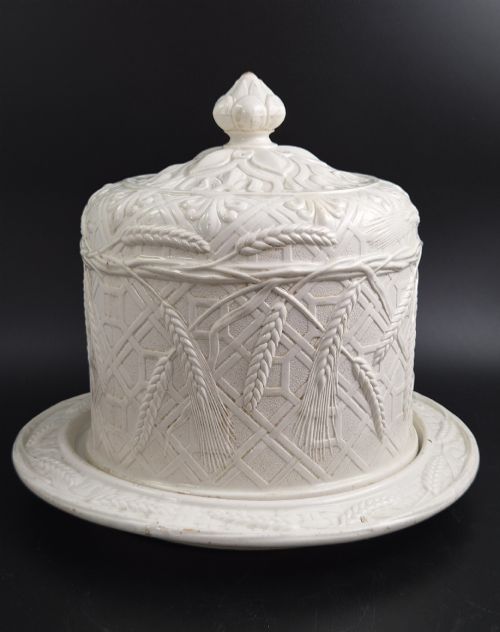
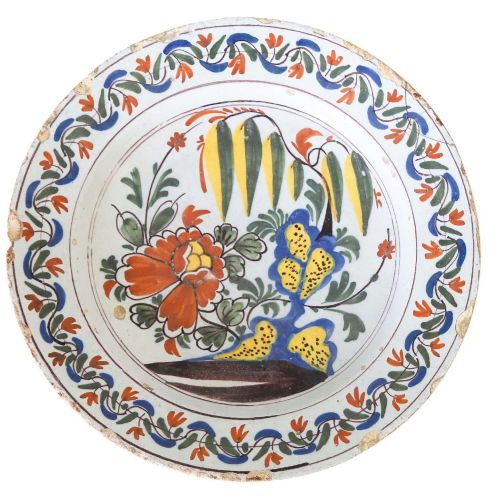
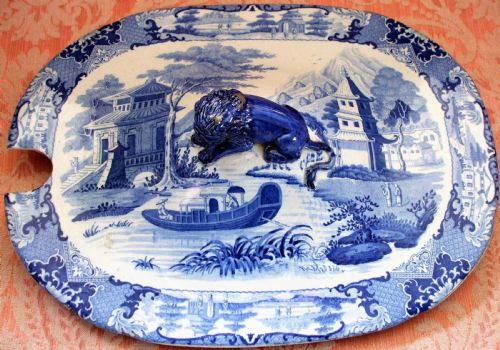
Vintage english earthenware covers a broad landscape of ceramic production, spanning utilitarian vessels, decorative figurines, and grand service pieces. Pieces range from eighteenth-century delft bowls and slipware jugs to nineteenth-century ironstone cheese domes and transfer-printed tureens.
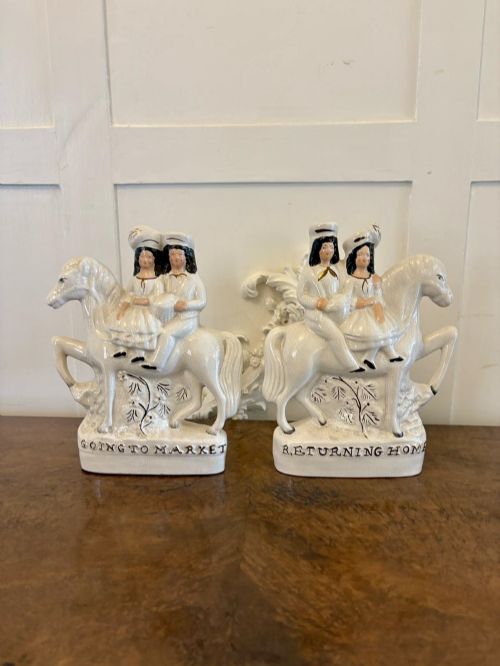
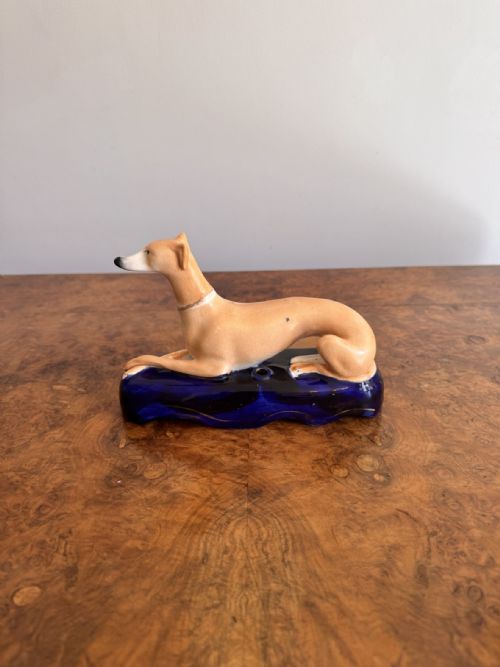
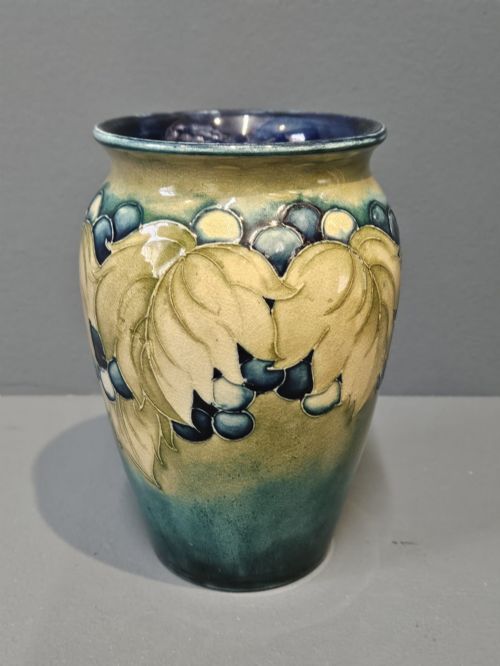
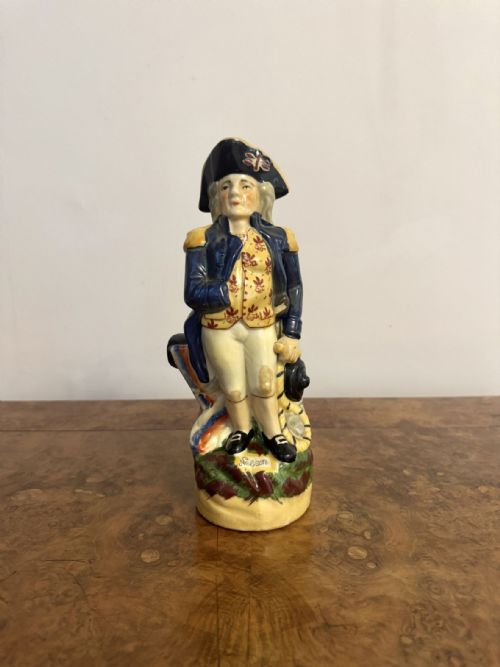
Buyers will encounter various forms within this selection, including jugs, vases, platters, and mantel figures such as Staffordshire spaniels and lions. Later twentieth-century examples introduce studio pottery figurines and banded bowls from makers like Moorcroft and T G Green.
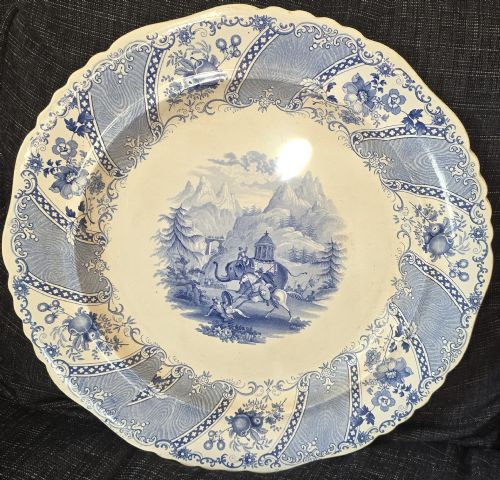
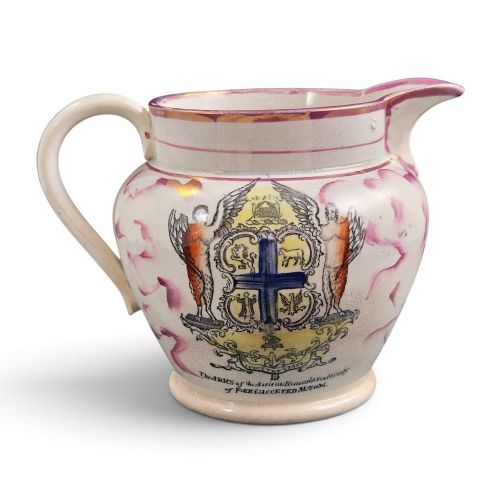
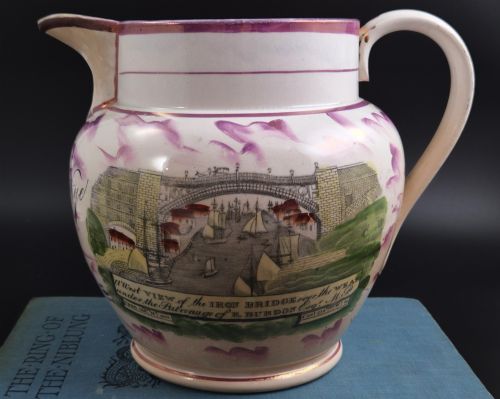
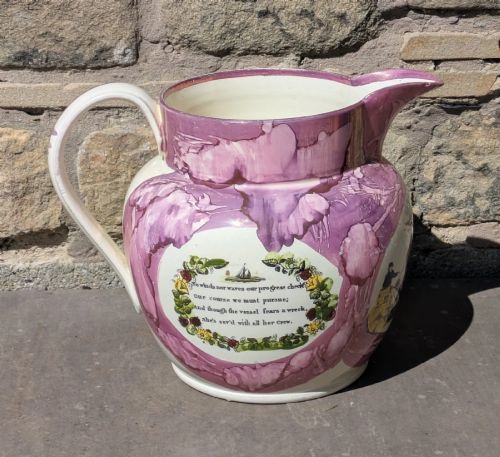
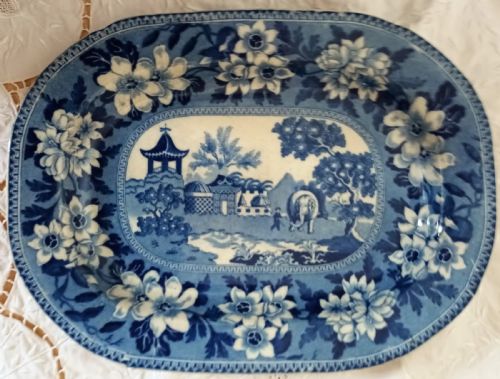
The aesthetic shifts significantly across periods, moving from hand-painted blue and white delftware and polychrome floral chargers to rich transfer-printed scenes, pink lustre finishes, and the bold colour palettes of Arts and Crafts and Art Deco pieces.
Materials and construction
The primary material underpinning these items is earthenware, alongside related bodies such as ironstone, creamware, and pearlware, fired to create durable domestic and decorative objects. Glazes provide the essential protective and aesthetic surface, appearing as clear coatings, tin glazes on delftware, or rich pink lustre highlights.
Decoration relies on diverse technical methods, encompassing hand-painted polychrome pigments, blue and white transfer printing, and slip trailing. Gold leaf occasionally accents finer Victorian and Edwardian items, while specialised forms utilise moulded details and applied figures.
Glazed ceramic and earthenware dominate the material record, complemented by specialised ironstone services, enamel highlights, and occasional gold leaf accents.
Evaluating distinction
Superior quality in these ceramics manifests in the crispness of transfer-printed details, the control of hand-painted brushwork, and the evenness of the glaze application. Early pieces often display charming irregularities from kiln placement, whereas later works demand precision in moulding and surface decoration.
The artistic ambition of the piece also dictates its standing, distinguishing standard utilitarian wares from modelled studio figures, portrait jugs, and elaborate table services produced by established potteries.
Robert Hamilton·John Rogers and Son·Alice Euphemia Thatcher·Charles Vyse·John and Richard Riley
The Vintage English Earthenware Glossary
- Earthenware
- Porous pottery fired at lower temperatures than stoneware or porcelain, requiring a glaze to achieve impermeability. It forms the structural base for the majority of these listings.
- Ironstone
- A heavy, durable type of earthenware patented in the nineteenth century to imitate porcelain. It frequently appears in white utility wares and dinner services.
- Transfer printing
- A mechanical decoration technique where an engraved copper plate transfers a design onto tissue paper, which is then pressed onto the ceramic body before glazing. This method enabled mass production of complex blue and white patterns.
- Delftware
- Tin-glazed earthenware produced in England from the seventeenth century onwards, characterised by an opaque white glaze painted with cobalt blue or polychrome motifs.
- Lustreware
- Pottery finished with a metallic glaze that reflects an iridescent sheen, often seen in pink or copper tones on nineteenth-century jugs.
- Slipware
- Pottery decorated with liquid clay applied to a contrasting clay body before firing, creating expressive linear or marbled patterns.
Vintage English Earthenware: Frequently Asked Questions
What is vintage english earthenware?
Vintage english earthenware comprises a diverse array of ceramic objects produced in England over several centuries, encompassing utilitarian vessels, tableware, and ornamental figures.
These pieces utilise porous clay bodies finished with various glazes, spanning early tin-glazed delftware, nineteenth-century ironstone, and twentieth-century studio pottery.
How do I date a piece?
Dating relies on stylistic markers, manufacturing techniques, and specific glaze types characteristic of particular eras, such as eighteenth-century slipware or Victorian transfer printing.
Makers' marks, registration diamonds, and named subjects also provide concrete chronological clues for nineteenth and twentieth-century items.
How were transfer printed pieces made?
Makers engraved copper plates with detailed designs, inked them, and transferred the image onto tissue paper for application onto the raw ceramic body.
After the paper was washed away, the piece received a protective glaze and a high-temperature firing that fixed the pattern permanently.
What is the difference between earthenware and ironstone?
Earthenware is a traditional, porous pottery body fired at lower temperatures, requiring a vitreous glaze to hold liquids.
Ironstone is a refined, highly dense variant of earthenware developed in the nineteenth century for increased strength and durability in heavy-duty kitchen and table wares.
How should I display pottery?
Pottery is best showcased on stable shelving away from direct, harsh sunlight to protect painted surfaces and glazes over time.
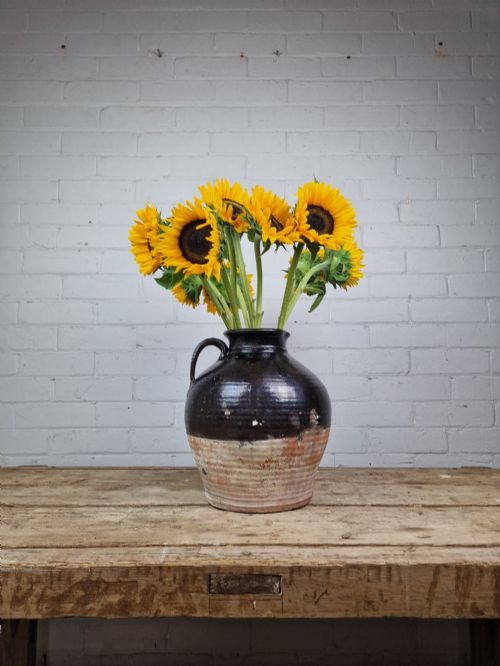
Larger items like tureens and chargers benefit from secure plate stands, while hollow vessels such as jugs and vases can stand alone as sculptural focal points.