
Vintage Engagement Jewellery
Vintage engagement jewellery spans decades of craftsmanship, offering distinct rings from Edwardian, Art Deco and Mid-Century periods.
Vintage Engagement Jewellery
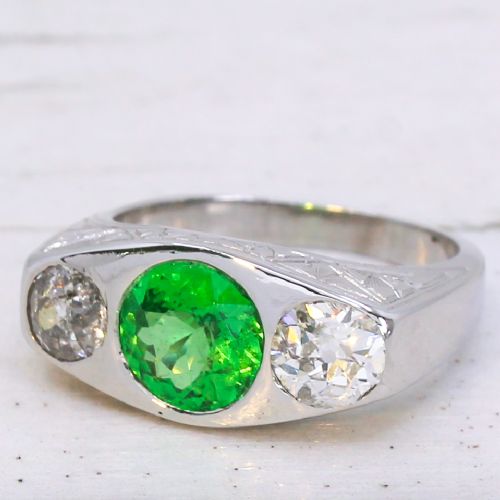
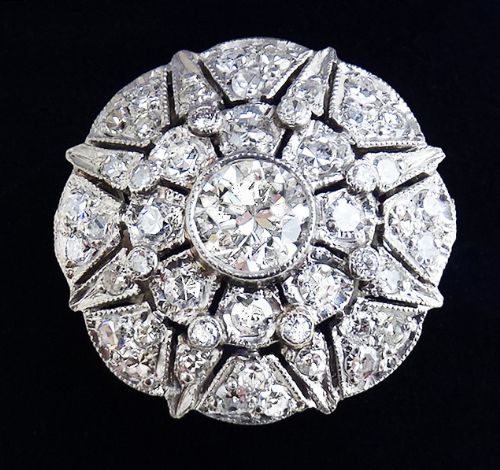
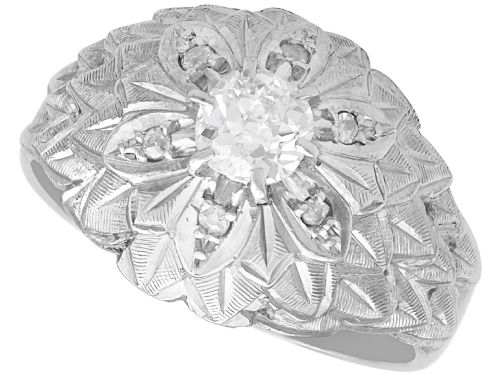
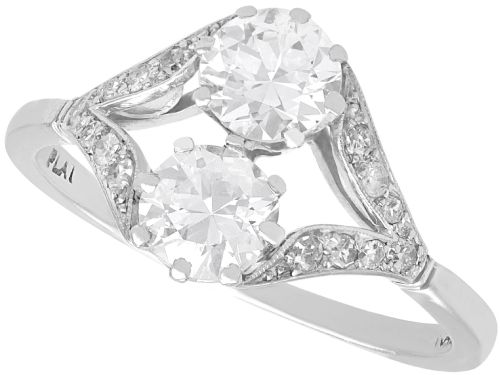
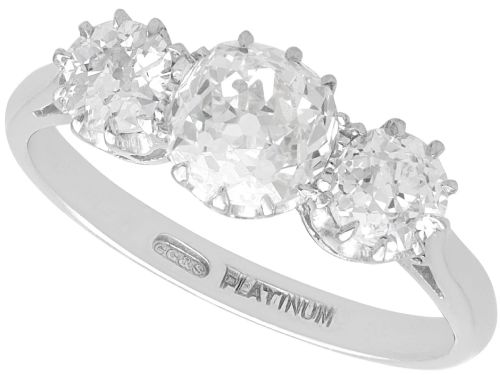
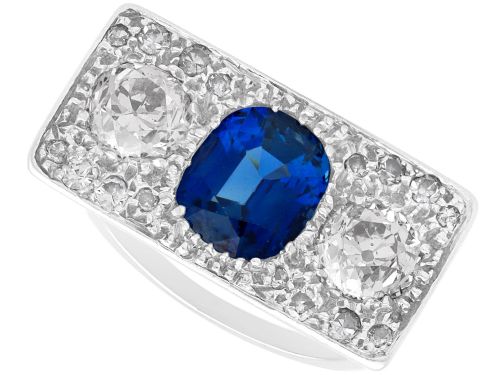
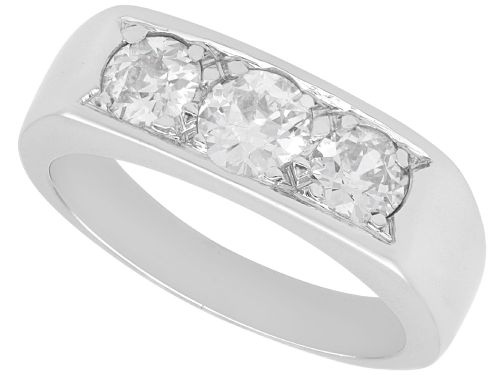
Vintage engagement jewellery primarily comprises rings shaped by stylistic shifts across the twentieth century, spanning Edwardian, Art Deco, and Mid-Century periods. Buyers exploring this category encounter cluster rings, solitaires, and trilogy settings designed in platinum and various goldkarats.
Origin details often point to French workshops or British periods, giving each piece a documented place in time. Rings range from delicate Edwardian filigree to bold Art Deco geometries and later 1960s modern designs.
Materials and Construction
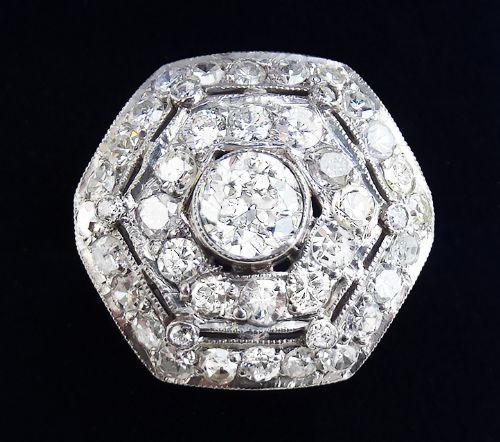
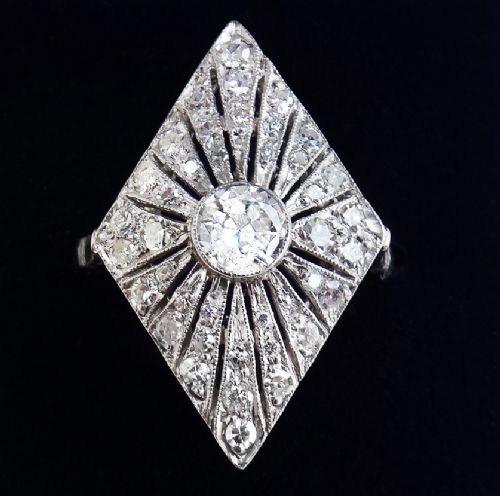
Platinum emerged as a favoured metal for mounting intricate diamond and sapphire clusters during the Art Deco era, offering structural strength alongside fine detail. Gold variations, including 18ct yellow, white, and rose gold, support traditional solitaire and multi-stone configurations.
Gems were hand-cut, frequently utilising old mine and old European cuts that distribute light differently than modern symmetrical facets. Settings rely on precise claw, bezel, and channel techniques executed by hand to secure centre stones and accent diamonds.
Listings feature platinum, yellow gold, white gold, and rose gold paired with diamonds, sapphires, emeralds, rubies, opals, and amethysts.
Evaluating Quality and Execution
Superior examples demonstrate meticulous metalwork where settings remain crisp and secure without thinning or prior over-polishing. The integration of accent stones with central gems shows balanced proportions and careful colour matching.
Gemstone quality is defined by natural origin, clarity, and treatment history, such as unheated rubies or minor oil emeralds. The precision of hand-cut facets and the integrity of the original claw work elevate the standard of the piece.
The Vintage Engagement Jewellery Glossary
- Cluster ring
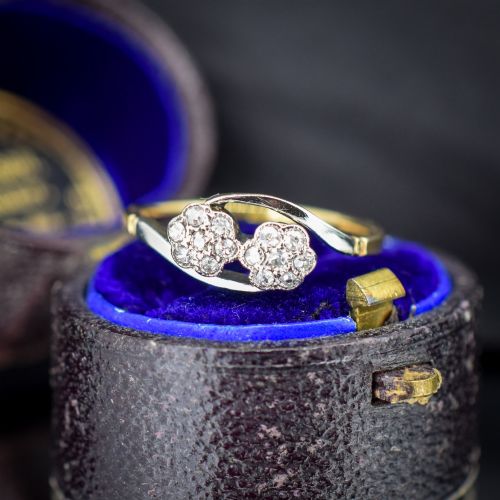
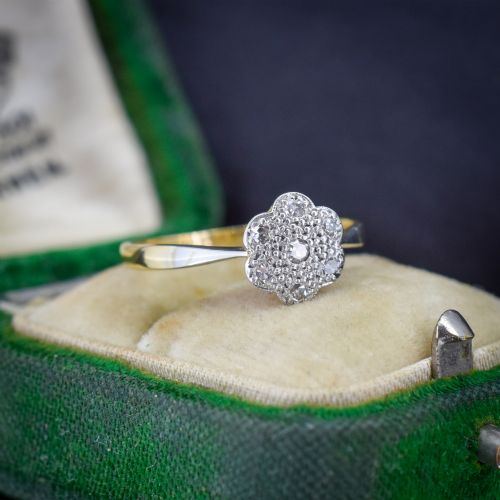
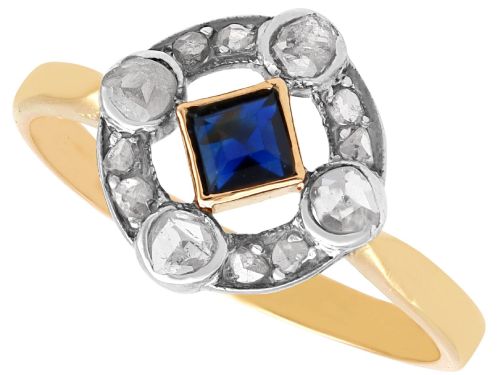
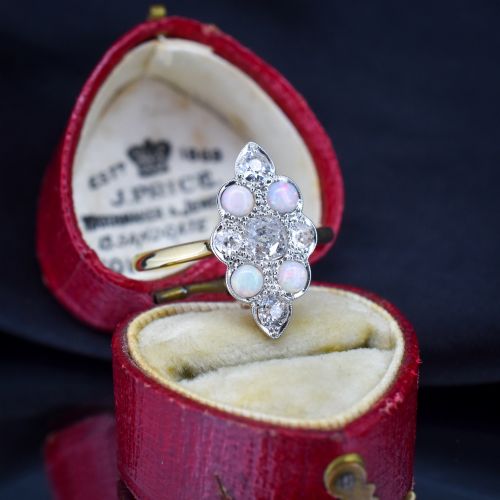
- A ring featuring a prominent central gemstone surrounded by a geometric halo of smaller accent stones, typically diamonds.
- Old cut
- A vintage diamond cutting style characterised by a smaller table, higher crown, and open culet, designed to catch candlelight.
- Trilogy ring
- A three-stone ring design representing the past, present, and future, frequently pairing diamonds with sapphires or rubies.
- Bypass ring
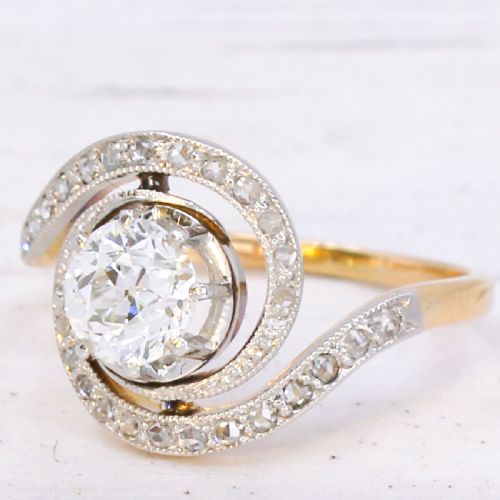
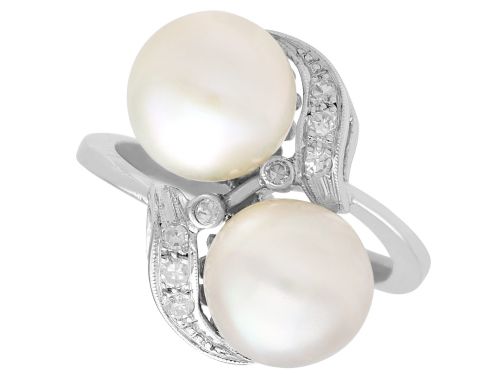
- A style where the shank wraps around the finger in a continuous overlapping movement, often incorporating twist motifs.
- Filigree
- Delicate openwork formed by fine twisted threads of precious metal soldered together in decorative patterns.
Vintage Engagement Jewellery: Frequently Asked Questions
What periods define vintage engagement jewellery?
The pieces span the Edwardian era, Art Deco period, and Mid-Century designs reaching into the 1960s. Each era brings distinct metallurgical choices and geometric or floral motifs.
Platinum dominates the 1920s and 1930s, while yellow and white gold frame pieces from the turn of the century and the post-war decades.
How do old cut diamonds differ from modern stones?
Old cut diamonds feature hand-faceted surfaces tailored under different lighting conditions than contemporary brilliant cuts. They exhibit smaller tables and deeper pavilions.
These historic stones produce a softer, warmer scintillation that characterises antique and vintage rings.
Are coloured gemstones common in these rings?
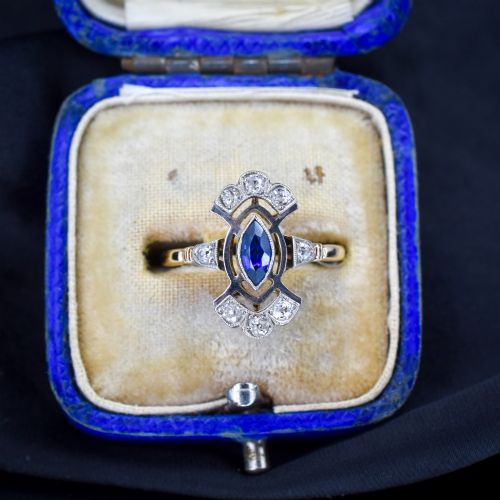
Ceylon sapphires, rubies, emeralds, and opals frequently serve as centre stones or contrasting accents in cluster configurations. Many pieces eschew traditional diamond-only formats for vibrant colour.
Origin documentation often accompanies significant sapphires and emeralds from this selection.
How should vintage rings be worn daily?
Daily wear requires understanding the specific metal durability and setting types, particularly for delicate Edwardian filigree or antique claws. Regular checks by a specialist ensure stones remain secure in their original mountings.
Removing rings during rigorous physical tasks preserves the structural integrity of the antique precious metals.