
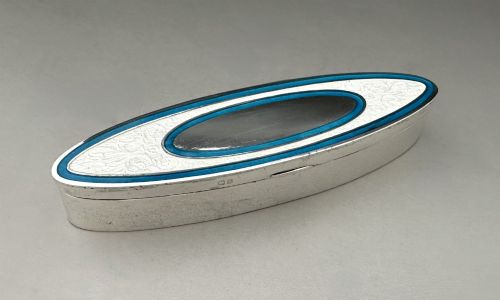
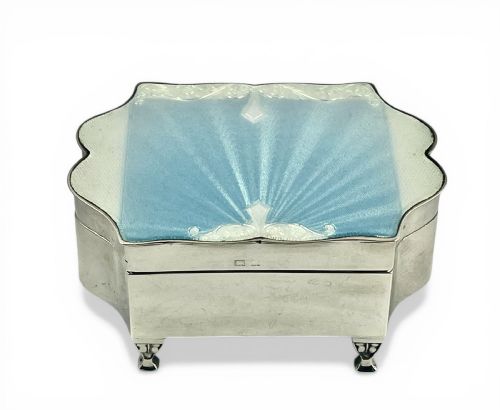


Vintage Enamelled Vanity Box
A vintage enamelled vanity box brings portable colour and silverwork to a dressing table, combining functional storage with geometric or floral ornament.
Vintage Enamelled Vanity Box
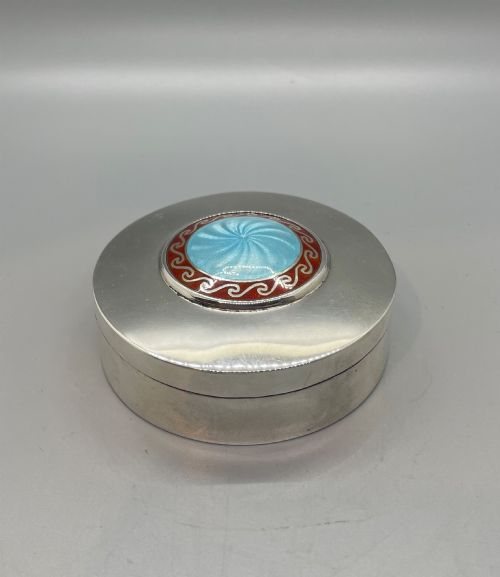
A vintage enamelled vanity box encompasses small containers designed for cosmetics, pills, and personal trinkets, originating from periods spanning the eighteenth century through to the mid-twentieth century. The selection centres heavily on Art Deco and Edwardian pieces executed in sterling silver, glass, and metal.
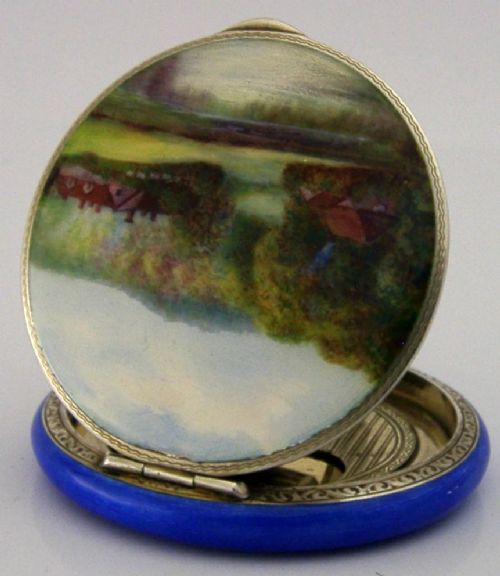
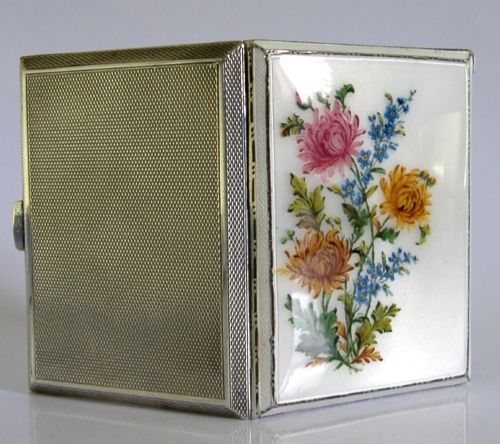
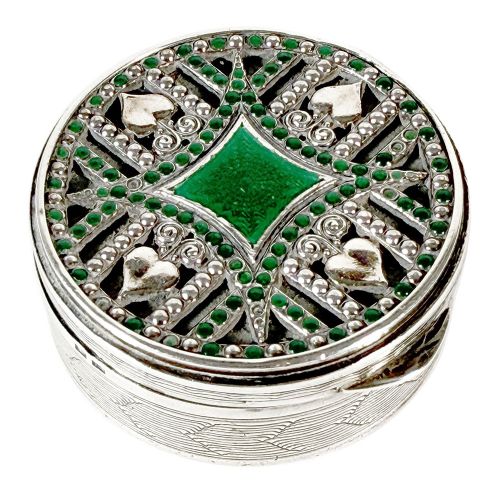
Buyers encounter powder compacts, dressing table jars, pill boxes, and cigarette cases bearing vitreous and guilloche enamel. These items originate from British, French, Austrian, and Italian makers, reflecting distinct regional styles of the early twentieth century.
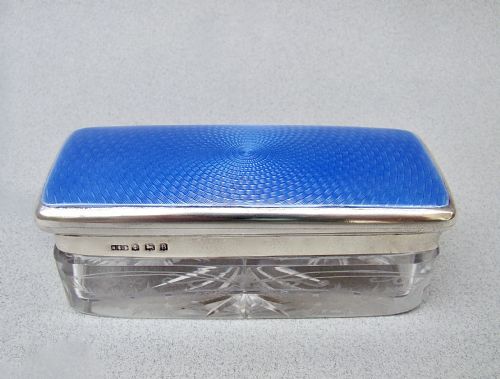
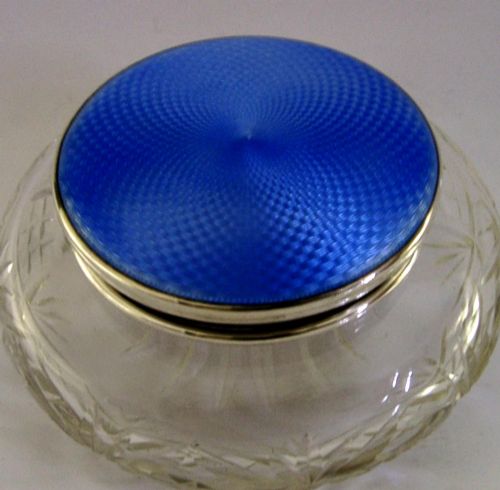
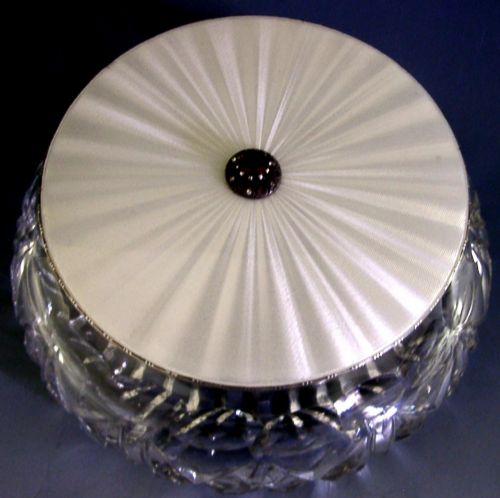
Forms range from small pocket trinket boxes to substantial cut glass jars with enamelled silver lids. The prevalence of 1920s and 1930s designs means geometric patterns and engine-turned metalwork dominate the available selections.
How they were made
Silversmiths constructed the foundational bodies of sterling silver, brass, or chrome, frequently pairing metal mounts with cut glass or cranberry glass bases. Enamel was fused to metal surfaces through high-temperature firing, often over machine-turned guilloche patterns that created shimmering geometric light effects beneath translucent colour.
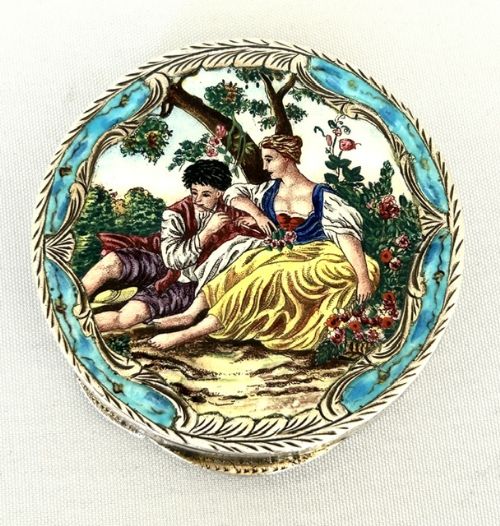
Surface decoration frequently incorporated hand-painted floral motifs, scenic miniatures, or bi-colour enamel work applied by specialist artisans. Makers utilised internal components such as mirrors, mesh screens, and suede linings to transform simple decorative containers into functional accessories.
A surprise discovery among these pieces is a tiny travel clock tucked inside a guilloche enamel watch case.
What varies in quality
Quality differentiates itself through the precision of the guilloche engine-turning and the clarity and depth of the fused vitreous enamel. Superior examples exhibit complex, hand-painted details and robust silver construction with tight-fitting hinged lids that close securely.
The sophistication of the maker's mark and the weight of the silver or metal housing signal higher standards of craftsmanship. Simpler pressed metal compacts sit at the functional end of the range, while fully hallmarked sterling silver and signed designer pieces represent the upper tier.
Henry Clifford Davis·George Adam Scheid·Henry Matthews·Goldsmith's and Silversmith's Co.·Richard Hudnut·Giuliano Spinelli·Houbigant
The Vintage Enamelled Vanity Box Glossary
- Guilloche enamel
- A decorative technique where a precise geometric pattern is機械-engraved into metal before translucent enamel is applied over the top. This allows the underlying pattern to shine through the coloured glass surface.
- Vitreous enamel
- A material made by fusing powdered glass to a substrate by firing, usually between seven hundred and nine hundred degrees Celsius. The resulting compound is durable, smooth, and resistant to tarnishing.
- Powder compact
- A small portable case containing a mirror and a compartment for face powder, often fitted with a sifter and a puff. These accessories were essential items for women during the early twentieth century.
- Dressing table jar
- A container designed to hold creams, pins, or cosmetics on a vanity surface, typically featuring a heavy glass body and a decorated metal lid. They reflect the refined grooming rituals of the Edwardian and Art Deco periods.
- Silver-gilt
- Sterling silver that has been coated with a thin layer of gold on its surface. This treatment provides a warm golden interior or finish to vanity boxes and pill cases.
Vintage Enamelled Vanity Box: Frequently Asked Questions
What were vintage vanity boxes used for?
These boxes served as portable containers for loose face powder, rouge, pills, and small personal trinkets during daily grooming routines. Many doubled as fashion accessories designed to be displayed on dressing tables or carried in evening bags.
Inside, compacts often included integrated mirrors and sifters, while larger jars held creams or hairpins. Cigarette cases and pill boxes provided secure storage for small personal items with decorative exterior finishes.
How do I date an enamelled box?
Dating relies heavily on hallmarks stamped into the silver, which record specific assay office symbols and active years for British makers. Stylistic indicators like Art Deco geometric motifs or Edwardian floral work also point to particular decades.
Foreign pieces often feature regional silver purity stamps, such as 800 standard, or maker signatures that align with mid-century or earlier production periods. Comparing the closure mechanism and interior lining materials helps narrow down the era of manufacture.
What is the difference between a compact and a trinket box?
A compact specifically includes internal provisions for cosmetics, such as a mirror, powder well, or mesh screen for loose powder. They were built for personal touch-ups and daily pocket or handbag use.
Trinket boxes and dressing table jars generally lack cosmetic sifter inserts and were intended to remain stationary on a vanity surface. Their interiors are plain, designed to hold rings, pins, or small keepsakes rather than makeup.