
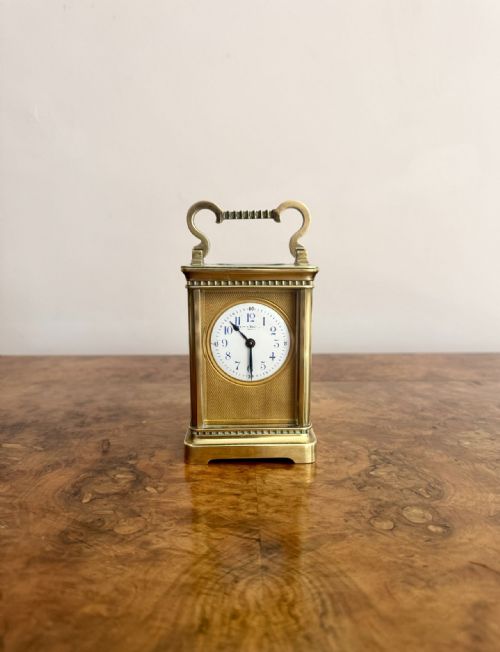


Vintage Enamel Table Clock
These vintage enamel table clocks combine precise timekeeping with decorative brass and champleve enamel work.
Vintage Enamel Table Clock
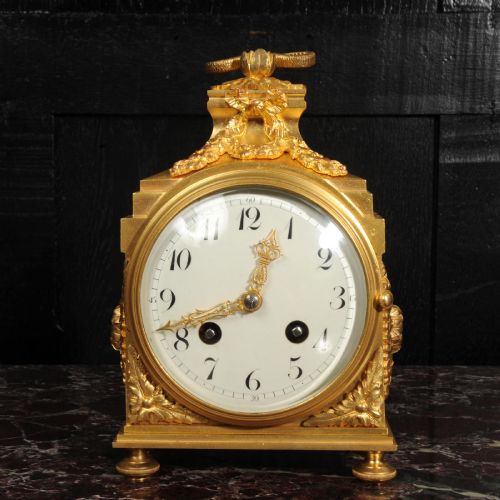
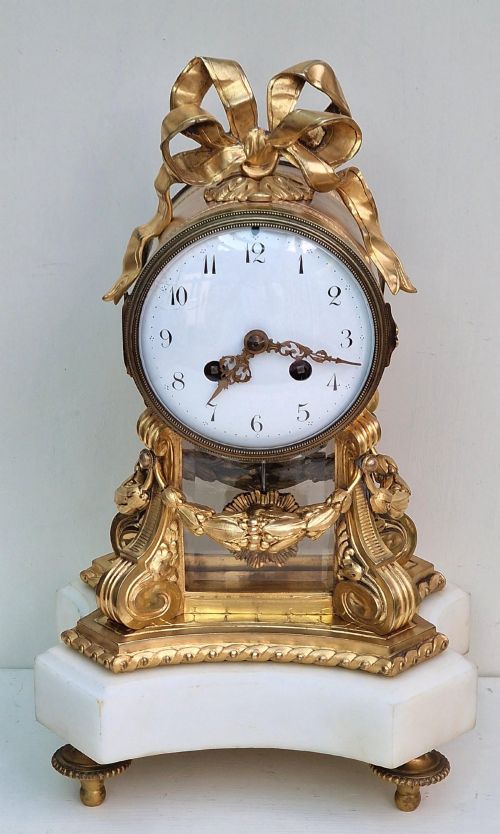
A vintage enamel table clock functions primarily as a portable or desk timepiece, frequently appearing in forms such as carriage clocks, mantel clocks, and desk clocks. These pieces span the Victorian, Edwardian, and Art Deco periods, encompassing both French and English origins.
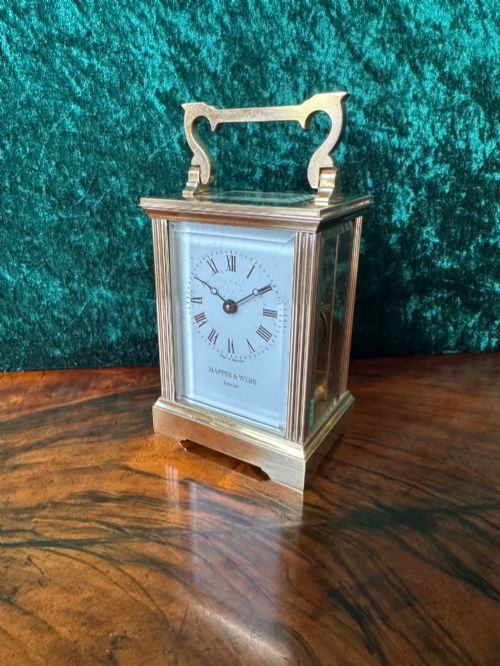
The most common examples on this page are French carriage clocks and mantel clocks featuring brass cases and enamel dials. They rely on mechanical movements housed in glazed or metal frameworks designed for domestic interiors.
Materials and construction methods
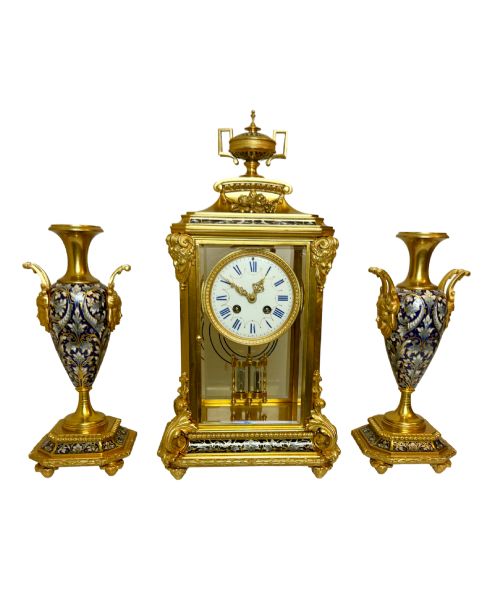
Cases combine brass, gilt bronze, ormolu, and glass, frequently paired with decorative champleve enamel or guilloche enamel details. These metals provide the structural framework and polished exterior finish typical of the period.
Movements are mechanical, often featuring eight-day mechanisms, striking functions, or repeating capabilities enclosed within protective metal and glass housings.
Several clocks include original travelling cases, proving that nineteenth-century travellers took their time very seriously indeed.
Quality variations in enamel clocks
Quality rests on the crispness of the brass casting, the depth of the gilding, and the intricacy of the champleve or guilloche enamel work on the dial and case. Finer pieces display hand-engraved details and superior movement reliability.
The integration of the enamel elements with the metal mountings dictates the overall refinement of the clock, separating standard production models from exceptional decorative works.
Mappin and Web·David Veasey·Liberty and Co·Latshea and Sons Edinburgh·Samuel Marti et Cie·AD Mougin
The Vintage Enamel Table Clock Glossary
- Champleve
- An enamelling technique where troughs are carved into a metal surface and filled with enamel powder before firing. This method creates bold coloured patterns flush with the surrounding metal.
- Carriage clock
- A small, spring-driven timekeeper equipped with a carrying handle, originally designed for travel during the nineteenth century. These clocks usually feature glass panels allowing the movement to be seen.
- Ormolu
- Gilded bronze produced by applying a mercury and gold amalgam to a bronze object, followed by heating to drive off the mercury. This treatment yields a durable golden finish.
- Guilloche
- A decorative technique where a precise repeating pattern is mechanically engraved into a metal substrate beneath a translucent layer of enamel. It produces a shifting geometric visual effect.
- Crystal regulator
- A mantel clock constructed with four glass panels held in a brass or gilt frame, designed to showcase the internal pendulum and movement from all angles.
Vintage Enamel Table Clock: Frequently Asked Questions
How do I wind a vintage carriage clock?
Most mechanical carriage clocks utilise a key inserted into the arbour on the backplate to tension the mainspring.
Care should be taken not to overwind the movement once firm resistance is felt.
What is a repeater clock?
A repeater mechanism sounds the last elapsed hour and quarter-hour when a button or lever on the case is activated.
This complication allowed owners to check the time in darkness without needing to light a candle.
How do I date an enamel desk clock?
Dating relies on the style of the brass case, the shape of the enamel dial, and any hallmarks or maker signatures stamped on the movement backplate.
Victorian and Edwardian pieces often exhibit distinct cast ornamentation characteristic of their decade of manufacture.
Are these clocks suitable for daily use?
These antique mechanical timepieces function well in modern homes when serviced and placed on a stable, level surface away from drafts.
Regular professional maintenance ensures the gear trains and escapements continue to operate smoothly.