

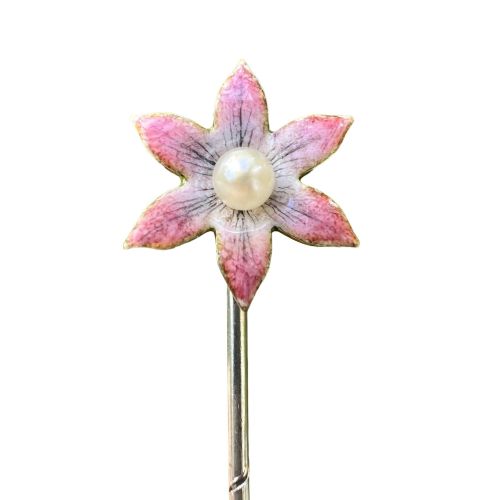


Vintage Enamel Lapel Pin
A vintage enamel lapel pin or small brooch brings sharp colour and detailed design to a lapel.
Vintage Enamel Lapel Pin
When you search for a vintage enamel lapel pin, you encounter small brooches, stick pins, badges, and bar pieces spanning from the nineteenth century through the mid-twentieth century.
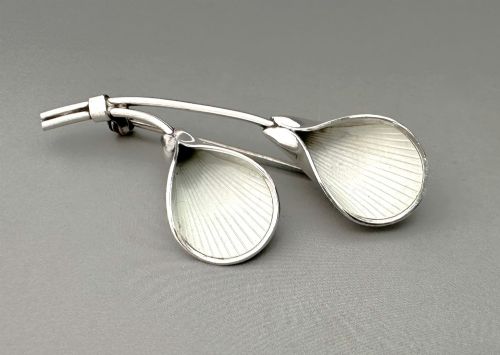
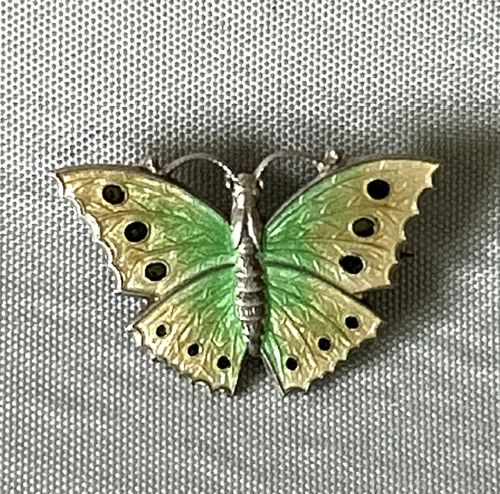
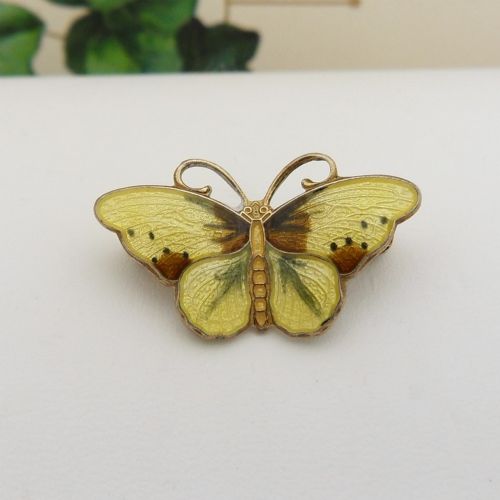
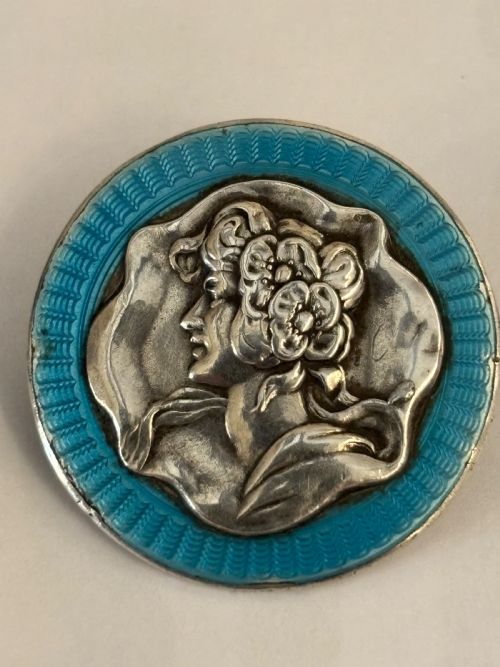
The selections on this page draw heavily from Edwardian, Art Nouveau, Art Deco, and Scandinavian modern traditions, with butterfly and floral motifs appearing frequently.
Makers employed materials such as sterling silver, silver gilt, gold, and platinum alongside vitreous, guilloche, and plique-à-jour enamel.
Materials and technique
Goldsmiths and silversmiths shaped precious metals including sterling silver, silver gilt, and various carats of gold to form the structural foundations of these pieces.
Enamelwork techniques, notably guilloche with its engine-turned geometric patterns beneath translucent colour, and plique-à-jour which resembles miniature stained glass, define the decorative surfaces.
Gemstones such as diamonds, pearls, amethyst, and marcasite are set into the metal frames to complement the vibrant enamel colours.
A flying duck brooch in platinum and diamond shares space with a visitor badge from the 1936 Olympic Games.
Assessing quality and execution
The finesse of the metalwork, from delicate filigree to precise silver gilt casting, dictates the baseline quality of an individual piece.
Superior enamelwork displays an even translucency and flawless fusion to the metal base, avoiding bubbling or heavy surface distortion.
The complexity of the design and the integration of supplementary materials like pearls and diamonds distinguish standard production from exceptional work.
Hroar Prydz
The Vintage Enamel Lapel Pin Glossary
- Guilloche enamel
- A decorative technique where a metal surface is mechanically engraved with intricate geometric patterns before translucent enamel is applied over the top. This allows the underlying pattern to shine through the coloured glass.
- Plique-a-jour
- An enamelling technique where the enamel is fired in open cells with no backing metal, creating a stained glass effect that lets light pass directly through.
- Silver gilt
- Sterling silver or fine silver that has been coated with a thin layer of gold on its exterior surface. It provides the visual warmth of gold combined with a silver base.
- Stick pin
- A long pin with a decorative head, designed to be pushed vertically through a lapel, cravat, or tie. The pin shaft is typically secured with a small cap at the sharp end.
- Vitreous enamel
- A material made by fusing powdered glass to a substrate by firing, usually between 750 and 850 degrees Celsius. The powder melts, flows, and hardens to a smooth, durable glass coating.
Vintage Enamel Lapel Pin: Frequently Asked Questions
How do I wear a vintage enamel lapel pin?
These pieces suit the lapel of a tailored jacket, a heavy winter coat, or the fabric of a knitted scarf. Secure the clasp firmly behind the fabric to ensure the piece remains upright and visible.
For stick pins, push the pin through a lapel fold and secure the safety cap on the reverse to prevent it from slipping out during movement.
How do I clean enamel jewellery safely?
Use a soft cloth dampened in lukewarm water with a mild soap to wipe away dust and oils from the surface. Avoid harsh chemical dips, abrasive brushes, and prolonged soaking in water.
Dry the piece thoroughly with a lint-free cloth immediately after cleaning, paying particular attention to any stone settings or clasps.
How do I date an enamel brooch?
Examine the overall design style, such as the flowing organic lines of Art Nouveau or the geometric precision of Art Deco. Hallmarks stamped onto the metal reverse provide specific assay office marks and date letters.
Consider the manufacturing techniques and fastener types, as safety catches and pin mechanisms evolved significantly from the Victorian era to the mid-twentieth century.
Are these pins fragile to handle?
Enamel is essentially glass fused to metal, which means it can chip or crack if struck sharply against a hard surface. Store each piece in an individual padded box to prevent impact damage from other items.
Handle the pieces by their metal frames rather than applying pressure directly to the enamelled sections when fastening or removing them.