



Vintage Enamel Decor
Vintage enamel decor brings colourful, enduring craftsmanship into modern interiors through pieces spanning the nineteenth and early twentieth centuries.
Vintage Enamel Decor
The selection on this page demonstrates broad geographical origins, extending from European glass and stoneware to Asian metalwork and advertising signs. Buyers meet everything from small tableware items like menu holders and napkin rings to substantial decorative plaques and candlesticks.
Dating across these pieces stretches from the nineteenth century through the Edwardian era and into the interwar period of the 1930s. The common thread uniting them is the application of vitreous enamel or painted enamel upon various hard substrates.
Materials and techniques
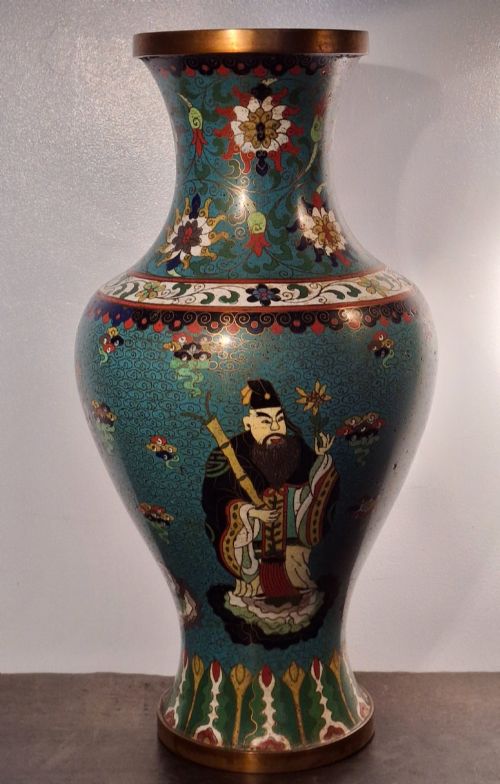
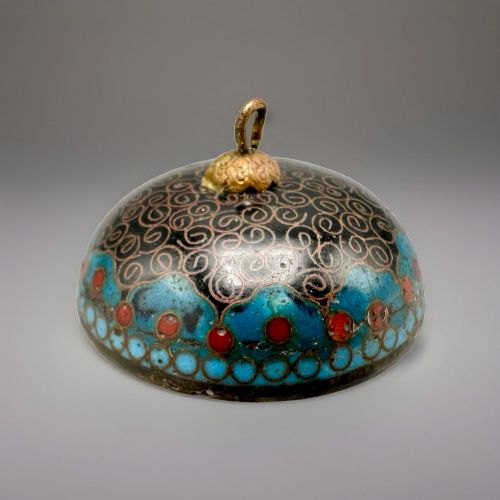
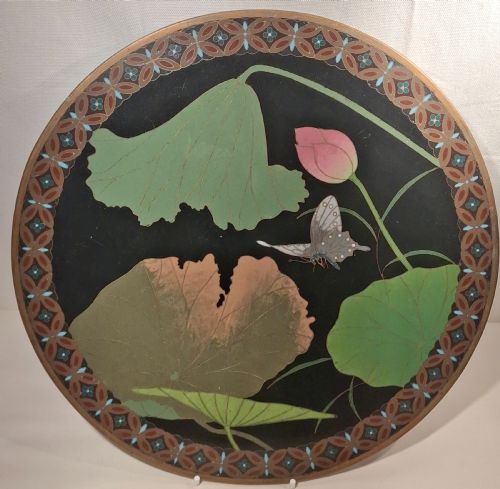
Makers fused powdered glass onto metal, ceramic, or glass bases at high temperatures to create durable coloured surfaces. Copper and brass commonly served as the foundation for Asian cloisonné and French champlevé, where wirework or recessed cells held the coloured pastes.
Pewter and silver formed the basis for British design, notably seen in Arts and Crafts metalwork combined with enamel inserts. Glass and stoneware provided alternative grounds, demonstrated by Bohemian blown vessels and Royal Doulton pieces decorated with enamel floral motifs.
Vintage Enamel Decor Retail Price Guide 2026
Typical asking prices for vintage enamel decor among the pieces listed under this phrase on Sellingantiques today, from the lower quarter to the upper quarter. They describe what is for sale here now, not the wider market.
A solitary fox hunting scene leaps across green Bohemian glass, frozen mid-chase by an early twentieth-century enamel painter.
Qualities that distinguish the range
Superior examples display exceptional precision in metalwork and wire placement, alongside a harmonious palette of evenly fired enamel colours. The crispness of hand-painted details and the stability of the glaze across complex curved surfaces separate masterwork items from standard production.
The integration of materials also defines the hierarchy, particularly where precious metals like silver gilt or fine bronze mountings accompany the enamel work. Maker attribution and documented designs elevate the standing of individual pieces within their respective historical categories.
Liberty & Co·Royal Doulton·David Andersen
The Vintage Enamel Decor Glossary
- Cloisonne Enamel
- A technique where thin metal wires are soldered to a metal base to create compartments filled with enamel paste before firing.
- Champleve Enamel
- A method involving troughs or cells gouged or cast directly into a metal surface to hold coloured enamel prior to heating.
- Guilloche Enamel
- Translucent enamel layered over mechanically engraved metal grounds, producing repeating geometric patterns visible beneath the colour.
- Meiji Period
- A Japanese historical era spanning from 1868 to 1912, noted for technical mastery in decorative arts exported worldwide.
- Tudric
- A trade name used by Liberty & Co. for a specific range of pewter wares often incorporating enamel decoration.
Vintage Enamel Decor: Frequently Asked Questions
How do I clean vintage enamel items?
Dust surfaces gently with a soft, dry cloth to preserve fragile glazed areas and underlying metal patinas. Avoid chemical dips or abrasive cleaners that might scratch the vitreous surface or damage exposed base metals.
Keep pieces away from direct moisture and extreme temperature fluctuations to prevent cracking or stress to the fused glass layer.
Can I use these decorative pieces daily?
Many items like napkin rings or menu holders were created for regular dining use and tolerate careful handling. Items such as delicate cloisonné plaques or advertising signs suit display rather than functional tasks.
Assessing the stability of the mountings and the condition of the enamel helps determine the appropriate level of everyday interaction.
How do I identify the period of an item?
Examine the base metal, manufacturing marks, and stylistic indicators such as Arts and Crafts motifs or Meiji period ornamentation. Comparing construction methods against documented timelines provides a reliable guide to the date of creation.
Consulting signatures or stamps stamped into pewter, silver, or ceramic elements offers direct clues regarding origin and era.
What caused variations in enamel colours?
Different metallic oxides added to the glass paste produced distinct hues during the high-temperature firing process. Variations in kiln heat and mineral composition often resulted in subtle tonal shifts unique to each manufacturing batch.